
702-569-2849
24/7 Las Vegas Pest Control Emergency Service
702-569-2849
24/7 Las Vegas Pest Control Emergency Service
Prevent cockroaches, rodents, ants, spiders, scorpions, flies, and other pests from invading your Las Vegas establishment with our expert pest control services that are geared toward treatment, prevention, and monitoring.
Enviro Guard works with business owners, property managers, and facility teams across Southern Nevada. Our team provides a starting point for identifying pest evidence, areas of concern, and conditions supporting the problem.
Our service is planned around your facility and operating schedule to address pest activity while minimizing unnecessary disruption to your staff, customers, tenants, or daily operations.
Schedule Your Free InspectionFast. Easy. No Obligation
Commercial pest problems vary by business type. Restaurants deal with food, drains, grease, and waste, while warehouses have loading docks, stored goods, and large doors. Offices have different concerns around break rooms, restrooms, kitchens, and utility spaces.
We analyze the problem presented, find out which pest is involved, and concentrate on treating the zones that are associated with the activity. Our services involve inspection, treatment, monitoring, preventive measures, and pest control.
Common commercial services include:
The service plan depends on the pest, the facility, and the conditions found during service.
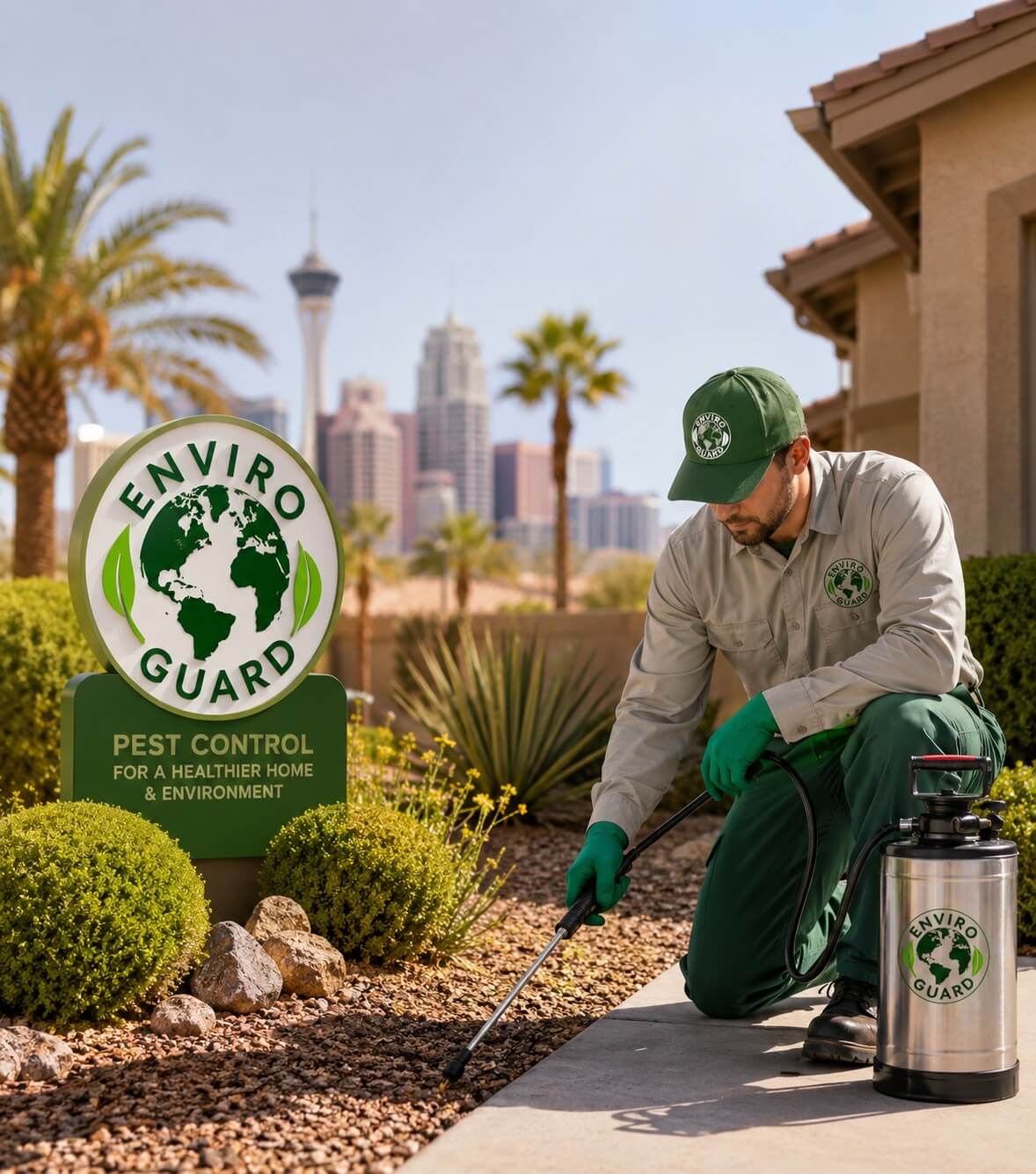
Commercial pest control also needs to have proper licensing and oversight. Enviro Guard has been serving Southern Nevada since 2006 and holds a license issued by the Nevada Department of Agriculture.
The company is listed under Company License #6663, with Steve W. Langman as Primary Principal under License #200474. Nevada identifies C2 as the Industrial and Institutional category within its Urban and Structural pest-control licensing system.
You can click here to learn more about the company.
These credentials give business owners and property managers a clear starting point when evaluating commercial pest-control services.
Various premises have their own pest problem environment. Our method for offering our services varies based on how the particular facility is operated and managed.

Break room, kitchen, bathroom, storage, and utility areas are all typically considered during service calls. Doorways, wall openings, and surrounding exterior areas are also important when there is a report of pests in these areas. Treatment stays focused on affected areas while fitting around normal office operations.

Retail locations need attention beyond the customer-facing floor. Stockrooms, receiving areas, storage spaces, delivery areas, and waste areas also need to be considered.
Service focuses on the locations connected to pest activity without creating unnecessary disruption for staff or customers.

Restaurants have several conditions that support pest activity, including food, moisture, grease, waste, and frequent deliveries. Roaches, rodents, flies, and ants often require attention around kitchens, drains, food storage, and waste areas. Service covers the areas connected to the problem, including kitchens, grease zones, dining areas, dumpsters, storage spaces, and exterior doors.

Medical offices need pest control that fits around patients, staff, and normal operations. Waiting rooms, exam rooms, restrooms, storage spaces, utility areas, cabinets, and exterior areas all have different inspection needs. Treatment is focused on affected locations and coordinated with the facility’s operating requirements.

Warehouses have loading docks, pallets, stored goods, large doors, and frequent deliveries. These conditions make dock areas, storage racks, break rooms, waste areas, and exterior walls important areas to review. We look for signs of rodent and insect activity and identify how pests are entering or moving through the building.

Property managers often handle pest complaints across multiple units, buildings, or managed spaces. A complaint in one location also deserves attention to nearby areas when the activity extends beyond the original report.
Service findings help management teams understand the problem, the work completed, and the areas requiring attention.

HOA communities have shared spaces, landscaping, pool areas, walkways, storage areas, and exterior building spaces. Ants, roaches, rodents, spiders, scorpions, and mosquitoes each require a different control approach. Service focuses on reported activity and the surrounding conditions that support it.
The type of facility helps determine where attention is needed, while the pest itself determines the treatment approach.
Different pests require different treatment methods, so accurate identification is an important part of commercial pest control.
| Pest | Common Commercial Problem Areas |
| Cockroaches | Kitchens, drains, food storage and equipment areas |
| Rodents | Warehouses, restaurants, storage areas and loading docks |
| Ants | Food areas, landscaping, doors and building openings |
| Flies | Kitchens, drains, waste areas and dumpsters |
| Bed Bugs | Offices, multi-unit properties and shared spaces |
| Scorpions | Landscaping, exterior walls and building openings |
| Spiders | Exterior walls, storage areas and low-traffic spaces |
| Termites | Structural areas and locations showing termite activity |
| Mosquitoes | Landscaping, irrigation and standing-water areas |
| Silverfish | Storage areas and moisture-prone spaces |
Our Las Vegas pests guide covers common pest pressures found around local homes, businesses, and other buildings.
Identifying the pest provides the starting point. The next step is determining where the problem is concentrated and what is supporting it.
A commercial pest inspection focuses on finding where pest activity is occurring and what conditions could be contributing to it. Our technicians review the areas most relevant to the facility, including interior spaces, exterior areas, access points, and conditions around food, water, and storage.
Depending on the facility, the inspection may include:
The inspection focuses on areas where pest activity is reported or where conditions could support pests. Findings such as droppings, damage, trails, nesting evidence, or live pests help establish where activity is occurring.
Exterior conditions often provide clues about how pests are entering or staying around a commercial building. Areas reviewed include:
These findings help determine which areas need attention and what type of service is appropriate for the facility.
Commercial pest control starts with the information gathered during the inspection. From there, our team determines the appropriate service, carries out the work, and reviews the results during follow-up visits.
We discuss the reported pest issue, review the inspection findings, and determine which areas require attention.
The treatment approach is based on the pest involved, the affected areas, facility conditions, and the level of activity found during the assessment.
We treat the identified areas using methods appropriate for the pest and the commercial setting.
Where needed, we recommend practical steps related to sanitation, moisture, storage, harborage, or building access that could help reduce conditions supporting pest activity.
During scheduled follow-up visits, we review the service areas, assess current conditions, and document findings that may require further attention.
This process gives the business a consistent way to address active pest problems while keeping track of conditions that need continued attention.
Our guide to how pest control companies protect property also explains how inspection and prevention help address pest activity beyond the first visible sighting.

Treatment addresses the immediate pest problem, while follow-up helps determine what happens next.
During subsequent visits, technicians review the areas connected to the original issue, look for new evidence, and record relevant findings. Recommendations are updated when pest activity or facility conditions change.
Service documentation also gives business owners and property managers a record of the work completed and areas that received attention.
For businesses dealing with recurring pest pressure, this ongoing review keeps service connected to what is happening at the facility.
Pest activity affects more than the area where a pest is spotted. In a commercial setting, it also creates concerns around customers, employees, inspections, stored goods, and daily operations.
Pests in customer-facing areas create an immediate concern for the business. Prompt attention helps the team address the reported problem and check related areas.
For restaurants and other regulated businesses, pest activity can create sanitation and inspection concerns. Addressing documented pest activity and the conditions supporting it can help businesses maintain appropriate pest-management practices.
Repeated sightings in break rooms, restrooms, and work areas create employee complaints. Addressing the activity and supporting conditions gives the business a practical response.
Rodents and some insects damage packaging, stored products, and materials. Warehouse and stockroom service focuses on signs of activity and the building conditions connected to them.
Pest activity in kitchens, customer areas, and workspaces interferes with normal operations. Treatment is focused on affected areas and coordinated around business needs.
Customers notice pest activity in public areas. A prompt response gives the business a clear process for addressing the problem and checking for related activity.
These concerns are why commercial pest management needs to address both the active problem and the conditions behind it.
There will be times when certain commercial pest situations require immediate attention beyond the scheduled service call. This can include anything from a single roach sighting in a restaurant kitchen to rodent activity within a warehouse.
Enviro Guard provides 24/7 emergency pest control for urgent commercial pest problems. Technicians assess the situation, identify the pest, and focus treatment on the affected areas first.
After immediate service, we review the conditions connected to the activity and explain the next steps for treatment, prevention, and follow-up.
For urgent problems, a quick assessment helps the business team move from a pest sighting to a practical response.
There is no single price for commercial pest control in Las Vegas. The cost depends on the size and type of facility, pest activity, areas requiring treatment, service frequency, and monitoring needs.
Pricing is based on factors such as:
We provide an estimate based on the service requirements identified for the business.
This keeps pricing connected to the actual work rather than applying one rate to every commercial facility.
Some businesses may need ongoing scheduled service, while others may only need treatment when pest activity is identified. The appropriate schedule depends on the facility, pest pressure, operating conditions, and monitoring requirements.
Restaurants and food-service businesses often need closer monitoring because food handling, waste, and daily deliveries create more opportunities for pest activity. Offices, warehouses, and retail locations have different service requirements.
The service schedule is established according to the conditions and pest activity found at the location.
Yes. Commercial pest control is planned around the property, business operations, and type of pest activity. Enviro Guard adjusts service for restaurants, offices, warehouses, retail spaces, medical offices, HOAs, and managed properties. Our technicians focus on areas such as kitchens, storage spaces, loading docks, utility areas, and exterior access points based on the facility.
Look for a licensed company with commercial experience, a clear inspection process, and a defined approach to follow-up. Enviro Guard has been serving Southern Nevada since 2006 and is licensed through the Nevada Department of Agriculture. We assess the property and pest activity first, then explain the treatment and prevention steps recommended for that location.
The right service arrangement depends on the property’s pest activity and ongoing service needs. Enviro Guard reviews the facility before recommending a service plan, including the type of pest, areas affected, and level of monitoring required. Business owners receive a clear explanation of the recommended service before moving forward.
Give the technician access to affected areas and share where and when pest activity has been noticed. Businesses should also identify operating restrictions, sensitive areas, and locations that require special attention. Enviro Guard uses these details alongside the site assessment to plan service around the facility.
Recurring pest activity often continues when entry points, food, moisture, or harborage remain available. Enviro Guard looks at the conditions surrounding the pest activity, not just the location where a pest was spotted. Treatment is followed by prevention recommendations and continued monitoring when the property requires ongoing attention.
Enviro Guard has been serving Southern Nevada since 2006. Commercial pest-control service is available across Las Vegas and nearby communities, including Henderson, North Las Vegas, Summerlin, Spring Valley, Centennial Hills, and Blue Diamond.
If you manage a business, commercial facility, or community and need help with pest activity, start with a free commercial pest inspection.