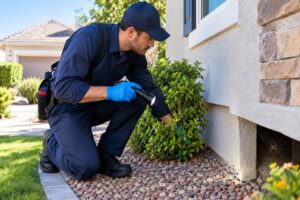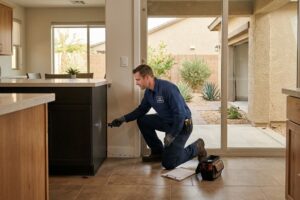

Living in Las Vegas means dealing with more than hot weather and desert conditions. Las Vegas pests can find plenty of food, water, shelter, and entry points around homes, businesses, rental properties, and other buildings. Irrigated landscaping, pools, pet bowls, trash areas, garages, attics, and small gaps around a property can all create opportunities for pest activity.
Common pests in the Las Vegas area include scorpions, cockroaches, ants, spiders, rodents, termites, bed bugs, mosquitoes, bees, wasps, and pigeons. Some are mostly outdoor nuisances, while others can get inside and become harder to manage.
This guide explains the most common Las Vegas pests, the signs to watch for, what attracts them, how they get inside, and when professional pest control may be worth considering.
Why Are Pests Common in Las Vegas?
The desert outside your property may be dry, but your property can provide the food, water, and shelter pests need.
Outside, things like a leaking irrigation line, a pet’s water bowl, a pool, a shaded wall, or an uncovered trash bin can create conditions pests can use. Inside, kitchens, bathrooms, garages, storage areas, and wall spaces can offer food, moisture, and protection.
Common sources include:
- Irrigated landscaping
- Leaking faucets and irrigation lines
- Pools and pool equipment
- Pet food and water
- Trash and food waste
- Garages and storage areas
- Attics and roof spaces
- Gaps around doors, windows, pipes, and walls
The EPA’s integrated pest management guidance recommends identifying pests and addressing food, water, shelter, and other conditions that support pest activity.
Water deserves special attention in Southern Nevada. Keeping irrigation under control and fixing leaks can help reduce damp areas around a property.
What Are the Most Common Las Vegas Pests?
Las Vegas properties can face a mix of desert, structural, indoor, and nuisance pests. The pests you are most likely to encounter depend on the building, landscaping, nearby properties, water sources, and how the space is used.
| Pest | Signs to Watch For | Where You May Find Them |
| Scorpions | Live sightings, shed skins, nighttime activity | Garages, patios, block walls, landscaping |
| Cockroaches | Droppings, egg cases, odors, live roaches | Kitchens, bathrooms, cabinets, utility areas |
| Ants | Ant trails, nests, repeated activity | Kitchens, doors, patios, yards |
| Spiders | Webs, egg sacs, live spiders | Garages, corners, landscaping |
| Rodents | Droppings, gnaw marks, scratching sounds | Attics, garages, walls, kitchens |
| Termites | Damaged wood, discarded wings, mud tubes | Foundations, soil, wooden structures |
| Bed Bugs | Dark spots, shed skins, eggs, live bugs | Mattresses, bed frames, furniture |
| Mosquitoes | Bites, adult mosquitoes, standing water | Yards, containers, drains, pool areas |
| Bees & Wasps | Swarms, nests, heavy activity | Trees, eaves, walls, landscaping |
| Pigeons | Droppings, feathers, nests, repeated activity | Roofs, ledges, solar panels |
| Earwigs | Live insects, recurring activity | Landscaping, garages, damp areas |
| Crickets | Chirping, live insects, recurring activity | Yards, garages, walls, landscaping |
| Silverfish | Live insects, shed skins, damaged paper | Bathrooms, storage areas, closets |
Fleas and flies can also become problems, particularly around pets, food waste, trash areas, and commercial properties.
Correct identification matters. Not every insect or arthropod found around a property is a pest, and identifying the pest is a basic part of deciding what should happen next.

Las Vegas Pests Property Owners Should Watch For
1 Scorpions
Scorpions are one of the pests most closely associated with the Las Vegas area.
They can turn up around garages, patios, block walls, landscaping, and other sheltered areas.
If you keep finding them inside, look beyond the room where you saw one. Check foundation cracks, gaps around doors, roof and attic areas, rock landscaping, storage spaces, and other possible access points.
One scorpion may be an isolated event. Repeated sightings deserve more attention. If scorpions keep showing up, learn more about scorpion control in Las Vegas and what may be attracting them to your property.
2 Ants
Ant trails are easy to spot, but the trail may not be where the problem starts.
You might see ants crossing a kitchen floor while the route begins outside near a door, window, foundation, or irrigation area.
Cleaning up the trail may remove what you see for a while. It does not necessarily address the nest or the reason ants found their way inside.
Look at both sides of the area where you see activity. A trail near a patio door, for example, may connect an indoor food source with an outdoor nest or moisture source.
If ants keep returning, ant pest control in Las Vegas can help identify where the activity starts and what may be keeping the colony going.
3 Cockroaches
Cockroaches are a common structural pest concern in Las Vegas.
A single cockroach does not automatically mean a major infestation. Repeated sightings are more concerning, especially when they happen during the day or in several parts of the property.
Check kitchens, bathrooms, cabinets, appliances, plumbing openings, garages, and storage areas. Look for:
- Droppings
- Egg cases
- Shed skins
- Live roaches
- A musty odor
- Roaches around sinks or appliances
Cockroaches can move through small openings around plumbing, cabinets, doors, and walls. Some species also prefer warm, dry areas, so the problem may not be limited to a kitchen or bathroom.
If you keep seeing roaches after cleaning and removing obvious food sources, the next step is finding where they are coming from and what is allowing them to stay.
4 Spiders
Spiders are common around Las Vegas homes and buildings, especially where insects provide a food source.
You may find webs around garages, outdoor lights, landscaping, block walls, sheds, and other areas with less disturbance.
Look for repeated webs, egg sacs, or spiders in the same areas.
Not every spider requires pest treatment. If you are concerned about a spider, avoid handling it and have it identified rather than assuming every spider is dangerous.
If spider activity keeps returning, spider control in Las Vegas can help identify conditions that may be supporting the activity.
5 Rodents
Rodents can become a problem around homes, businesses, garages, attics, and other buildings.
Look for droppings, gnaw marks, damaged food packaging, nesting material, scratching sounds, or a musty smell in enclosed areas.
Check around garage doors, rooflines, vents, utility openings, plumbing penetrations, and other places where a rodent may get inside.
Do not focus only on removing the rodent you found. Finding and closing the entry point is also part of addressing the problem.
For broader protection around a home, residential pest control in Las Vegas covers rodents along with several other common household pests.
6 Termites
Termites deserve attention because they can cause damage that is not always obvious at first.
Watch for damaged or hollow-sounding wood, discarded wings, mud tubes, or other signs around foundations and wooden structures.
If you suspect termites, an inspection can help determine whether there is active activity and where it may be located.
7 Bed Bugs
Bed bugs differ from many outdoor pests in that they can move with people and their belongings.
Small dark spots, shed skins, eggs, or live bugs can be found around bed frames, mattresses, furniture, and anywhere else people sometimes rest.
If you suspect bed bugs, don’t move infested furniture or personal belongings from one room to another. It can spread the problem.
Because bed bugs can be difficult to find and remove, professional bed bug removal in Las Vegas may make more sense than repeatedly treating only the area where you found one.
8 Mosquitoes
Mosquito problems often start outside.
Standing water around yards, patios, containers, pools, and irrigation systems can create breeding sites.
Check plant trays, buckets, toys, pet-water containers, gutters, pool covers, drains, and other items that can hold water.
A quick walk around the property can help you find small water sources before they become a bigger problem.
If mosquito activity continues, mosquito control in Las Vegas can help identify breeding areas and reduce mosquito activity around outdoor spaces.
9 Bees and Wasps
Bees and wasps are a real concern in Southern Nevada, particularly around active nests and colonies.
Be careful around active nests, swarms, or large numbers of bees near doors and other busy areas.
Do not disturb an unknown nest to determine what type of bee or wasp is present.
If you find a hive or swarm, professional bee removal in Las Vegas is a safer option than trying to remove it yourself. Enviro Guard’s current bee service covers both residential and commercial properties and specifically addresses Africanized honeybees.
10 Pigeons
Pigeons can create problems around roofs, ledges, equipment, and solar panels.
Look for droppings, feathers, nesting material, and repeated activity in the same location.
If pigeons keep returning, the issue may involve a preferred roosting or nesting spot rather than simply the birds themselves.
Pigeon control in Las Vegas can address recurring nesting and roosting problems around residential and commercial properties.
11 Earwigs, Crickets and Silverfish
These pests are generally less significant than scorpions, cockroaches, rodents, termites, or ants, but they can still become a nuisance around Las Vegas properties.
Earwigs may show up around landscaping and damp areas. Crickets can become noticeable around yards, garages, and exterior walls. Silverfish are more often found indoors, particularly around storage areas, closets, bathrooms, and other sheltered spaces.
Repeated activity is worth investigating if you cannot identify where the pests are coming from or why they keep returning.
When Are Las Vegas Pests Most Active?
There is no single pest season in Las Vegas.
Activity changes with weather, food, water, landscaping, construction, and conditions around individual properties.
Spring can bring more outdoor insect activity. During the hottest part of summer, pests such as scorpions, ants, cockroaches, and mosquitoes may become easier to notice.
As temperatures change in fall, some pests may look for protected areas around buildings.
Winter does not mean pests disappear. Some move into garages, attics, wall spaces, and other sheltered areas.
If you are trying to decide whether ongoing service makes sense, our guide to how often you should get pest control in Las Vegas explains why service frequency depends on the pest, property, and level of activity.
How Can You Tell If a Property Has an Infestation?
One pest does not always mean an infestation. Repeated evidence tells you more.
Watch for:
- Droppings
- Gnaw marks
- Nests
- Egg cases
- Shed skins
- Webs
- Damaged food packaging
- Unusual odors
- Scratching or movement sounds
- Repeated sightings
- Activity in several rooms or areas
Location matters too.
Ants near a patio door may be using an outdoor route into the building. Cockroaches around a sink may have access to moisture or plumbing gaps. Rodent evidence in an attic may point to an opening near the roof.
The goal is to work out where the activity starts, how the pest is getting around, and what is helping it stay.
Where Do Las Vegas Pests Get Inside?
Pests do not need a large opening.
Check:
- Door sweeps
- Window screens
- Foundation cracks
- Utility openings
- Plumbing penetrations
- Vents
- Garage doors
- Roofline gaps
- Damaged exterior seals
Once inside, pests can move behind appliances, under sinks, inside cabinets, around plumbing, inside walls, or through garages.
If you find activity near a back door, check the other side of that door too. Landscaping, irrigation, food, moisture, nesting areas, or a small gap may explain why pests are showing up there.
What Attracts Pests to a Las Vegas Property?
Most pest problems come down to four basic needs:
Food. Water. Shelter. Access.
Food can include crumbs, grease, pet food, trash, bird seed, and food left outdoors.
Water can come from leaking pipes, irrigation, pet bowls, planters, pools, and standing water.
Shelter can include clutter, dense plants, wood piles, rocks, wall spaces, attics, and garages.
Access often comes through gaps around doors, windows, pipes, cables, vents, foundations, and roofs.
You do not need to remove every possible source. Reducing several of these conditions can still make your property less attractive to pests.

How Can You Reduce Pest Problems?
Start outside.
Check irrigation for leaks, broken lines, and overspray. Remove standing water from containers, gutters, planters, and other outdoor items.
Inside, clean spills and crumbs, store food in sealed containers, keep trash closed, and avoid leaving pet food outside for long periods.
Then look at the landscaping. Keep plants and debris from creating tight hiding spaces against the building.
Finally, check entry points. Repair torn screens, replace worn door sweeps, seal gaps around pipes and cables, and keep exterior seals in good condition.
DIY Pest Control vs. Professional Help
A small, clearly identified pest problem may be something you can handle yourself.
Cleaning up food, fixing leaks, removing standing water, reducing clutter, and sealing obvious gaps are useful first steps.
Professional help makes more sense when the problem keeps returning, or you cannot work out where the pests are coming from.
Consider an inspection if you find:
- Rodent evidence
- Bed bugs
- An active nest
- Stinging insects
- Property damage
- Activity in several areas
- An unidentified pest
- A problem that continues after basic prevention
The key question is not only, “What kills this pest?”
It is also, “Why is this pest here, and what is allowing it to stay?”
If you’re unsure what you are dealing with, you can schedule a free pest inspection in Las Vegas and have the property assessed before deciding what treatment is needed.
What Should a Professional Pest Inspection Cover?
A useful inspection should tell you more than which product might be used.
First, the pest should be identified. Then the inspection should look at where activity is occurring, possible entry points, signs of nesting or reproduction, and conditions that may be supporting the problem.
Outside, this can include landscaping, irrigation, moisture, debris, harborage areas, and access points.
Inside, the focus may include food, water, shelter, plumbing areas, storage spaces, and other places where pests can hide.
The recommendation should connect the finding to the next step. You should know what needs to be corrected, what treatment may be appropriate, which areas are involved, and whether follow-up or monitoring makes sense.
For homes, residential pest control in Las Vegas is available for recurring and one-time pest concerns. Enviro Guard currently lists scorpions, roaches, ants, spiders, rodents, termites, bed bugs, mosquitoes, and other pests among its residential services.
For offices, restaurants, retail spaces, warehouses, HOAs, and other businesses, commercial pest control in Las Vegas may be a better fit.
Does Every Property Need Recurring Pest Control?
A service schedule should depend on the pest, property, history, surrounding conditions, and what you want the service to achieve.
A home with repeated scorpion activity near landscaped areas may need a different plan from an apartment with one ant trail. A commercial property with recurring pest activity may also need more monitoring than a property with an isolated issue.
There is no reason to choose a monthly plan simply because another property does.
What Is Integrated Pest Management?
Integrated Pest Management, or IPM, uses monitoring, identification, prevention, and control.
In simple terms:
- Identify the pest.
- Find where it is active.
- Look for conditions helping it survive.
- Correct those conditions where possible.
- Use control measures when needed.
- Check whether the problem is improving.
The idea is simple. Treating the pest you can see does not always fix the reason it appeared.
How to Choose a Pest Control Company in Las Vegas
Ask questions before hiring anyone.
Find out what the technician found, where activity is located, what may be attracting the pest, how it may be getting inside, and what areas will be treated.
Ask what happens after treatment too. Some problems need follow-up visits or monitoring. Others may only need prevention and occasional checks.
Licensing is another basic thing to verify. The Nevada Department of Agriculture provides information about Nevada pest-control licensing requirements.
You can also compare expected costs in our guide to Las Vegas pest control prices.
What If You Need Pest Control Right Away?
Not every pest sighting is an emergency.
But some situations need faster attention. Examples include a scorpion inside a home, an active bee or wasp nest near an entrance, rodents inside living areas, or pest activity affecting customers or employees.
For urgent situations, Enviro Guard offers 24-hour pest control in Las Vegas. The service covers homes and businesses and is positioned for same-day and after-hours pest problems.
Need Help With Pests Around Your Las Vegas Property?
If you’re seeing repeated pest activity, finding signs of an infestation, or aren’t sure what you’re dealing with, Enviro Guard Pest Control can help identify the problem and explain your options.
Our technicians can assess your property, look for pest activity and potential entry points, identify conditions that may be contributing to the problem, and recommend an appropriate next step.
Whether you own a home, manage a rental property, run a business, or oversee a commercial building, starting with an inspection can help you understand what is happening before the problem gets worse.
Ready to find out what’s attracting pests to your property?