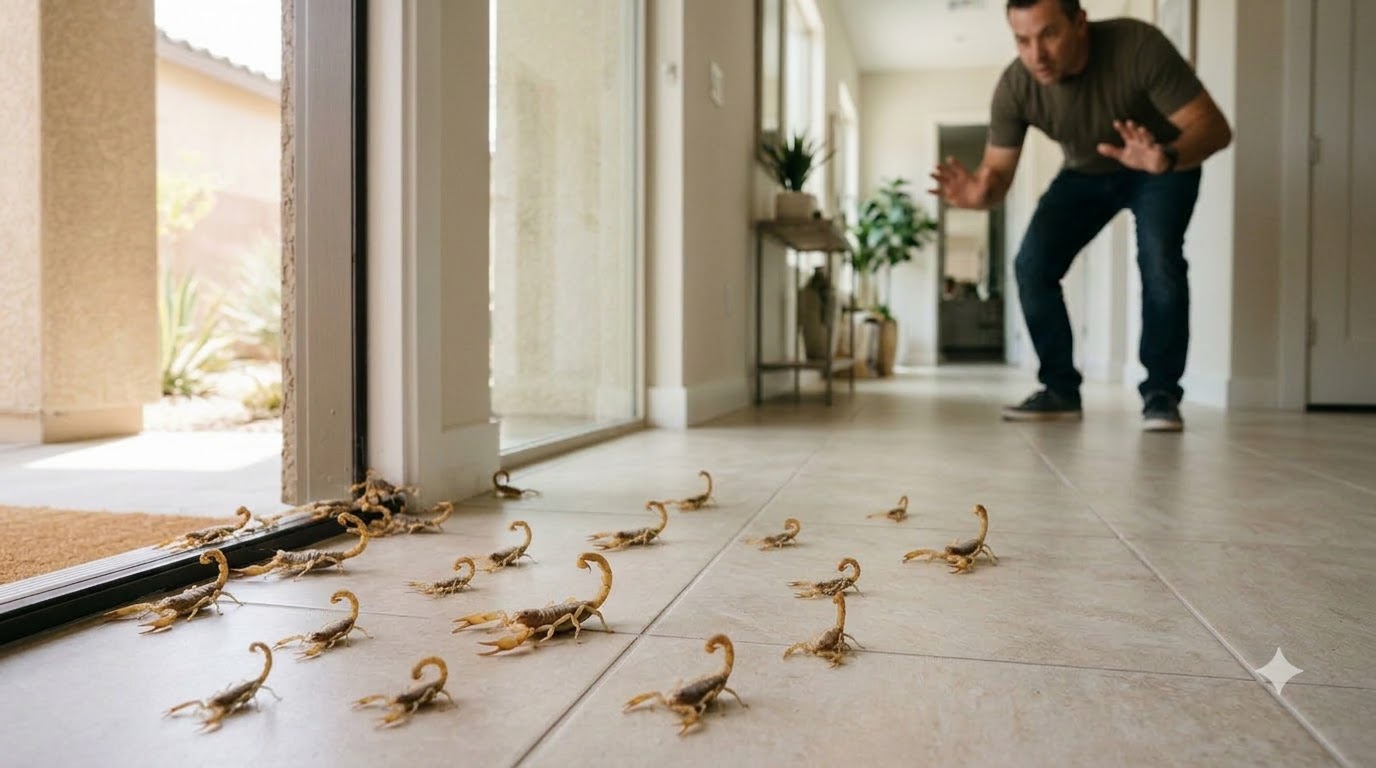
Encountering a scorpion can be scary, especially when you spot one inside your home or nearby. According to the Nevada Department of Agriculture, scorpions are common throughout Nevada. While most species cause only mild reactions, they can still sting if handled, disturbed, or accidentally trapped.
If you come across one, the first thing to do is stay calm, keep your distance, and never try to touch or pick it up. Knowing what to do next can help you avoid a sting and decide whether it’s time to call a professional for scorpion control.
1 Keep Your Distance and Move Children and Pets Away
Do not approach, step on, or attempt to pick up the scorpion. Move children and pets away from the area because they may accidentally touch or disturb the scorpion and get stung. Keep them out of the area until the scorpion has been safely removed.
If you see it near a bed, sofa, shoe rack, or bathroom, avoid reaching into nearby dark spaces. Scorpions have flattened bodies that help them hide in narrow cracks and crevices.
Texas A&M AgriLife Extension confirms that they also shelter under stones, bark, and wood, making them difficult to find once they disappear from view before you have a chance to react.
Tip: Remember where you saw it and check the surrounding area from a safe distance. Its last known location can help you identify potential hiding places if it escapes.
2 Remove It Only If You Can Do So Safely
Suppose the scorpion is on an open floor and easy to see. Do not try to crush or move the scorpion with your hands. Cover it with a sturdy container and slide rigid cardboard underneath. This helps you avoid touching it directly and lowers the risk of a sting.
Do not try to catch it if it is near your body, hiding in a crack, or difficult to reach. If you cannot remove it safely, keep children and pets away and call a pest-control professional.
3 Check the Area Before Using It Again
Once the scorpion has been removed, inspect the immediate area carefully. Check around baseboards, door thresholds, shoes, folded towels, and stored belongings without putting your hands into concealed spaces. If you are in an area where scorpions are common, wear closed-toe shoes and check footwear before putting it on.
If it was found in a bedroom, inspect the bedding and the floor around the bed before going to sleep. Shake out shoes and clothing that have been left on the floor.
Check Nearby Entry Points
- Do not focus only on the exact spot where you saw the scorpion.
- Check the route it could have taken to enter the room, including gaps under doors, openings around pipes, and cracks near baseboards.
- Finding and correcting an entry point can help reduce the chance of another encounter.
What to Check After You Encounter a Scorpion
Removing a scorpion deals with the immediate problem, but it does not explain how it entered your home. Before returning to your normal routine, check the surrounding area and look for possible entry points.
Use this checklist:
- Check the nearest entrance: Check the door sweep, weatherstripping, and any gaps around the door frame.
- Look around plumbing openings: Check visible gaps where pipes enter walls, particularly in bathrooms, kitchens, and laundry rooms.
- Inspect nearby belongings: Check your shoes, towels, bedding, and items on the floor. Look carefully before reaching into dark or hidden spaces.
- Look outside the same wall: Check for cracks, gaps, stored materials, and plants around your home, as these can give scorpions places to hide.
- Record repeated sightings: Note the date, room, and approximate location each time you find a scorpion. This information can help identify a recurring pattern.
Where Do Scorpions Hide in Las Vegas Homes?
Scorpions are generally more active at night. During the day, they often seek shelter in dark, undisturbed places where they can avoid heat and predators.
Common scorpion hiding places in homes include:
| Area | Common hiding spots |
| Garages | Behind boxes, under shelves, along walls. |
| Bathrooms and kitchens | Under sinks, near pipes and appliances. |
| Closets and storage rooms | Inside shoes, clothing, and boxes. |
| Bedrooms | Behind furniture, near baseboards and shoes |
| Laundry areas | Inside cabinets and laundry piles. |
| Cracks and gaps | Around pipes, doors, windows, and baseboards. |
Scorpions are very common around Las Vegas residences because of the desert climate that favors them. The warm weather, dry areas, and outdoor environments provide ideal hiding places for scorpions during the day and mobility at night.
The Nevada Department of Agriculture reports that scorpions are common throughout Nevada. Around 23 scorpion species are known in the state. The bark scorpion (Centruroides exilicauda) is found in parts of the Las Vegas Valley and is the Nevada species considered seriously venomous.
What to Do If a Scorpion Stings You
- Keep a safe distance to prevent another sting.
- Wash the sting site with regular hand soap or mild, fragrance-free soap and water.
- Wrap an ice pack in a clean cloth and apply it to the area for short periods. Never put ice directly on the skin. Seek medical guidance promptly if you are unsure which species caused the sting.
- Avoid unnecessary movement and remove rings or tight jewelry if the sting is on a hand or finger and swelling develops.
- Call 911 immediately if the person develops difficulty breathing, unusual eye movements, uncontrolled muscle movements, excessive drooling, seizures, or other severe symptoms.
Children who are stung should receive prompt medical advice after a sting because they can be more vulnerable to venom. Do not wait for severe symptoms to appear before seeking advice.
You can also contact U.S. Poison Control at 1-800-222-1222 for guidance.
Do not cut the sting site, attempt to suck out venom, or apply a tourniquet. Avoid handling the scorpion to identify it; a photograph taken from a safe distance may be useful if it can be obtained without risk.
How to Prevent Scorpions From Entering Your Home
Preventing scorpions starts with reducing hiding spots and closing the areas they often use to enter. Scorpion safety tips can make your home less attractive to scorpions.
- Seal Cracks and Gaps: Walk around your home and check areas near doors, walls, and utility openings. Sealing cracks helps reduce entry points and keeps outdoor pests outside.
- Keep Garages and Doors Sealed: Check garage door seals, weatherstripping, and door sweeps. Replacing damaged seals helps close common entry areas around your home.
- Remove Outdoor Clutter: Keep stored items away from exterior walls. Remove or organize old wood, cardboard, yard debris or unused equipment. These items can create shelter where scorpions hide.
- Fix Water Problems: Repair leaking sprinklers and avoid leaving wet areas around your yard. Better water control helps reduce insect activity, which can also reduce food sources for scorpions.
- Maintain Landscaping: Keep plants trimmed and remove debris from rock beds. Avoid letting landscaping materials build up against walls because these areas create shelter close to your home.
- Reduce Other Pest Activity: Scorpions feed on insects, so controlling other pests helps reduce their food supply. Our residential pest control in Las Vegas service helps homeowners manage pest issues around their property.
- Check Outdoor Items Before Bringing Them Inside: Inspect shoes, boxes, blankets, and equipment before moving them indoors. Pay close attention to items stored in garages, patios, and outdoor areas.
- Inspect Outdoor Areas at Night: Scorpions are active after dark, which makes nighttime checks useful. The University of Nevada, Reno Extension provides Nevada-specific pest education resources for homeowners. Scorpions also glow under ultraviolet light, which makes them easier to spot during nighttime inspections.
When to Call a Scorpion Control Professional
Professional help makes sense when you see repeated scorpions, find them inside your home, or cannot find where they are entering.
A technician inspection can find scorpion hiding places in homes that are easy to miss during a quick check. Home pest infestation treatment should be selected according to the site, the level of activity, and any safety considerations involving children or pets.
Enviro Guard offers a free pest inspection to identify areas that may be bringing scorpions close to your home.
What to Do Next After Encountering a Scorpion
If you continue encountering scorpions, EnviroGuard Pest Control can help assess the situation and identify potential areas of concern.
Our technicians start with an inspection before recommending treatment. We look at your property first to understand where scorpions hide and how they move around your home.
During a visit, we check:
- Exterior walls
- Landscaping
- Garages
- Entry points
- Areas where scorpions hide
We use what we find during the inspection to recommend scorpion pest prevention steps based on your home.
For ongoing problems, learn more about our scorpion control in Las Vegas service.