
In most places, spiders are just part of the scenery. But in Las Vegas, they show up more often and in greater numbers. Sometimes they even make their way inside homes including bedrooms, living rooms, kitchens, bathrooms, garages etc through gaps, damage and cracks.
Spiders don’t knock, don’t ask, and hide in quiet corners, behind furniture, around windows, and where they can find shelter and safety. They can also leave webs and egg sacs around your home, while some species may bite when disturbed.
That’s why homeowners in Las Vegas often call a spider exterminator for safe removal. However, most people use insecticide spray when they see spiders, but using harmful chemicals isn’t always the first step you need to take.
Because your children, pets, and even indoor plants can suffer from the buildup of toxic residue. Fortunately, with a few simple steps and some local insight, you can protect your home naturally and call in help when the issue becomes too much to handle.
Why Spiders Love Las Vegas
Deserts may seem empty, but they’re buzzing with life, and that includes spiders. The Las Vegas region gives them the perfect balance of warmth, food, moisture, and places to hide.
Here’s what makes local homes so attractive to spiders:
- Constant bug activity: Spiders feed on common pests like flies, ants, and roaches
- Cool indoor temperatures: Your air-conditioned home is better than the desert heat
- Sheltered corners: Basements, garages, attics, and cluttered rooms offer perfect hiding spots
- Outdoor lighting: Bright porch lights attract insects, which attract spiders
Without proper management, a spider or two can turn into a web-covered corner or, worse, an egg sac.
Signs That You May Have a Spider Problem
Most people don’t realize there’s a problem until it’s a big one. Spotting one spider isn’t necessarily a red flag. But spotting patterns is.
Here are a few signs that spiders may be making themselves at home:
- Webs: Not just in the corners of rooms, but in basements, windows, and vents
- Sightings: Regular appearances of spiders, especially in the same areas
- Egg sacs: White, round silk sacs often tucked into hidden spaces
- Shed skins: As spiders grow, they leave behind empty exoskeletons
- Other bugs: If your house has other pests, it may also be spider-friendly
If these signs keep appearing, you may be dealing with a spider infestation in Las Vegas.
Common Spiders Found in Las Vegas Homes
Not every eight-legged pest is dangerous, but it’s best to limit contact, especially with children or pets in the home.
Knowing what you’re dealing with makes a big difference. Below is a table of the most common spiders in Las Vegas
| Spider | Where Found | Risk |
| Black Widow | Garages, sheds, dark corners | Venomous |
| Desert Recluse | Debris, storage areas | Venomous |
| Wolf Spider | Gardens, foundations | Usually low |
| Cellar Spider | Indoor corners, garages | Harmless |
| House Spider | Windows, furniture, garages | Usually low |
| Jumping Spider | Walls, windowsills, plants | Usually low |
| Orb-Weaver | Gardens, fences, shrubs | Usually low |
According to the University of Nevada, Reno Extension, proper pest identification is an important first step in integrated pest management.
That’s why, if you control spider activity long-term, you may need professional help instead of natural ways.
Natural Ways to Keep Spiders Out of Your Home
Keeping spiders away doesn’t have to involve harsh treatments. These natural methods are both simple and safe:
1 Start by Finding Out Why Spiders Are Getting Inside
Before reaching for a spray bottle, look around your home to find places that give entry points, shelter, or food to spiders. You can check gaps around doors, cracks in walls, clutter, etc.
Ask yourself
- Where are you seeing spiders most often?
- Are webs concentrated around windows or doors?
- Are there gaps around the foundation?
- Do insects gather around outdoor lights?
- Is there clutter in your garage or storage area?
- Are plants touching the exterior walls?
- Are window screens damaged?
- Are webs appearing near a particular entry point?
These questions will help you find out why spiders are entering or staying around your home before you start treating them.
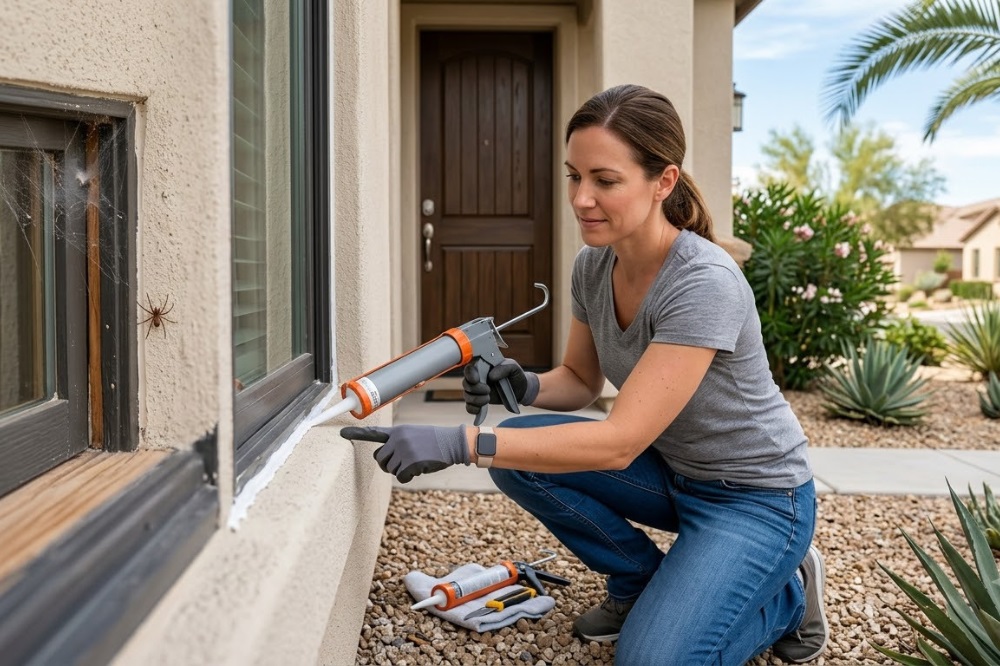
2 Seal Cracks and Gaps Around Your Home
Another practical way to prevent spiders is to make it harder for them to get inside. Usually, they enter through small gaps around doors, windows, pipes, vents, and the foundation.
However, you can reduce these routes by inspecting these areas:
- Window frames
- Door frames
- Foundation cracks
- Utility openings
- Cable and pipe entry points
- Gaps beneath doors
- Garage doors
- Exterior vents
Tip: Do not only look at eye level. Check around the foundation and lower sections of exterior walls too; if you find any gaps or damage, fill or repair it immediately.
3 Vacuum Instead of Spraying
If you find an occasional spider indoors, you do not always need to spray it.
A vacuum can remove:
- Visible Spiders
- Webs
- Egg sacs before they hatch
- Dust & Debris
- Small Insects
If you prefer non-chemical spider control, then vacuuming is a useful option. Because it physically removes house spiders and their webs, giving them a place to remain without spreading insecticide indoors.
By reaching ceilings, garages, and storage areas, it can also pick up egg sacs, dust, and small insects in the same area that may support spider activity.
4 Make Spider Prevention a Routine
One deep cleaning can remove existing webs, dust, and hiding spots of spider presence. But it may not solve the problem permanently.
Create a simple spider prevention schedule
| Frequency | What to Check |
| Weekly | Vacuum webs, check corners, remove food waste, clean insect-prone areas |
| Monthly | Inspect screens, door seals, cracks, garage corners, vegetation, and outdoor lights |
| Seasonally | Clear outdoor debris, check stored items, inspect walls, webs, and egg sacs |
By taking small preventive actions like addressing entry points, hiding places, and food sources, you can control spider pest activity.
How to Keep Spiders Out of Specific Areas?
Outdoor lighting, insects, moisture, and vegetation around your home can attract spiders. Areas such as bedrooms, kitchens, garages, bathrooms, and entryways can then become hiding spots where spiders build webs.
To help keep them out, start by checking areas such as:
- Bedrooms: inspect windows, screens, damage, cracks, and under-bed areas to reduce spider activity
- Garage: reduce clutter, vacuum corners, seal garage-door gaps to remove hiding spots
- Bathroom: check vents, plumbing openings, and screens to avoid pest entry
- Kitchen: Spiders are predators, so reduce insect food sources and seal openings
- Basement/storage areas: reduce clutter and inspect stored boxes to prevent spiders from finding she
When Natural Prevention Isn’t Enough
Natural solutions can prevent infestations, but once spiders have settled in, or if you’re dealing with venomous species, they may not be enough. Consider professional help if you are dealing with:
- Spider activity keeps increasing
- You repeatedly find spiders in several rooms
- Large numbers of webs appear
- Egg sacs are frequently present
- Spiders keep returning despite exclusion and cleaning
- You cannot identify where they are coming from
- You are concerned about a potentially medically important species
Enviro Guard is a Nevada-licensed pest control company in Las Vegas, and the team can help identify where spiders are coming from and what is supporting the activity, rather than simply treating the visible spiders.
By offering targeted, eco-friendly spider treatments, they ensure it is free of risk. Since 2006, they have focused on safe, green methods to remove spiders and keep them from coming back.
They also help homeowners with full pest-proof home inspections to block future entry points, identify early signs, and guide you on preventive care throughout the year.
Final Word
Spiders might be part of the ecosystem, but they don’t belong in your pantry or laundry basket. With the right mix of natural prevention and smart cleanup, you can create a space that’s less attractive to spiders without turning your home into a chemical zone.
If you’re already seeing webs, egg sacs, or creepy visitors on the regular, it may be time to bring in professionals. The Enviro Guard Pest Control team knows the habits of eight-legged pests and how to handle them gently but effectively. Their commitment to clean, chemical-free Las Vegas pest control services makes them a go-to for families looking for peace of mind.