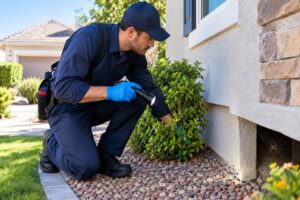

A pest control schedule that works for a home in another part of the country may not make sense for a Las Vegas property. Desert heat, irrigated landscaping, pools, block walls, garages, and nearby undeveloped areas can all create places for pests to find food, water, or shelter.
For many homes, quarterly service is a practical starting point for prevention. But repeated scorpion activity, roaches, mosquitoes, rodents, or other ongoing problems can change that. Here is what to consider before deciding how often your property needs service.
Start With the Right Service Frequency
For many Las Vegas homes, quarterly service is a reasonable starting point for general prevention. That means having the property checked and treated about every three months.
But quarterly service is not a rule for every property. A home with repeated pest activity may need monthly or every-two-month visits. An isolated problem may only need one treatment.
The goal is to match the service frequency to the pest and the property.
| Schedule | When it may make sense |
| Monthly | Pest activity keeps returning, or pressure is high |
| Every two months | Activity returns but does not require monthly visits |
| Quarterly | General prevention with lower pest activity |
| One-time | An isolated pest problem |
1 Monthly Pest Control
Monthly service may make sense when pests keep returning or the property has conditions that support ongoing activity.
A home with repeated scorpion sightings is different from one that occasionally finds a spider in the garage. Commercial properties may also need closer attention because of food, moisture, deliveries, waste, and daily traffic.
Monthly service is not automatically better. The property still needs to support the recommendation.
2 Every Two Months
Every-other-month service can fit properties where quarterly visits are not quite enough, but monthly treatment may be more than necessary.
It can provide more frequent checks without putting every property on a monthly schedule.
3 Quarterly Pest Control
Quarterly service can work well for many properties with low pest activity and few conditions that attract pests.
It gives the property regular attention while leaving room to change the schedule if activity increases.
4 One-Time Pest Control
One-time service may be enough for an isolated problem.
For example, you may find ants around one entry point or spiders gathering in a garage. If there is no sign of continuing activity, recurring service may not be needed.
An established infestation is different. Some problems require follow-up treatment or monitoring.
Look at What Makes Your Property Different
The Mojave Desert is hot and dry, but irrigated properties can create attractive pockets of water and shelter for pests.
A yard with regular irrigation can provide moisture. Pools, leaking faucets, irrigation overspray, and drainage problems can create additional sources of water. Landscaping, rock beds, block walls, garages, patios, and storage areas can give pests places to hide.
Nearby undeveloped areas can also affect a property’s pest pressure.
Entry points matter too. Gaps around garage doors, windows, pipes, vents, and other parts of a building can give pests a way inside.
Enviro Guard’s Las Vegas service specifically points to desert heat, irrigated landscaping, and nearby undeveloped areas as conditions that can create opportunities for pest activity.
That is why two homes in the same neighborhood may not need the same service schedule.

Know What Can Change Your Service Schedule
Several factors can change how often a property needs professional pest control.
- Pest activity: Seeing one pest occasionally is different from finding them every few days.
- Type of pest: Scorpions, roaches, ants, mosquitoes, rodents, spiders, and bed bugs have different habits and treatment needs.
- Property size: Larger homes, rental properties, HOAs, and commercial buildings have more areas to inspect.
- Landscaping: Dense plants and vegetation close to the structure can create shelter for pests.
- Moisture: Leaks, standing water, poor drainage, and irrigation overspray can support pest activity.
- Food sources: Pet food, trash, food waste, and poorly stored food can attract pests.
- Entry points: Gaps around doors, windows, garages, vents, and utility openings can give pests access.
- Past activity: A property with repeated pest problems may need closer attention than one with little history.
A home where scorpions repeatedly enter through exterior gaps is a different situation from a home with an occasional spider in the garage.
A restaurant with recurring roach activity is different again. Food storage, drains, deliveries, waste areas, and daily operations can create conditions that do not exist at most homes.
Consider the Pest Before Choosing a Schedule
The pest itself can change how often professional service makes sense.
- Scorpions: Repeated sightings can point to exterior hiding areas or entry points that need attention.
- Roaches: Food, moisture, hiding places, and entry points can contribute to recurring activity.
- Ants: Food sources, entry points, trails, and colony activity can all affect how long the problem lasts.
- Spiders: Outdoor hiding areas and the insects they feed on can affect activity around the property.
- Mosquitoes: Standing water, irrigation, and drainage can affect outdoor activity.
- Rodents: Entry points, food, shelter, and nesting areas need to be considered. Exclusion may be part of the solution.
- Bed bugs: Bed bug treatment is different from routine preventive service. Follow-up depends on the infestation and treatment method.
There is no fixed number of visits that works for every pest.
Watch for Signs Your Current Schedule May Need to Change
Your current schedule may need to change if you notice:
- Pests between scheduled visits
- Activity returning soon after treatment
- Droppings or nesting material
- Pests appearing in several areas
- Repeated indoor activity
- Pests entering through visible gaps
- Activity returning in the same location
- DIY treatments only helping temporarily
One sighting does not automatically mean you need monthly service.
A repeated pattern matters more. If the same pest keeps showing up in the same area, it is worth finding out why.
Don’t Assume Winter Means the Problem Is Gone
Cooler weather can change pest behavior, but it does not automatically end pest problems.
Some pests may become less active outdoors. Others may seek shelter around buildings or inside protected areas.
Your pest, property, and activity level should guide the decision rather than the season alone.
Reduce Pest Problems Between Visits
Professional treatment is only one part of pest prevention. Between visits, you can:
- Fix leaking faucets and irrigation lines.
- Remove standing water.
- Keep food in sealed containers.
- Store pet food properly.
- Keep trash contained.
- Trim plants away from the structure.
- Repair damaged screens.
- Seal gaps around doors and windows.
- Reduce clutter around garages and storage areas.
- Fix irrigation overspray and drainage problems.
These steps fit the basic idea behind Integrated Pest Management, or IPM.
The University of Nevada, Reno Extension recommends identifying and monitoring pests before choosing control methods. Its IPM guidance combines prevention, sanitation, physical controls, biological controls, and chemical controls based on the situation.
That is why pest control should not simply mean spraying on a fixed calendar. The pest and the conditions around the property should help determine what happens next.
See How Enviro Guard Builds Your Service Plan
Enviro Guard Pest Control has served Las Vegas since 2006. Its current service process starts with inspecting the property to find pest activity, entry points, and conditions that may be helping the problem continue.
Its residential service page says plans are based on the property type, pest activity, problem areas, and specific needs. The company also describes treating the property’s full footprint and addressing areas where pests hide or enter.
A home with low pest activity may be suited to quarterly prevention. A property with repeated activity may need closer service. An isolated problem may only need one visit.
The service plan should follow what the inspection finds, rather than putting every Las Vegas property on the same schedule.
Learn more about residential pest control in Las Vegas
Get a Clear Recommendation for Your Property
Not sure whether your property needs monthly, quarterly, or one-time pest control?
Our technicians can help identify pest activity, entry points, problem areas, and conditions that may be contributing to the problem.