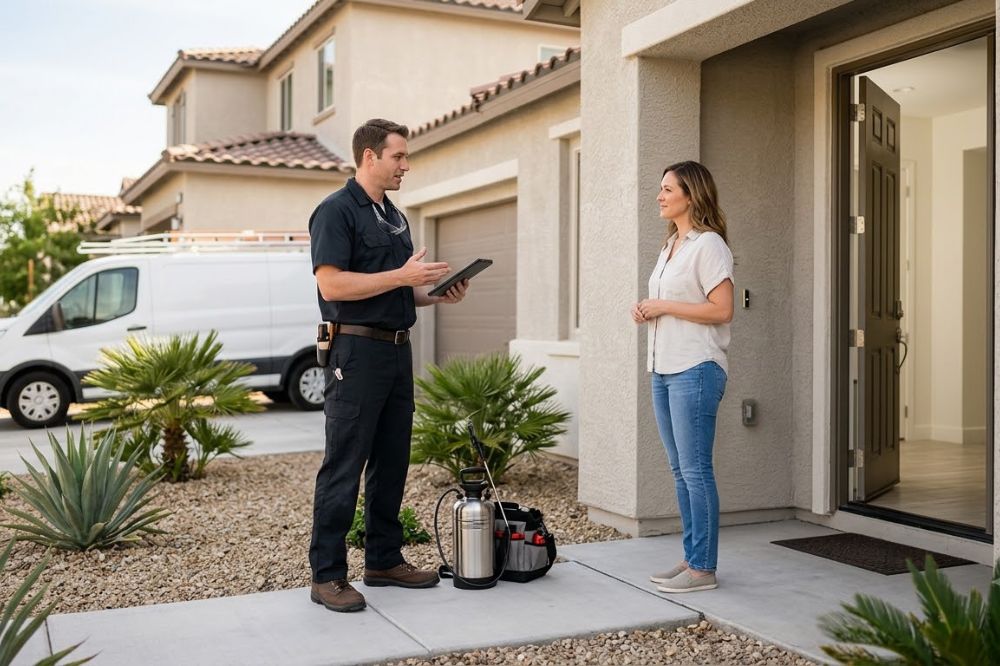
You can go back inside after pest control when the required waiting time has passed and it is safe to return. Some products require treated surfaces to dry first, while other treatments have different safety rules. There is no single waiting time for every pest control service.
The product being used, how it is applied, and which areas are treated all affect when you can return. Following the right pest treatment precautions helps you prepare your home and avoid disturbing treated areas.
What Affects Your Return Time After Pest Control?
The safe waiting time depends on the treatment, not just the pest being treated. Product instructions, application methods, and treated areas all matter.
1 The Product and How It Is Applied
Different pest control products have different safety rules. Treating a small crack or gap is different from applying a product across a larger surface.
Before treatment, ask which areas will be treated and when you can use them again. The product label provides important directions, including any restrictions on when people can return.
Do not use the waiting time from another treatment as a guide. Even two services for the same pest may have different safety requirements.
2 Whether Treated Surfaces Need to Dry
Some treatments require surfaces to dry before people or pets can touch them. Drying time depends on the product, how it was applied, airflow, and indoor conditions.
Follow the instructions for the treatment before letting children or pets back into those spaces. Avoid cleaning, wiping, or washing treated surfaces until you know it is safe to do so.
A surface that feels dry is not always ready for normal use. Check the treatment instructions before cleaning, moving furniture, or using the treated room again.
3 Children, Pets, and Sensitive Household Members
Children and pets may touch floors, toys, furniture, and other surfaces. This makes it important to plan treatment around their daily routines.
Tell your pest control provider about young children, pets, and anyone in your household with asthma, allergies, or other health concerns before treatment begins. Ask which precautions apply to your service.
Find out when children and pets can return and how to handle items such as pet bowls, toys, and bedding.
What Should You Do Before Going Back Inside?
Before returning, make sure the required waiting time has passed and follow any other steps given for your treatment. Knowing which areas were treated and what needs attention can help you prepare.
1 Check the Re-Entry Instructions
Before treatment, confirm when you can return and whether any rooms or surfaces need extra care. The instructions depend on the product and how it was applied.
If you are unsure whether a room is ready, contact your pest control provider before entering or using that area.
For general advice on pesticide safety, read the US Environmental Protection Agency’s pesticide safety tips. Always follow the instructions for the product used in your home.
2 Ventilate Only When Instructed
Some treatments require fresh air before a room can be used again. Others have different rules.
Follow the directions given for your treatment. Do not assume you should open windows or use fans unless instructed. Fresh air does not replace a required waiting time.
A lack of chemical smell does not mean a room is safe. Some products have little or no noticeable smell.
3 Protect Food, Toys, and Household Items
Before treatment, follow the instructions for protecting food, dishes, toys, pet bowls, and other household items. Ask which steps apply to the areas being treated.
After treatment, do not wash treated surfaces unless instructed. Cleaning too soon could remove the product from areas where it needs to work.
If an item may have come into contact with a pesticide, ask how to handle it safely. These pest control safety precautions after treatment can help you understand what to do before using treated areas again.
How Long Should You Wait After Different Pest Treatments?
The type of pest helps determine the treatment used, but it does not set the waiting time. The product instructions and how it was applied determine when you can return.
1Ants, Cockroaches, and Spiders
For ants, cockroaches, and spiders, treatments usually aim at cracks, gaps, openings, and hiding spots of the pests.
Take note of the directions for treatment and wait for the drying of surfaces according to the requirements of the treatment. Do not wipe off any residues from the treated surface unless directed to do so.
If you continue to see pests after service, note where and when they appear. This information can help your provider assess the problem and decide whether further attention is needed. You can also learn about common household pests in Las Vegas to better understand the pests found around local homes.
2 Bed Bug Treatments
Options for bed bug treatment include targeted products, heat, or both. Every type has its own safety guidelines to follow.
Make sure you know when the room is available for use again and whether any bedding, clothing, or other items will need additional handling. Just because the appointment has finished doesn’t mean the room is safe to enter.
Follow the instructions before moving belongings back or sleeping in the bed. If you are unsure whether an item needs cleaning, ask your pest control provider.
3 Rodent Treatments
Rodent control may use traps, bait stations, or other methods. Children and pets must be kept away from equipment and materials used for control.
Follow the safety instructions for the treated areas. Do not move or handle bait stations unless you have been told how to do so safely. If a station is damaged or moved, contact your provider for advice.
4 Outdoor Pest Treatments
Outdoor treatments may cover areas around foundations, patios, lawns, and other parts of your property. The safety rules can differ from those for indoor treatments.
Check when people and pets can return to treated areas. You may also need to delay watering or other outdoor activities, depending on the product used.
In Las Vegas, irrigation, watered plants, and gaps around doors or utility lines can affect pest activity around a home. Understanding these local conditions helps homeowners prepare for treatment and address possible entry points. Learn more about how the Las Vegas climate affects residential pest control needs.
5 Fumigation
Fumigation is much stricter in terms of safety measures as compared to other conventional methods of treating pests. One cannot go into the structure until it has been properly checked by the certified team conducting the fumigation.
A set number of hours is not enough to prove that a building is safe. Wait for official clearance and follow every instruction from the fumigation team. An open door or the lack of a chemical smell does not mean it is safe to return.
Preparing Your Las Vegas Home for Pest Control
Good preparation starts with knowing where pests have been seen and which areas need attention. Before treatment, point out where you have noticed pest activity and any gaps or openings where pests may be entering.
In Las Vegas, irrigation near foundations, watered plants, and gaps around doors or utility lines are useful details to check. These conditions can affect pest activity around a home.
Ask which items need to be moved or covered and whether you need to leave the property during treatment. Find out what must happen before you can return, and keep the instructions handy so everyone in your household knows what to do.
What About Follow-Up Pest Treatments?
Some pest problems need more than one visit. The need for follow-up depends on the pest, the treatment used, and the activity found after service.
Each visit may have its own safety instructions, so do not assume the waiting time or preparation steps will be the same every time. Ask your provider what to expect after each treatment and whether any additional precautions apply.
In case you are considering continuous service, talk about the schedule of your treatment and what to expect between services. The idea is to solve the pest problem without violating the safety guidelines of each service.
When Should You Contact Your Pest Control Provider?
Contact your provider if the safety instructions are unclear, you do not know whether a room is ready, or you need advice about food, bedding, toys, or pet items that may have been exposed.
You should also ask for help if a treated area has been disturbed or a bait station has been damaged. Do not move equipment or clean the area without the right advice.
If someone feels unwell after possible contact with a pesticide, move away from the source if it is safe to do so and seek medical advice. For severe symptoms, call emergency services. Keep the product label or treatment details available if possible.
Get Clear Advice Before Returning Home
The safe time to return after pest control depends on the product, how it was applied, and the instructions for that treatment. There is no single waiting time for every home. The lack of a chemical smell does not prove that an area is safe.
Enviro Guard Pest Control is locally owned and operated and has been serving Southern Nevada since 2006. We are Nevada-licensed and insured, and we help homeowners understand their pest problems and the safety steps needed for their service.
Find out more about our residential pest management services and call 702-569-2849 to discuss your pest control needs.