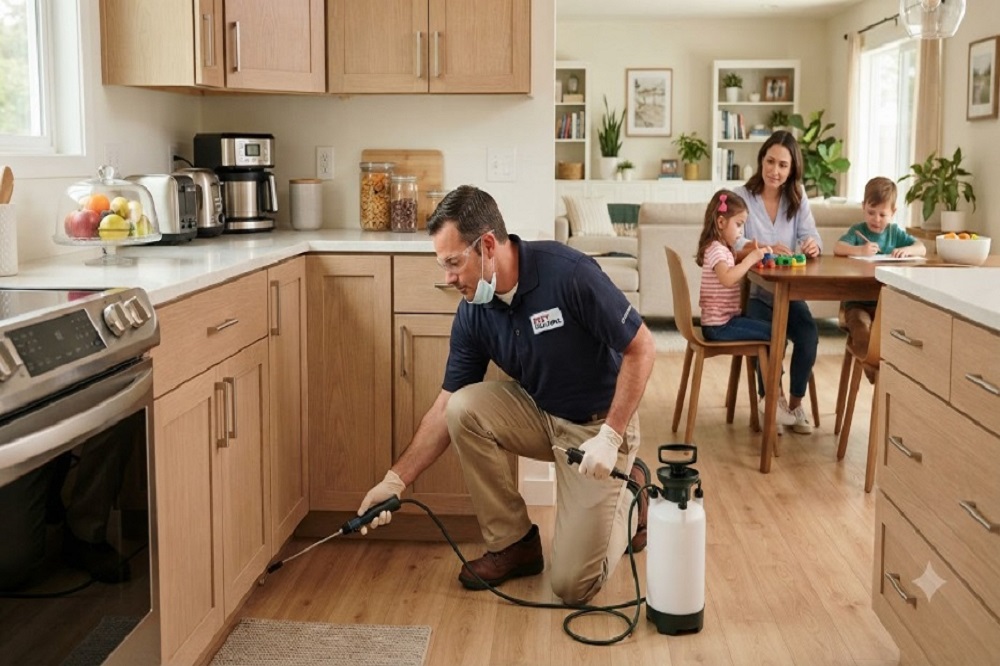
Prior to pest control treatment, the best preparatory action can be simple. Put away all open food or plates, make room for inspection by our technician, and inform us of any children or pets in the house. During the process, give our technicians space to work and keep household members away from areas where they perform treatment. After that, follow instructions on re-entry into the treated area.
Everything depends on what pests need to be treated for and which area of the property we treat.
Preparations for pest control in the kitchen with cockroaches will differ greatly from a garage where we catch rodents, bedrooms with bedbugs, or yards with scorpions.
All this pest control precaution information is based on the conditions we encounter in our residential pest control services in Las Vegas.
Why Preparation Matters During a Pest Control Visit
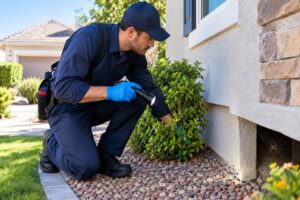
As soon as our professionals reach a property, it is essential to identify the source of any activity before beginning treatment. A jammed cabinet, congested corner of a garage, or pieces of furniture blocking a wall will hinder the inspection process.
We commonly check areas such as:
- Baseboards and wall edges
- Under sinks and around plumbing
- Kitchen cabinets and appliances
- Garage edges and storage areas
- Door thresholds and utility openings
- Bedrooms and furniture involved in the service
- Exterior walls and accessible landscaping
Preparation is not about moving everything in your home. It is about giving the technician access to the areas connected to the pest problem.
What to Do Before Our Technicians Arrive
The preparation we suggest varies from service to service, but here are some things that we consistently ask our customers to do prior to our arrival.
1 Put Away Food and Cooking Items
If the food, ingredients, dishes, and utensils are within the area to be treated, then they need to be stored or covered.
It is common to come into contact with various kitchen areas while inspecting them. Getting rid of the food or other kitchen items will help us have enough space to inspect those areas.
The EPA recommends removing or covering food during pesticide applications.
2 Move Children’s Items From Treatment Areas
Children’s belongings such as toys, play-mats, and soft toys should be removed from the areas to be treated.
This is important when the area to be treated is the floor, low areas, bedrooms, etc.
3 Keep Pet Areas Accessible
Before we start, let us know where your pets normally eat, sleep, and spend time.
Move pet bowls, bedding, toys, and other items away from the treatment area when instructed. Dogs, cats, birds, reptiles, fish, and other animals may require different precautions depending on the service.
4 Clear the Areas We Need to Inspect
The home preparation for pest control involves allowing our technicians access to the areas that will be under study. Please ensure that you remove any obstacles such as boxes, bags, furniture, etc., which might be obstructing the baseboards, cabinets, sink, garage, or access points.
5Tell Us Where You Found the Problem
Firstly, the question that needs answering before making a request is: where did you find this pest? Describe the room, location, and what you found there. For example, homeowners may observe cockroaches in their kitchens next to a sink, scorpions near the entrance to the garage, ants on the wall, and rodents in the storeroom. Such data will be useful to our experts during the inspection.
6 Mention Household Concerns Before Treatment
Remember that it is important to let the technician know if there are any kids, pets, allergies, or even areas of sensitivity involved.
It can also be beneficial to discuss the attempts made before to solve the issue on your own, whether it is the pests or the chemicals that you may have used.
7 Check Any Pre-Service Instructions
If you received specific instructions before the appointment, follow those directions.
The safe use guidelines by the National Pesticide Information Center recommend that people follow the directions on the pesticide labels and remove their personal effects, such as toys, clothes, and equipment, from the areas that are to be sprayed. The requirements for one application do not imply those of others.
What Happens During the Visit?
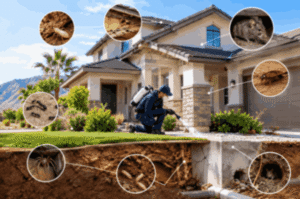
As we begin the inspection process, our team will proceed to enter the areas connected with the activity. We will search for the presence of the pest, factors that promote its occurrence, harborage areas, and means by which the pest gains access to the area. This inspection will be customized according to your site’s needs.
Your role in the process is very easy. All you need to do is allow access to the specified areas without household activity interfering with the process.
If you recall another area that was infested with pests during your visit, then tell us. Even small bits of information from the homeowners often help us get an idea of the distribution of the activity.
Before leaving, ask questions regarding follow-up actions.
What Should Children and Pets Do During Treatment?
This is one area where homeowners should follow the technician’s instructions rather than rely on a general rule.
During an active treatment, children should stay away from the areas where the technician is working. Pets should also remain away from those areas.
For pets, tell us what animals live in the home and where they are normally kept. A dog that spends time in the backyard presents different considerations from a fish tank inside the home or a bird kept in a room being treated.
The EPA advises keeping children and pets away from treated areas according to the applicable product directions and applicator instructions.
When Can You Return to the Treated Area?
There is no single waiting time that applies to every residential pest-control service.
Re-entry will depend upon the nature of treatment, the substance applied, the method of application, and the site. In case there is any requirement that people/animals should avoid entry into the site, the pest control technician will inform you about the same.
For professional pest control, you can always ask about the timing of re-entry before the service is over if there is some confusion regarding any particular room or outdoor area.
Do not go by a general two- or four-hour rule because the treatment process varies every time.
What Should You Do After Treatment?
Once the technician gives you the applicable instructions for using the treated areas, there are a few things worth keeping in mind.
1 Leave Treated Areas Alone as Instructed
Don’t rush to clean, wash, or remove any treatments from the surface unless you are instructed to do so.
This will hinder the processes already done if you clean it at an early stage.
2 Return Stored Items
As soon as everything is prepared for normal usage, put all your stuff that has been moved prior to the treatment process back where it belongs.
Remember to inspect everything that had been kept near the treatment location before moving it again.
3Pay Attention to Where Activity Continues
In case you observe any signs of pests after service, please take note of their location.
Our technicians need to know this information in case we have another visit or communication between us. Location and kind of activity are important pieces of information when considering future action.
4 Keep Your Service Instructions
Remember all the instructions and information that come your way during your visit. When you have doubts regarding any of the treated areas, these notes come in handy.
5 Get Help for Accidental Exposure
In case an accidental exposure to a pesticide occurs, you should follow the instructions for first aid on the pesticide label. If you are in the U.S., Poison Control can help you for free and anonymously by calling 1-800-222-1222.
Why Precautions Differ by Pest
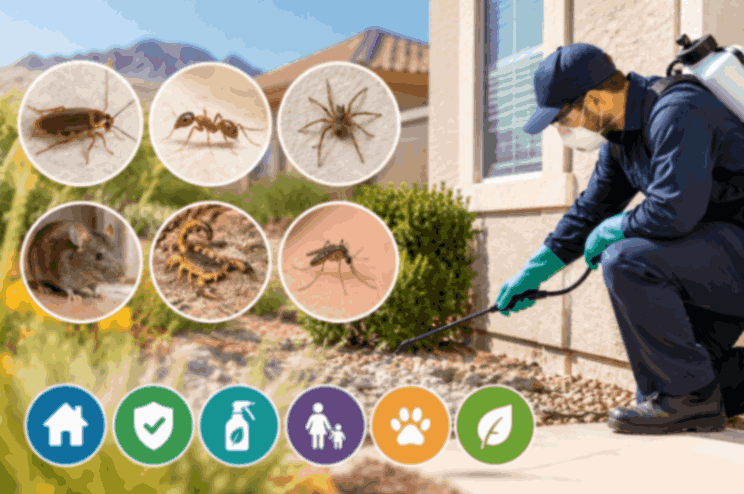
It is because our technicians handle all types of pests differently since they differ from one property to another.
- Cockroaches: Inspections usually involve looking into kitchens, plumbing areas, cabinets, appliances, and other hidden spots where activity has been observed.
- Ants: Follow activity leading to food sources, moisture, points of entry, walls, and outside areas.
- Scorpions: For Las Vegas homes, inspections may involve looking around garages, block walls, door jams, landscaping, and other hidden outside areas.
- Bed Bugs: Inspection will primarily involve bedrooms, furniture, sleep areas, and other designated areas within the treatment plan.
- Rodents: Garages, attics, storage areas, walls, and possible points of entry are inspected.
- Mosquitoes: Outside inspection involves looking at yards, shady areas, landscaping, and any areas where water collects.
- Outside treatments: Since the treatment is done outside, the issue of accessibility and getting people and pets out of the treated area is critical.
The pest tells us where to look. The treatment method then determines what preparation and safety instructions apply.
Questions to Ask Your Technician
Before the technician leaves, make sure you understand the instructions that apply to your service.
- Which areas were treated?
- When can people and pets use those areas again?
- Are there surfaces that should not be cleaned yet?
- Does anything need to remain moved after treatment?
- What should I watch for after today’s service?
- What should I do if I continue seeing pest activity?
Common Mistakes We See Homeowners Make
A few preparation mistakes come up regularly during residential visits:
- Leaving food or dishes exposed in an area being treated
- Blocking the areas the technician needs to inspect
- Leaving toys or personal items in the treatment area
- Forgetting to mention where pest activity was first noticed
- Moving items back before the area is ready
- Cleaning treated surfaces without checking first
- Using another pesticide without discussing it with the technician
- Assuming the instructions from an older treatment still apply
It is easy to prevent these issues if the homeowner knows what the technician requires before his arrival.
Final Thoughts
Effective preparation will involve the areas in which pest activity is being monitored. Ensure that access is easy, protect your home possessions as advised, point out to the technician what you have noticed, and let them do their job effectively.
At Enviro Guard Pest Control, our technicians use what they find during the inspection to determine the appropriate next steps for the home. If you are dealing with pest activity in Las Vegas, we can inspect the property, explain what we find, and walk you through what to expect from the service.