Residential pest control focuses on keeping homes free from pests, while commercial pest control helps businesses protect staff, customers, food, and goods. The main difference is how pest control is planned for each type of property. In Las Vegas, heat, watered gardens, and easy access to water can attract pests to both homes and businesses. Understanding these differences helps you choose the right service for your property.
What Is Residential Pest Control?
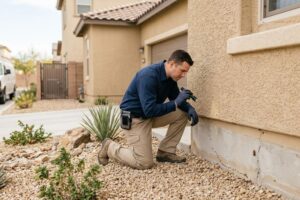
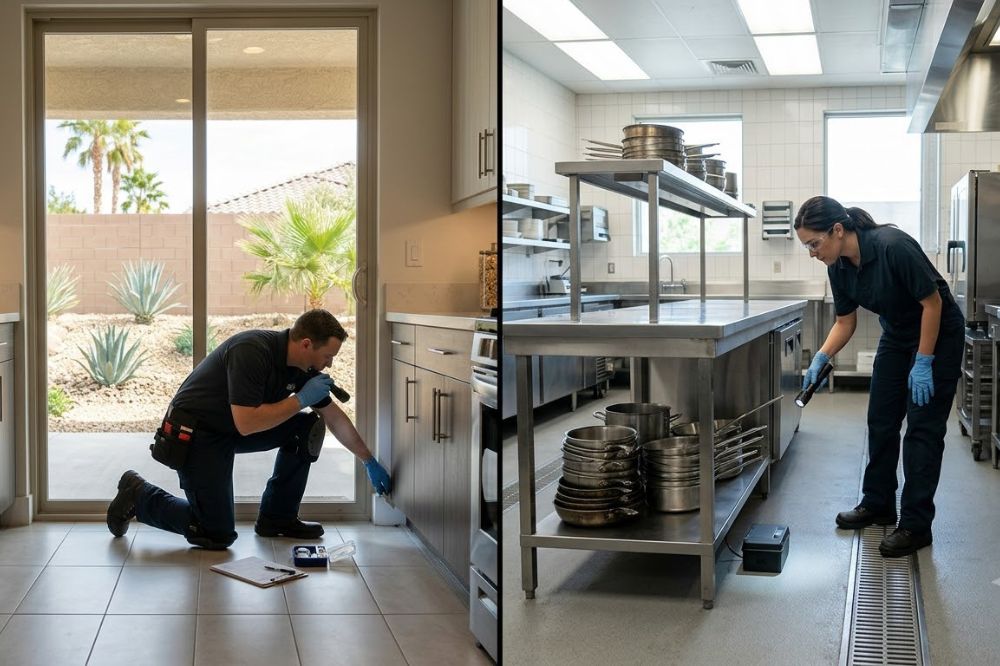
Residential pest control helps homeowners deal with pests inside and outside their homes. We look at which pests are present, where they hide, and what may be attracting them.
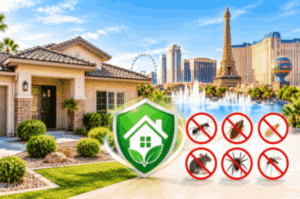
Common pests in Las Vegas include ants, cockroaches, scorpions, spiders, mice, rats, and mosquitoes. These pests may be attracted to the house by pet food, leaking water pipes, garden plants, and gaps between doors.
Before proceeding with treatment, we check:
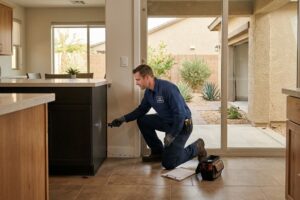
- Indoor areas: Kitchens, bathrooms, garages, and storage spaces.
- Outdoor areas: Patios, walls, gardens, and areas around the home.
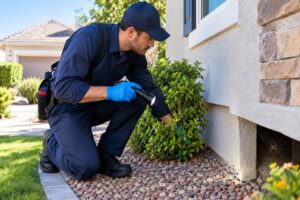
- Entry points: Gaps around doors, windows, pipes, and vents.
- Food and water: Crumbs, leaks, pet bowls, and standing water.
For example, ants may enter a kitchen to find food. Scorpions near a garage may be getting inside through gaps around the door.
Learn how residential pest inspection services address pest problems caused by the Las Vegas climate.
What Is Commercial Pest Control?
Commercial pest control helps businesses deal with pests in offices, restaurants, shops, hotels, warehouses, and other work areas.
Pests can spoil food, damage goods, and disrupt daily work. They can also cause concern for staff and customers. Food businesses must take extra care to keep food areas clean and follow the rules that apply to them.
When planning pest control for a business, we check:
- Problem areas: Kitchens, stockrooms, loading bays, and trash areas.
- Business hours: When work can be done with less disruption.
- Deliveries and goods: Where items enter and how they are stored.
- Pest activity: Where pests have been seen or may be hiding.
For example, a restaurant may have pest problems near food storage areas, drains, or trash bins. A warehouse may need checks around loading doors and stored goods.
We recommend a plan based on the pest problem and the needs of the business.
Residential vs. Commercial Pest Control: Key Differences
Both types of pest control deal with pests, but the plan depends on the building and how people use it.
| Factor | Residential Pest Control | Commercial Pest Control |
| Property type | Single-family homes, apartments, condos, rental properties, and new homes | Offices, shops, restaurants, hotels, and warehouses |
| Main concerns | Family members, pets, and living areas | Staff, customers, food, and goods |
| Common pests | Ants, scorpions, spiders, cockroaches, rodents, mosquitoes, bed bugs, and termites | Ants, cockroaches, rodents, and flies |
| Treatment plan | Based on the home, pest activity, entry points, and household needs | Based on the business, affected areas, pest activity, and daily operations |
| Scheduling | Planned around household routines and treatment needs | Planned around business hours and operational needs |
| Prevention | Food storage, sealing entry points, moisture control, and outdoor care | Cleaning, waste control, sealing entry points, and building checks |
| Follow-up | Depends on the pest problem and service plan | Depends on the pest problem and service plan |
Some properties need both types of care. A large apartment building may need checks in shared spaces. A small office may only need a few areas checked. The right plan depends on the building and the pests found.
How We Handle Pest Control
At Enviro Guard Pest Control, we look at the pest problem and the areas affected before making recommendations. Our approach has three main steps.
1 Find the Pest
We check where pests have been seen and look for signs of what may be causing the problem. We also look for gaps, food, and water that may attract them.
2 Choose the Right Treatment
Our recommendation for treatment will be dependent upon the pest and the affected area. For homes, we take into account the occupants and pets in addition to label safety instructions. At businesses, we factor in areas used by employees and patrons.
3 Help Stop Pests from Returning
We outline easy ways to avoid future pest infestations. It could mean sealing gaps, proper storage of food, repairing water leaks, and ensuring the cleanliness of trash receptacles. Return visits will be based on the pest situation.
The US Environmental Protection Agency’s guide to Integrated Pest Management explains how checks, prevention, and pest control methods work together.
Common Pests in Homes and Businesses
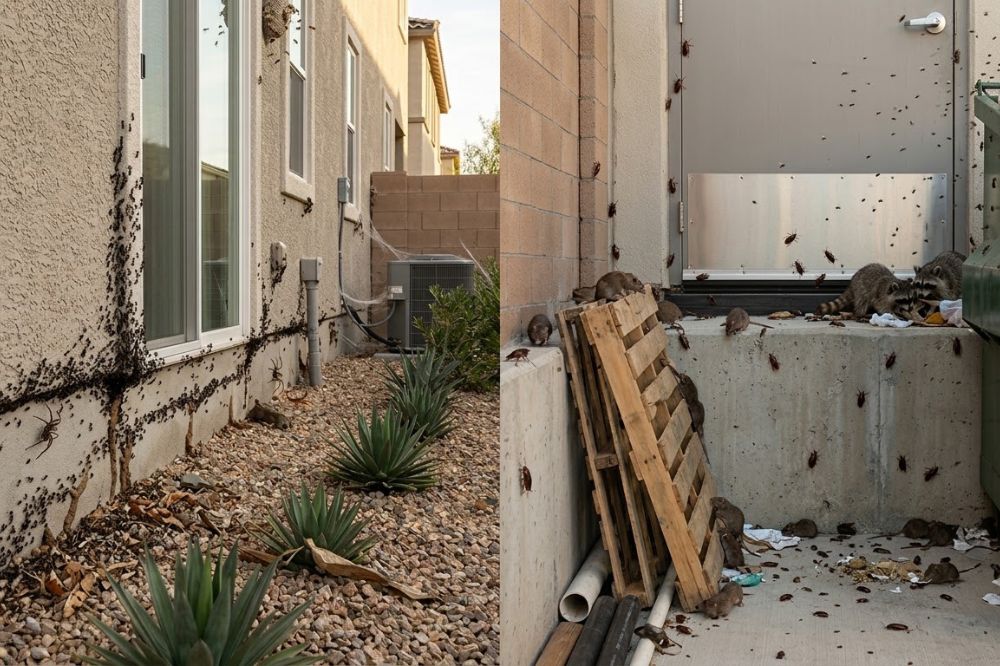
Some pests affect both homes and businesses. Where they hide and the problems they cause often depend on the building.
1 Ants
Ants are generally found on kitchen counters, on crumbs, and in pet dishes. In business premises, they can be attracted by food spills and garbage. We pay more attention to the area where we find the ants and the source that attracts them.
2 Cockroaches
Cockroaches tend to stay out of sight near appliances, pipes, and drains. In businesses, food preparation areas and rubbish storage can also provide places for them to hide. We use the signs we find to guide our treatment plan.
3 Rodents
Signs such as feces, bite marks, and wall activity could indicate the presence of mice or rats. Within homes, areas such as the garage and storage cupboard are inspected. In business premises, particular care is taken to examine stockrooms and points of delivery.
4 Scorpions and Spiders
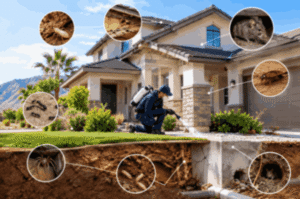
Throughout Southern Nevada, we inspect for scorpions and spiders within garages, block walls, rock beds, and outside storage. We look for openings that might provide entry points for these pests inside your home. Our strategy is to find their sources and means of entry.
5 Mosquitoes and Flies
Standing water around gardens and outdoor spaces can provide breeding sites for mosquitoes. Flies are more often drawn to rubbish bins and food waste. We assess these areas and recommend steps to address the conditions that attract each pest.
See our guide for more information on residential and business pest prevention.
Why Property Type Matters in Las Vegas
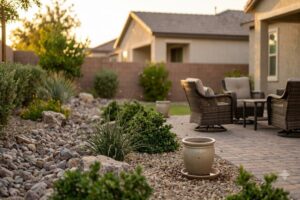
Las Vegas has a dry climate, but pests can still find water and shelter around buildings. Watered gardens, shaded spots, and leaking pipes can attract them.
Small gaps around pipes, garage doors, and building walls can let pests inside. At businesses, loading doors and delivery areas may also give pests a way in.
Homes can have different needs, too. A detached house may have different pest problems from an apartment or condo with shared walls and common areas. Read our article on condo vs. house pest control to learn more.
How to Choose a Pest Control Service
Before choosing pest control for homes and businesses, ask these questions:
- Experience: Has the company handled your type of pest problem?
- Licensing and insurance: Does it have the required licenses and insurance?
- Clear advice: Does it explain what needs to be done and why?
- Safety: Does it explain how to prepare for treatment?
- Scheduling: Can it arrange visits at a suitable time?
- Prevention: Does it explain how to help keep pests away?
Enviro Guard Pest Control has been serving Southern Nevada since 2006. We are licensed and insured in Nevada, offer eco-conscious treatment options, and use background-checked and drug-tested technicians. We explain our recommendations based on the pest problem at your property.
Find the Right Pest Control for Your Property
Whether you need pest control for your home or business, we serve Las Vegas and nearby Southern Nevada communities. Same-day appointments are available when scheduling permits, and we offer 24/7 emergency response.
Get Your Free Pest Inspection or call 702-569-2849 to discuss your pest problem.