A tiny insect running across your floor can be unsettling, especially when you’re not sure whether you’ve spotted a baby cockroach. What do baby roaches look like, and how can you tell one from another small household pest?
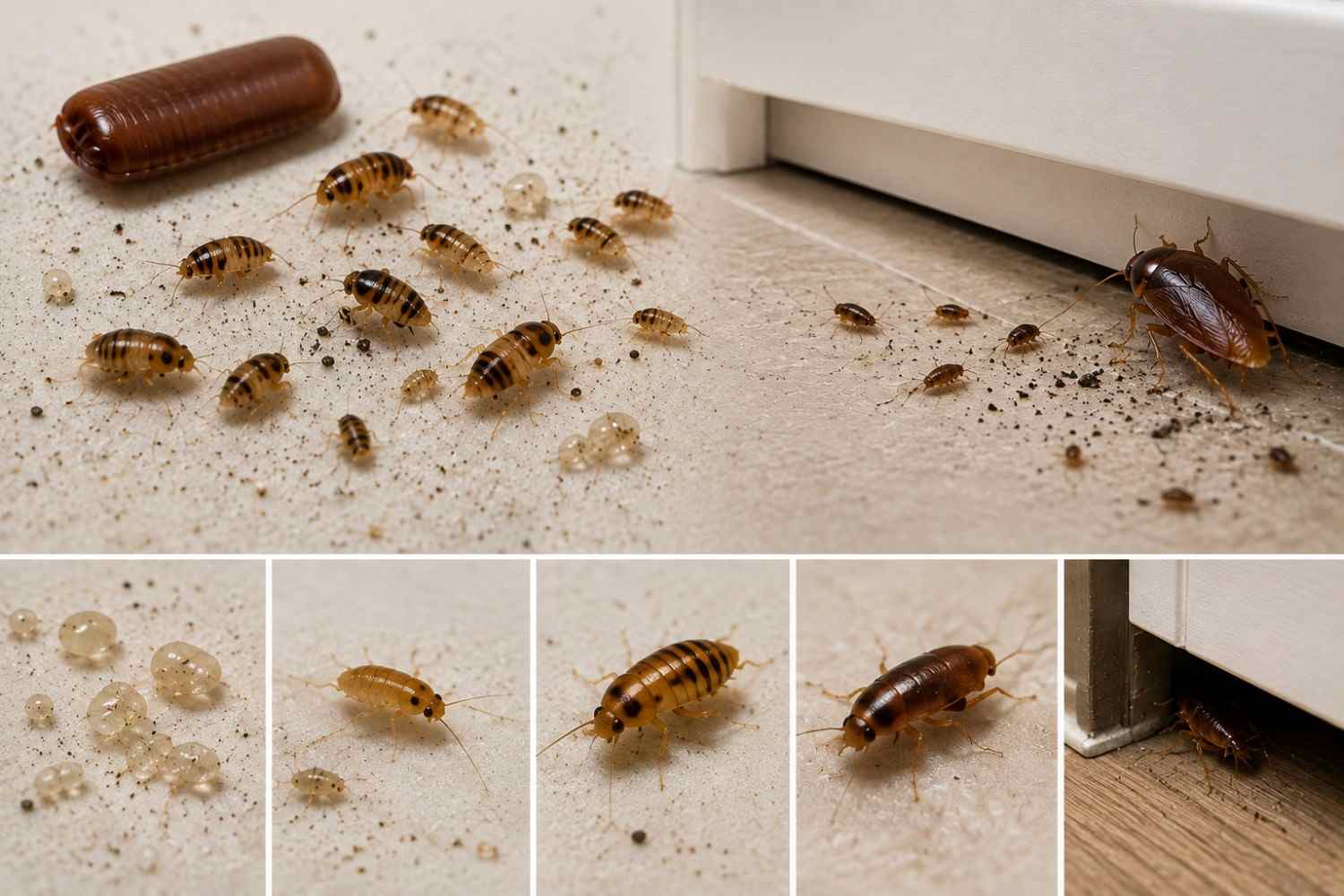
Baby cockroaches are immature roaches called cockroach nymphs. They usually have six legs, long antennae, flattened bodies, and no fully developed wings. Their appearance changes as they grow, so a newly hatched nymph may look quite different from an older one.
In Las Vegas homes and businesses, small beetles, young crickets, carpet beetle larvae, and bed bug nymphs can also be mistaken for baby roaches. This guide explains how to identify them, compare common species, find likely hiding places, recognize signs of activity, and decide what to do next.
How to Identify a Baby Cockroach
For baby cockroach identification, don’t rely on size alone. Look at several features together.
If you’re asking what do baby cockroaches look like, start with the legs, antennae, body shape, color, and wing development.
1 Six Legs
Cockroach nymphs have six legs. The legs are usually easy to see in a clear photograph or when the insect is viewed up close.
2 Long Antennae
A nymph has long, noticeable antennae that can appear large compared with its body. This is one of the useful features to check when comparing a suspected nymph with other small insects.
3 Flattened Body
Most cockroach nymphs have a flattened, oval or slightly elongated body. Their shape allows them to move through narrow cracks and protected spaces.
4 No Fully Developed Wings
Young cockroaches don’t have fully developed wings. Older nymphs may develop small wing pads that become more noticeable as they approach adulthood.
5 Color and Markings
Color depends on the species and developmental stage. A nymph may be dark brown, brown, reddish brown, or nearly black. Some species have lighter bands or patches.
6 Size
Newly hatched nymphs can be very small, but they become larger after each molt. For that reason, there isn’t one size that identifies every cockroach nymph.
7 Take a Clear Photo
If you want to compare baby roach pictures, photograph the entire insect in good lighting. Try to capture the antennae, legs, body, and markings rather than taking a blurry close-up.
A photograph can help with an initial comparison, but some insects and cockroach species are difficult to distinguish from a picture alone.
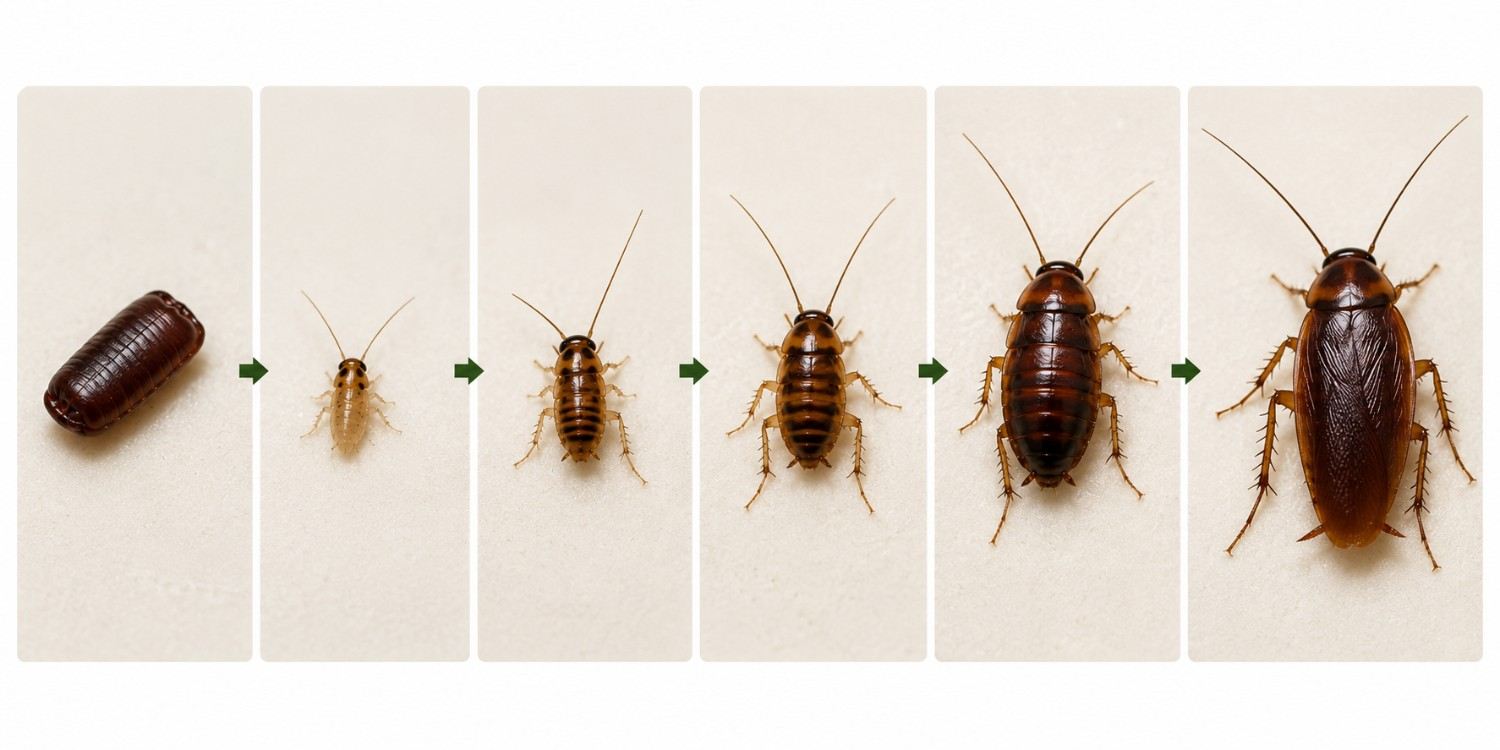
How Baby Cockroaches Change as They Grow
Cockroaches develop through three main stages:
Egg → Nymph → Adult
They don’t have a separate pupal stage. Instead, nymphs gradually develop into adults through a series of molts.
Each developmental stage between molts is called an instar. With each molt, the nymph becomes larger and develops more adult-like characteristics.
As a nymph matures:
- Its body becomes larger.
- Its markings may become easier to recognize.
- Wing pads develop in older nymphs.
- Its proportions gradually become more similar to those of an adult.
A freshly molted nymph may also look much paler than usual. Its new outer covering needs time to harden and develop its normal coloration.
This natural development explains why two roaches found in the same property may look different even when they belong to the same species.
Common Baby Cockroach Species in Las Vegas
The Nevada Department of Agriculture identifies German, American, Oriental, and brown-banded cockroaches as common domiciliary cockroach species in Nevada. The same material notes that German cockroaches are particularly important in homes, apartments, and restaurants, while American and Oriental cockroaches are associated with moisture and brown-banded cockroaches prefer warmer, drier locations.
| Species | Approx. nymph size | General appearance | Common habitat | Useful clue |
| German cockroach | About 3–16 mm | Dark brown to nearly black when young | Kitchens, bathrooms, food areas | Small size and dark appearance |
| American cockroach | About 4–35 mm | Brown to reddish brown | Moist areas, plumbing and utility spaces | Nymphs become much larger as they mature |
| Oriental cockroach | About 5–30 mm | Dark brown to nearly black | Damp, sheltered areas | Broad, dark body |
| Brown-banded cockroach | About 3–12 mm | Brown with lighter bands or markings | Warm, dry areas | Light bands become a useful clue |
Nymph sizes are approximate and vary by developmental stage. Size should be considered alongside color, markings, body shape, and location when identifying a species.
1 Baby German Cockroach
Baby German cockroaches are generally small and dark. As they grow, they become larger and develop wing pads.
German cockroaches are strongly associated with indoor environments. Kitchens, cabinets, appliances, sinks, and areas where food is handled can provide favorable conditions.
They are the most frequently found cockroach species in Nevada and an important pest in homes, apartments, and restaurants.
2 Baby American Cockroach
They have a broad body and become considerably larger as they develop. Its coloration can range from brown to reddish brown.
American cockroaches are associated with moisture and may be found around plumbing, drains, utility areas, garages, and other damp or sheltered locations.
3 Baby Oriental Cockroach
Baby Oriental cockroaches are generally dark brown to nearly black and have a broad body.
This species is associated with damp, sheltered environments. Drains, plumbing areas, garages, utility spaces, and other moisture-prone locations may provide suitable conditions.
4 Brown-Banded Cockroach Nymph
Brown-banded cockroach nymphs are relatively small and brown, with lighter markings that can help with identification.
Unlike moisture-associated species, brown-banded cockroaches prefer warm, dry locations. They may occur in cabinets, furniture, closets, appliances, and protected areas away from regular water sources.
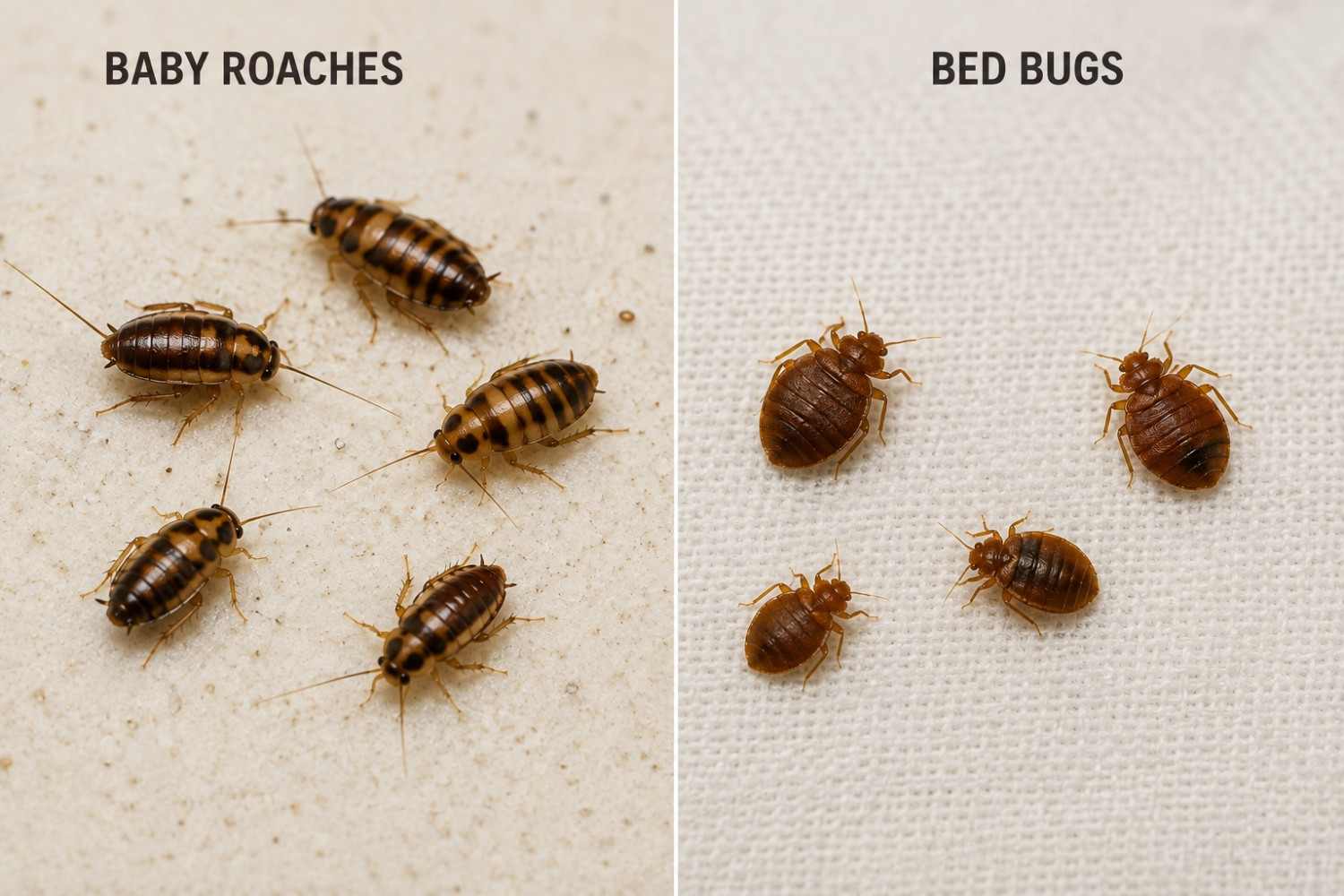
Baby Roaches vs. Bed Bugs
It can be confusing because both can be very small. Rather than relying on size, compare several characteristics.
| Feature | Cockroach nymph | Bed bug nymph |
| Antennae | Long and noticeable | Shorter |
| Color | Often brown or dark depending on species and age | Very pale or translucent when newly hatched |
| Body | Flattened and generally oval | Flattened and broadly oval |
| Movement | Usually quick-moving | Generally slower |
| Wings | Not fully developed in nymphs | No wings |
| Location clues | Cracks, cabinets, kitchens, plumbing areas and other hiding places | Commonly associated with sleeping areas and bed bug evidence |
If the insect is pale and was found around a sleeping area, bed bugs may be worth considering. If it is dark with long antennae and is found near food, plumbing, cabinets, or other cockroach hiding places, a cockroach nymph may be more likely.
The location alone isn’t enough for a definitive identification.
Bugs That Look Like Baby Roaches
Several bugs that look like baby roaches can turn up inside homes and businesses.
1 Small Beetles
Some small beetles have dark, oval bodies and may look like roach nymphs at first glance. Their legs, antennae, and overall body structure can help distinguish them.
2 Young Crickets
Young crickets can be dark and fast-moving. Their developing hind legs and different body shape are useful clues.
3 Carpet Beetle Larvae
Carpet beetle larvae are generally elongated and may have visible hairs or bristles. A noticeably hairy body is a strong clue that the insect isn’t a typical cockroach nymph.
4 Bed Bug Nymphs
Newly hatched bed bugs are extremely small and usually pale or translucent. Their lighter appearance can help distinguish them from many dark cockroach nymphs.
Where Do Baby Roaches Hide and Why Are They There?
If you’re wondering where baby roaches hide, start with places that offer food, water, warmth, shelter, or access to protected spaces.
1 Kitchens and Bathrooms
Check areas such as:
- Cabinets
- Under and behind appliances
- Around sinks
- Plumbing openings
- Cracks and crevices
- Areas near food storage
- Moisture-prone spaces
2 Garages and Utility Areas
Garages, drains, utility spaces, storage areas, and plumbing locations can provide shelter, particularly for species that favor moisture.
3 Bedrooms, Furniture, and Cabinets
Warm, dry locations can be important when brown-banded cockroaches are suspected. Furniture, closets, cabinets, appliances, and protected wall spaces may provide suitable hiding places.
4 Cracks, Plumbing, and Entry Points
Small gaps around doors, pipes, cabinets, utility lines, and other openings can give cockroaches access to a building or allow them to move between areas.
5 What Attracts Them?
Cockroaches need access to basic resources. Conditions that can support activity include:
- Food and food waste
- Pet food
- Water
- Leaking plumbing
- Moisture
- Clutter
- Cardboard and paper
- Cracks and gaps
- Accessible entry points
In Las Vegas, outdoor irrigation and landscaping can also create areas of moisture and shelter near structures. Garages and utility openings may provide additional routes into a building.
For more practical prevention steps, see our guide to pest prevention in Las Vegas homes.
Are Baby Roaches a Sign of Infestation?
One sighting doesn’t automatically mean you have a large infestation.
A single nymph could have entered from another area or been carried inside. Repeated sightings, however, are more significant and deserve a closer look.
Pay particular attention when you notice:
- Nymphs of different sizes
- Adult cockroaches and nymphs together
- Repeated sightings in the same area
- Cockroaches in several rooms
- Egg cases
- Droppings
- Shed skins
- Continued activity after cleaning or DIY treatment
Nymphs at different stages can indicate that cockroaches are developing nearby. That observation alone doesn’t tell you how large the population is, but it gives you a reason to investigate further.
Signs of Baby Roach Infestation
The signs of baby roach infestation can extend beyond seeing the insects themselves.
1 Droppings
Cockroach droppings may appear as dark specks, spots, streaks, or smears. They can occur near food sources, hiding places, and areas where cockroaches travel.
2Shed Skins
Nymphs shed their outer coverings as they grow. Finding shed skins in cabinets, cracks, behind appliances, or other protected spaces may indicate nearby development.
3 Egg Cases
Cockroach egg cases are called oothecae. Their appearance varies between species. Finding egg cases along with nymphs or other evidence can indicate reproduction nearby.
4 Odor
A larger cockroach population can produce an unpleasant odor, particularly in enclosed areas where insects and debris accumulate.
5 Multiple Roaches
Finding several nymphs, adults, or different developmental stages provides more evidence of ongoing activity than finding one unidentified insect.
No single sign proves an infestation. The combination of evidence and the location of the activity provide a better picture.
How to Get Rid of Baby Roaches
If you’re looking for how to get rid of baby roaches, start by making the property less favorable to them.
1 Remove Food Sources
Clean crumbs, grease, spills, and food waste. Pay particular attention to areas under and behind appliances.
2 Store Food Securely
Keep food and pet food in sealed containers. Avoid leaving exposed food out for extended periods.
3 Fix Moisture Problems
Repair leaking faucets, pipes, appliances, and other plumbing problems. Keep moisture-prone areas as dry as practical.
4 Reduce Clutter
Cardboard, paper, packaging, and accumulated storage materials can create additional hiding places.
5 Seal Gaps
Check around doors, pipes, cabinets, utility penetrations, and other possible entry points. Seal appropriate cracks and gaps where practical.
6 Monitor Activity
Sticky traps can help show where cockroaches are traveling and whether activity is concentrated in a particular area.
7 Don’t Focus Only on Visible Roaches
Killing the insects you see doesn’t necessarily address cockroaches hiding inside cracks, appliances, cabinets, wall spaces, or other protected locations.
The U.S. Environmental Protection Agency recommends an integrated approach that includes reducing access to food, water, and shelter, addressing entry points, monitoring activity, and using pest-control products appropriately when needed.
What We Look For During a Las Vegas Cockroach Inspection
At Enviro Guard, we don’t focus only on the insect you saw. We look at the surrounding conditions and the pattern of activity to understand what may be happening on the property.
1Where the Insect Was Found
The location of a sighting gives us a starting point. A nymph found under a kitchen sink presents different possibilities from one found in a dry closet or garage.
2 Other Evidence
We check for additional signs such as droppings, shed skins, egg cases, adult cockroaches, and other nymphs.
3Food and Moisture Sources
We look for conditions that could support activity, including accessible food, pet food, leaking plumbing, moisture, and areas that are difficult to keep clean.
4 Hiding Places and Access Points
Cracks, gaps, cabinets, appliances, plumbing openings, utility penetrations, and other protected spaces can all be relevant during an inspection.
5Activity Across the Property
We also consider whether the issue appears isolated or whether cockroaches may be moving between rooms or entering through another part of the structure.
Our inspection is meant to give you a clearer picture of the problem before deciding what action makes sense.
When Should You Get a Pest Inspection?
You don’t necessarily need professional treatment because you saw one small insect. An inspection becomes more useful when the sightings keep happening or other evidence appears.
Consider scheduling an inspection if you notice:
- Baby roaches every few days
- Nymphs at different developmental stages
- Adults and nymphs together
- Egg cases
- Droppings or shed skins
- Activity in multiple rooms
- Continued sightings after DIY efforts
A professional inspection can help confirm what pest you’re dealing with, identify areas of activity, and find conditions that may be allowing the problem to continue.
How Enviro Guard Can Help
If baby roaches continue appearing, Enviro Guard Pest Control can help you determine whether you’re dealing with ongoing cockroach activity.
Our team provides residential and commercial pest control in Las Vegas and surrounding Southern Nevada communities. We start with an inspection, identify the pest and contributing conditions, and then recommend treatment based on what we find rather than assuming every property has the same problem.
Our current inspection process includes checking for active or past pest activity, possible entry points, hiding areas, and property conditions that may need attention.
If you want to have the property checked, you can schedule a free pest inspection in Las Vegas.