Knowing when seasonal pests in Las Vegas are more likely to appear can help you plan. Summer highs average above 100°F, while winter nights are much cooler. Irrigated lawns, garden beds and leaking sprinkler lines can provide moisture in the desert environment.
This month-by-month calendar explains which pests to watch for and what you can do to reduce the risk around your home.
Key takeaways
- July is the hottest month by average high temperature, at 104.5°F, followed by August at 102.8°F. During the summer, pay attention to bark scorpion hiding places around rocks and walls, along with cockroach activity near indoor food and moisture sources.
- Mosquito activity often increases during the hotter months. Clark County identifies standing water in containers, green pools and leaking irrigation systems as breeding sources. Summer storms can add to the problem.
- January has an average low of 40.5°F, while December averages 39.6°F. Rodents may seek sheltered spaces, and cockroaches can remain active indoors where conditions support them.
- Las Vegas’s monsoon season brings changing conditions, not a guaranteed pest peak. Rainfall, irrigation, nearby construction and the layout of a property can affect when pests become noticeable.
- Use the calendar as a guide, not a deadline. Repeated scorpion sightings, returning ant trails, cockroach activity, or rodent droppings deserve attention in any month.
What Does a Pest Year Look Like in Las Vegas?
Las Vegas sits in a desert valley, but homes still have water sources, landscaped areas and sheltered spaces that pests can use. The National Weather Service’s Las Vegas climate normals show average highs rising from 58.5°F in January to 104.5°F in July. The city’s summer monsoon also brings the possibility of storms and temporary standing water.
These conditions help explain seasonal changes, but temperature alone does not determine whether pests will enter a home. A leaking drip line beside a block wall, a worn garage-door seal or clutter in a storage room can create a concern regardless of the month.
At Enviro Guard Pest Control, we consider where the reported activity occurs and what conditions around the property could be contributing to it. A recurring issue near a garage, kitchen or landscaped wall calls for different checks. Our recommendations depend on the pest, its location and the conditions we identify.
The calendar below combines long-term climate averages with practical observations homeowners can make throughout the year. The temperature figures describe typical conditions, not a forecast for a particular day.
Month-by-Month Pest Calendar: Which to Watch For and What to Do
The temperatures below are average daily highs and lows from the National Weather Service’s 1991–2020 climate normals for Las Vegas. Pest activity is presented as a general seasonal guide, not a guarantee that a particular pest will appear in that month.
| Month | Average high / low | Pests to watch for | One useful task |
| January | 58.5°F / 40.5°F | Rodents seeking shelter; indoor cockroaches | Look for droppings or gnaw marks in garage storage. |
| February | 62.9°F / 44.1°F | Rodents, cockroaches and ants where food or moisture is available | Examine the space beneath sinks and behind kitchen appliances. |
| March | 71.1°F / 50.5°F | Ants and mosquitoes around water sources | Run the irrigation system and look for leaks or pooling. |
| April | 78.5°F / 56.9°F | Ants, scorpions and spiders | Clear debris from rock beds and inspect loose pavers. |
| May | 88.5°F / 66.1°F | Ants and other outdoor insects | Remove food scraps from patios and secure rubbish bins. |
| June | 99.4°F / 75.8°F | Scorpions and mosquitoes where water collects | Examine pool covers and shaded outdoor spaces. |
| July | 104.5°F / 82.0°F | Scorpions, ants and mosquitoes | Note where indoor sightings occur and what is nearby. |
| August | 102.8°F / 80.6°F | Ants, mosquitoes and other outdoor pests | Empty water from planters and outdoor containers. |
| September | 94.9°F / 72.4°F | Ants and pests around watered landscaping | Trim plants touching exterior walls and correct drainage issues. |
| October | 81.2°F / 59.6°F | Rodents seeking shelter; possible scorpion activity | Examine worn seals around garage doors. |
| November | 67.1°F / 47.3°F | Rodents and pests in storage areas | Look for damaged packaging and signs of nesting. |
| December | 56.9°F / 39.6°F | Rodents indoors; pests brought in with belongings | Inspect luggage after travel and store it away from sleeping areas. |
December Through February: Winter Pests
Winter brings cooler nights to Las Vegas, but it does not stop every pest from being active. Rodents can seek shelter in attics, garages and wall spaces, while German cockroaches can remain active indoors where food, moisture and warmth are available. These indoor conditions matter more than the season alone.
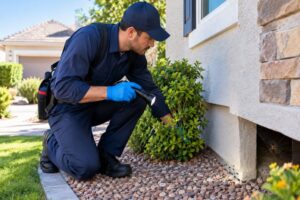
Rodent droppings, gnaw marks, shredded material and damaged food packaging can point to activity. When assessing a property, our technicians look at where these signs appear and check nearby gaps around pipes, cables, garage doors and other possible entry points. Finding the opening matters because removing the signs without addressing access can leave the problem unresolved.
Garages and storage areas deserve attention, especially when boxes, tools and other items have been left in place for months. Clutter can hide droppings and provide sheltered spaces for pests. In kitchens and bathrooms, leaks, food residue and damp cupboards can support insect activity even when outdoor conditions are cooler.
Winter is also a useful time to review gaps around doors, utility lines and the building’s exterior. Damaged seals and open joints can give pests access to sheltered spaces. Our inspection process considers these openings alongside signs of activity, helping us determine which areas need attention.
Bed bugs follow a different pattern. They can enter a home at any time of year through luggage, clothing and used furniture. If bed bugs are suspected, identifying the affected areas is important. Moving potentially infested belongings between rooms can spread the problem.
March Through May: Spring Pests
As spring temperatures rise, outdoor conditions around Las Vegas homes begin to change. Irrigation systems, garden beds and shaded spaces near block walls can provide moisture and shelter in the desert landscape. These areas can attract insects and create conditions that support pest activity.
Scorpion sightings can become more noticeable as temperatures warm. Rock landscaping, gaps in block walls, outdoor storage and spaces around garages are all worth examining when scorpions appear. A sighting near a door does not prove that the scorpion entered through that opening, so the surrounding conditions need to be assessed. Our scorpion control service focuses on locating possible hiding places, entry points and conditions that may attract scorpions.
Ants are another concern during spring. Trails along window frames, skirting boards and plumbing lines can help show where ants are travelling. Crumbs, spills, open food packages and moisture near sinks may also attract them indoors. Our assessment looks at the trail and its surroundings rather than focusing only on the visible ants.
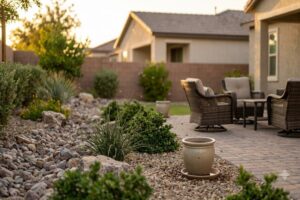
Landscaping can make a difference, too. Loose pavers, decorative rocks, stacked materials and dense plants create sheltered spaces where pests can hide. Sprinkler overspray and leaking drip lines can leave parts of the yard or exterior walls damp. Finding these conditions helps us assess whether moisture, shelter or nearby food sources may be contributing to the problem.
Spring is also a useful time to look for signs of termite activity, including discarded wings near windows and doors. Swarming times vary with weather and local conditions, so the absence of a swarm does not rule out termite activity. Any suspected signs should be assessed before deciding on the next step.
June Through August: Summer Pests
Summer brings some of the highest temperatures of the year to Las Vegas. Average highs reach 99.4°F in June, 104.5°F in July and 102.8°F in August. Monsoon storms can add rain and temporary moisture, although their timing and rainfall vary from year to year. During these months, shaded areas, outdoor water sources and gaps around the building deserve attention.
Bark scorpions are a key concern during the warmer months. They can hide in rock landscaping, hollow spaces in block walls and cluttered areas around garages or sheds. Because scorpions are active at night, a lack of daytime sightings does not necessarily mean they are absent. When assessing repeated sightings, our technicians consider nearby hiding places, insect activity and possible entry points. These details help shape the treatment plan rather than relying on a single sighting.
Mosquitoes are another summer concern because they need standing water to breed. Plant saucers, buckets, clogged drains, leaking irrigation lines and water trapped in pool covers can create breeding sites. Clark County’s mosquito awareness guidance highlights the need to remove standing water around homes and patios. Mosquito activity often rises during hotter months, but the timing varies each year.
Our mosquito control service addresses mosquito activity around homes and businesses. When assessing the conditions around a property, water sources, irrigation, pools, drains and shaded outdoor areas are all relevant because they can provide places for mosquitoes to breed or rest.
Cockroaches and ants can also become a nuisance during summer. Large cockroaches around garages, exterior doors and other entry points may be coming from outdoor areas. Ants may follow regular trails towards food or water. Where these pests appear, and whether the activity is indoors or outdoors, helps guide further checks.
Stinging insects can also build nests around roof edges, covered patios and other sheltered spaces during warm weather. If wasps or bees are gathering near an entrance or outdoor seating area, the nest location and level of activity should be assessed before anyone tries to disturb it.
September Through November: Fall Pests
As temperatures cool, pest activity can shift, but autumn does not bring an immediate end to warm-weather pests. September can still be very hot in Las Vegas, and irrigation continues to provide moisture around homes. By October and November, cooler nights make sheltered spaces and possible entry points important areas to assess.
Scorpions may remain active during early fall while temperatures are warm. Repeated sightings around block walls, garages and exterior doors can help identify areas that need a closer look. Our technicians consider the location of each sighting alongside possible hiding places and gaps around the building. Activity can vary with weather and property conditions, so the calendar alone cannot confirm whether a home has a scorpion problem.
Autumn can also bring termite swarms under suitable conditions. Discarded wings near windows, doors or other light sources may warrant further assessment. A swarm does not reveal the full extent or exact location of a colony, so the surrounding area needs to be checked before deciding what action is needed.
Rodents may also seek sheltered spaces as nights become cooler. Attics, garages and wall spaces can offer protection, particularly when food or stored items are nearby. Droppings, gnawed packaging and scratching sounds can point to activity. Checking nearby openings helps establish where rodents may be getting inside.
The area around the home provides useful clues, too. Fallen fruit, pet food left outdoors, dense plants and piles of stored materials can provide food or shelter for pests. Nearby construction or land clearing can change the conditions around a property, although it does not automatically mean pests will move indoors. When activity increases, the type of pest, where it appears and when it started help guide a closer assessment.
How to Prevent Pest Problems?
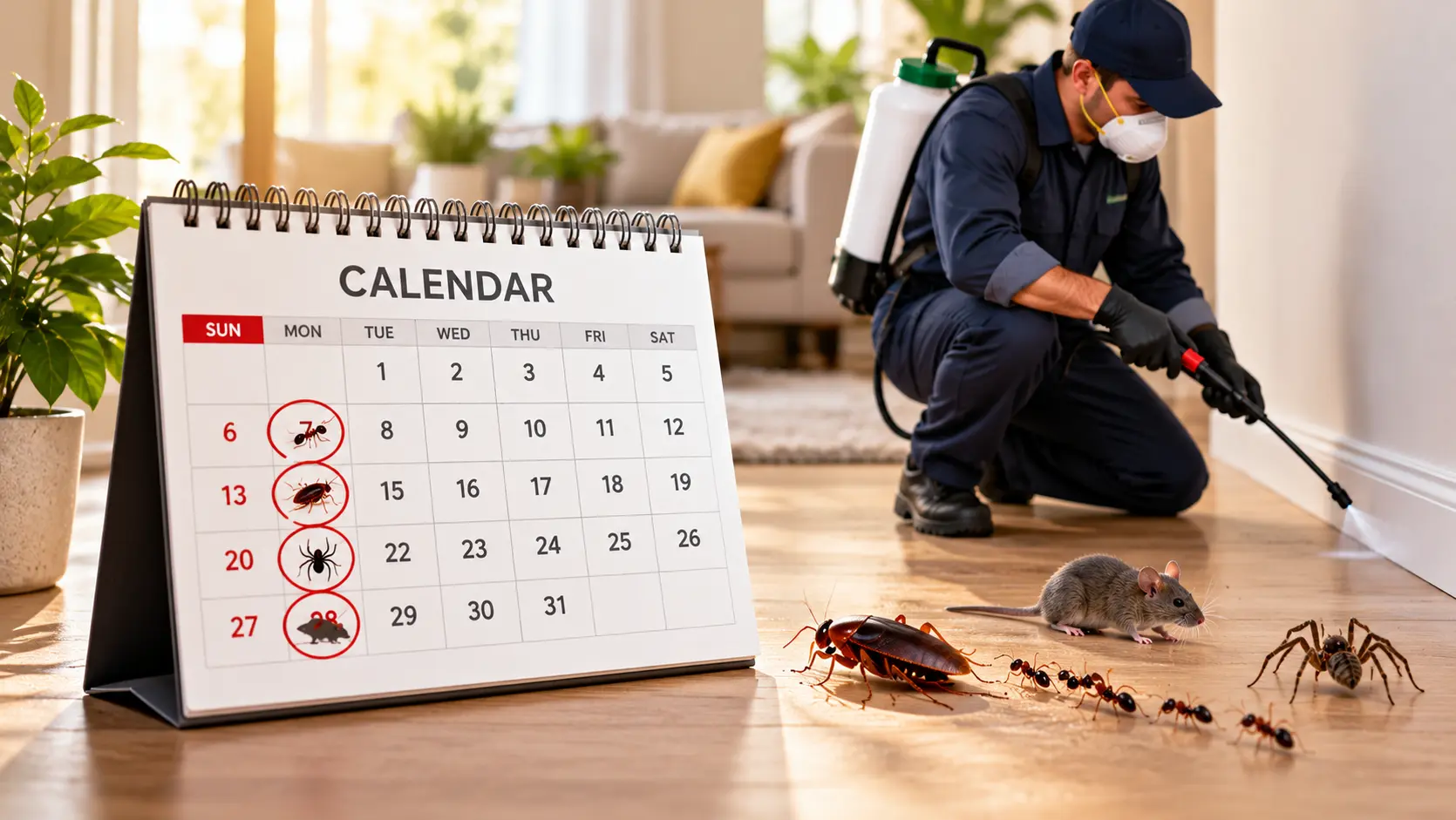
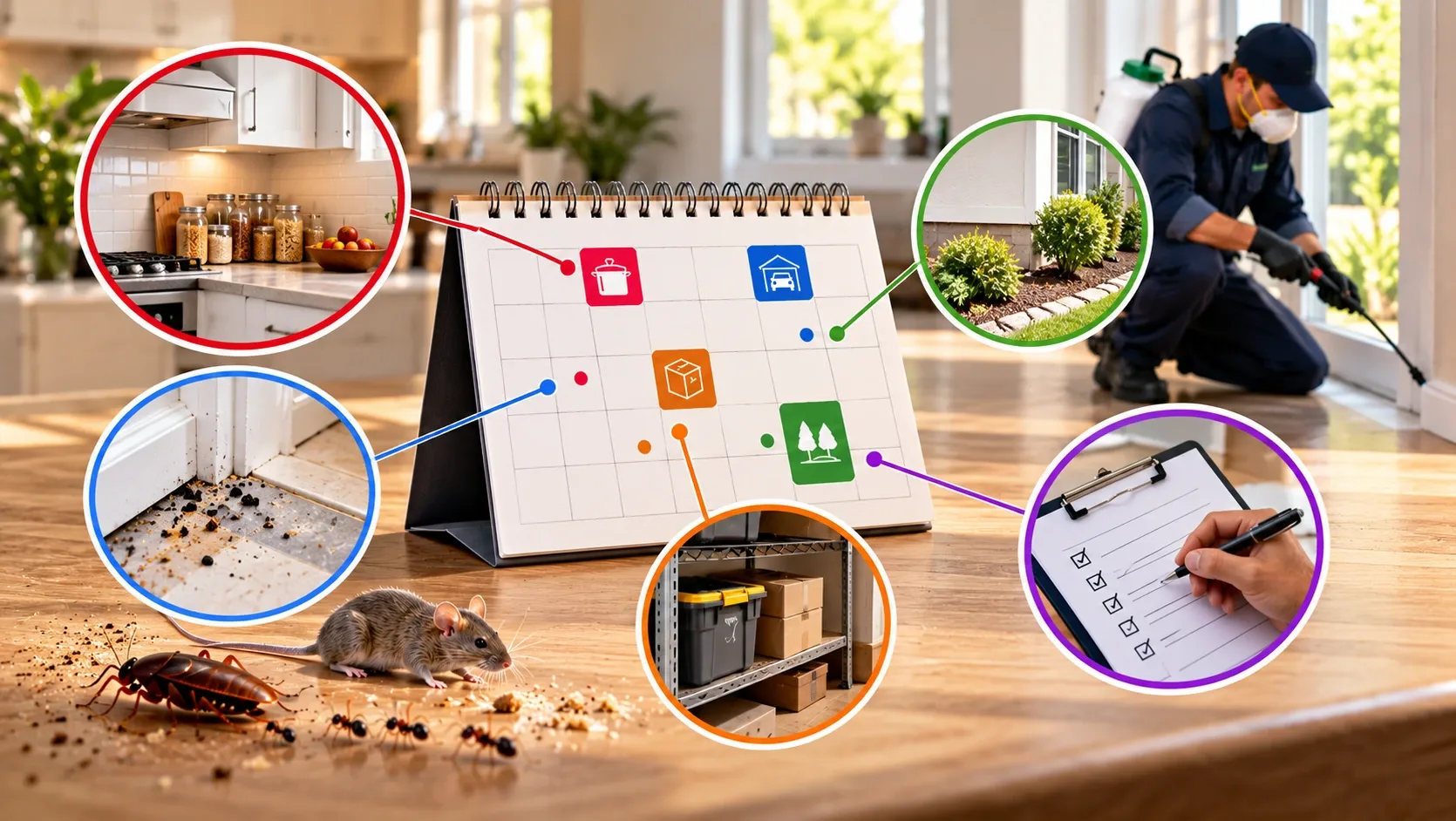
A calendar works best as a reminder, not a reason to treat every property every month. Focus on the areas that match the season and any activity you have already noticed.
Use this simple routine:
- Choose one priority area. Rotate between the kitchen, garage, storage spaces and outdoor boundaries.
- Look for evidence. Note droppings, insect trails, damaged packaging, standing water or worn seals.
- Consider the cause. Check for accessible food, excess moisture, clutter and possible routes inside.
- Address what you find. Store food securely, repair leaks, remove unnecessary debris and empty containers that collect water.
- Keep a record. Write down the date, location and pest type when activity returns.
A pattern can tell you more than a single sighting. Ants repeatedly appearing beside a sink call for different checks from rodents leaving signs in a garage. A brief record also gives a pest control professional a clearer starting point if the issue continues.
For more examples of conditions that can attract unwanted pests, read our article on scenarios that lead to pest infestations. It can help you identify which parts of your home deserve closer attention.
When to Schedule a Pest Inspection?
A single sighting does not always mean there is an infestation. Repeated activity, visible damage or signs in several areas deserve closer attention, especially when basic cleaning and repairs have not resolved the issue.
Consider arranging an inspection if you notice:
- Scorpions keep appearing inside repeatedly.
- Ant trails returning after you have removed obvious food sources.
- Cockroaches showing up regularly in kitchens, bathrooms or other indoor spaces.
- Rodent droppings, gnaw marks or damaged packaging.
- Possible bed bug signs that persist after checking luggage and belongings.
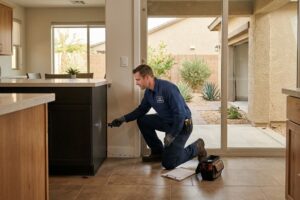
At Enviro Guard Pest Control, we consider the reported pest activity alongside the property’s condition. We look at where the problem occurs, possible entry routes and nearby conditions that could be contributing to it. We then explain the service options that fit the situation. The right approach depends on the pest and the property.
Enviro Guard Pest Control is locally owned and operated and has been serving Southern Nevada since 2006. We are Nevada-licensed and insured, and help homeowners understand their concerns and available options. Same-day appointments may be available, depending on scheduling.
If you need help with an ongoing issue, learn more about our residential pest control in Las Vegas or our free pest inspection service.
Call Enviro Guard Pest Control at 702-569-2849 to discuss the activity you have noticed and arrange an inspection.