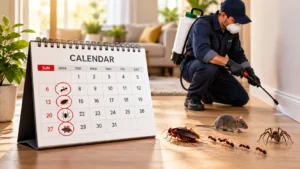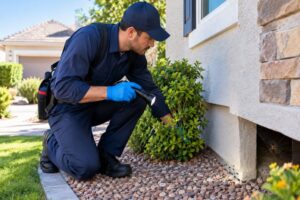
Do ants keep appearing in your home, even after you clean them up or spray the affected areas? The problem may involve more than the ants you can see. They may be emerging from a nearby nest, slipping through small gaps, or following trails back to food and water sources inside your home.
In Las Vegas, hot, dry weather can drive ants indoors in search of shelter. According to the University of California’s Integrated Pest Management (UC IPM) program, worker ants collect food for the colony and feed other members. Killing visible ants alone may not eliminate an infestation because the queen and other ants can remain in the nest.
Finding the route ants use and locating nearby nesting areas can help you address the problem at its source. This guide covers common ant entry points, where ants tend to nest around Las Vegas homes, and the signs that suggest it may be time to seek ongoing ant prevention services.
Why Do Ants Keep Coming Back After You Kill Them?
According to Colorado State University Extension, ant colonies contain workers that forage for food and care for the young, while queens produce eggs. The workers you see searching for food represent only a small part of the colony.
Several factors can cause them to return:
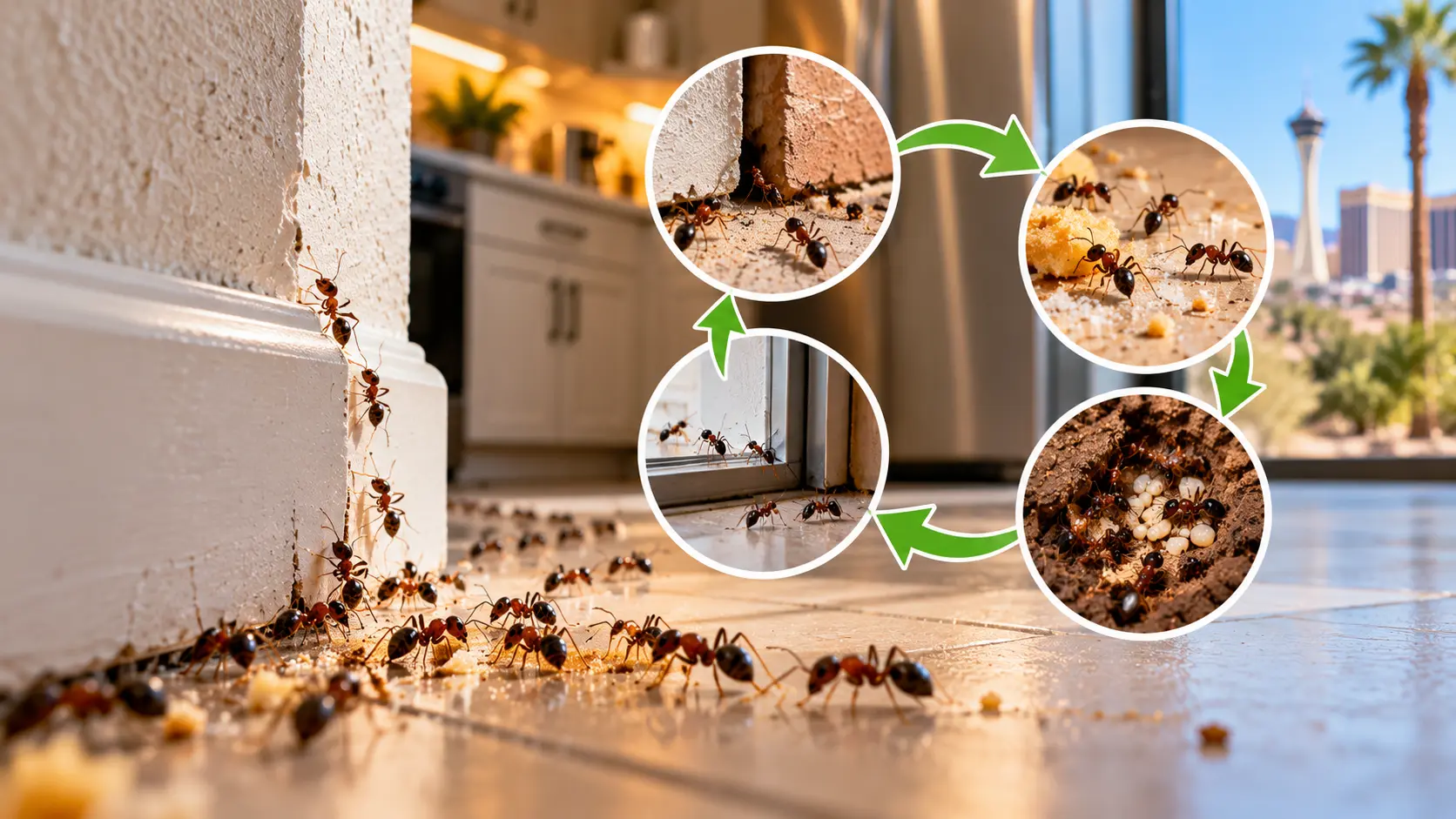
- The scent trail: Ants leave chemical signals called pheromones that help other ants follow the same route to food or a nest. If the pheromone trail is not removed, other ants may continue following the same route.
- A reward: If a colony has found food or water there, more ants may follow the trail and return to that spot.
- The nest is still active: Ants can continue emerging from a colony in the yard, beneath a walkway, or inside a wall.
- Entry points remain open: Gaps around windows, doors, pipes, and utility lines give ants another way inside.
Note: Sprays can sometimes make the problem worse. Argentine ants, which are found in the Las Vegas Valley, can split into smaller groups and establish new nests. Some repellent treatments can disrupt ant activity and, in certain species, contribute to colonies spreading into additional nesting sites.
Common Ant Entry Points in Las Vegas Homes
- Gaps beneath exterior doors and around window frames
- Spaces around plumbing pipes and utility lines
- Openings around AC drain lines and condensate pipes
- Holes where electrical wires pass through walls
- Gaps around irrigation pipes and outdoor faucets
- Cracks in outside walls and concrete foundations
Where Do Ants Commonly Build Their Nests?
Locating the nest can help explain why ants keep returning, even when you cannot see many of them.
1 Outdoor Areas
| Location | Where to Look | Why Ants Gather |
| Rocks and Concrete | Beneath rocks, pavers, and concrete edges | Shelter and protection |
| Landscaping and Soil | Mulch, garden beds, and soil near foundations | Nesting space and moisture |
| Walls and Walkways | Cracks in block walls, patios, and walkways | Protected nesting sites |
| Irrigation and Damp Areas | Leaking irrigation lines, outdoor faucets, and wet soil | Access to moisture |
| Garages and Exterior Walls | Garage edges and masonry cracks | Shelter and entry points |
| Las Vegas Landscaping | Irrigated lawns, shrubs, and foundation beds | Moisture in the dry desert environment |
2 Indoor Areas
| Location | Where to Look | Why Ants Gather |
| Kitchens and Pantries | Cabinets, pantry corners, and food storage areas | Food crumbs and spills |
| Plumbing Areas | Beneath sinks and around pipes | Moisture and access gaps |
| Walls and Baseboards | Wall gaps, baseboards, and utility openings | Travel routes and concealed spaces |
| Damp Materials | Water-damaged wood and areas around insulation | Potential nesting sites |
| Garage Storage | Behind stored items and between cabinets and walls | Shelter and undisturbed spaces |
Carpenter ants may be present if you notice large ants, fine wood debris, or signs of wood damage. However, these clues alone do not confirm an infestation.
University of Nevada, Reno Extension notes that odorous house ants can have several linked nests, while pavement ants often nest under sidewalks, driveways, and inside cracks in the pavement.
Note: Ant nesting locations vary by species.
Why Do Ants Keep Coming Back Into My House or Bedroom?
Even if there is no food in your bedroom, ants can still come inside. Ants may come into your bedroom looking for moisture or enter through tiny gaps around doors, windows, pipes, and electrical fittings. They may even nest in wall cavities or other concealed spaces. Ants can also be attracted to things you might overlook, such as sugary drinks, snack crumbs, or a pet’s food bowl.
To find out where the ants are coming from, look at the gaps around windows and doors, under furniture and behind bedside tables for crumbs or spills, inspect nearby bathrooms and pipes for leaks, watch where the ants disappear, and clean their trails and remove any food residue.
Note: If ants keep appearing in the same bedroom despite cleaning, the issue may be an entry point or a hidden nest rather than poor housekeeping.
Why Do Ants Keep Coming Back After Baiting?
Ant bait uses a slow-acting poison mixed with an attractant (such as sugar, protein, or oil). This can be effective because worker ants carry the bait back to the colony.
However, it is not a long-term or instant solution for an infestation.
If ants keep coming back after bait, consider these possibilities:
- Not enough time has passed: Depending on the product and infestation, bait may take several days or longer to affect the colony because worker ants need time to carry it back to the nest.
- The bait does not appeal to that ant species: Ants may prefer different food sources at different times; for example, some ants prefer sweet foods like sugar or honey while others prefer protein or greasy foods, such as meat or oily food. It depends on the colony’s needs at that time.
- The colony has another nest: Some species, like Argentine ants, Odorous house ants, and Pavement ants, maintain multiple nesting sites or interconnected nesting sites.
- The bait has dried out or been used up: Follow the product label for replacement, as liquid bait may evaporate in hot weather, making it less attractive or difficult for ants to consume.
- Sprays interfere with baiting: Some products can repel or kill foraging ants before they carry bait back to the nest or make ants avoid the area where you placed the bait.
Note: Use a bait labeled for the species in your home, and follow its instructions carefully. Keep bait out of reach of children and pets. Do not apply sprays around bait unless the product directions and treatment plan allow it.
How to Prevent Ants From Returning
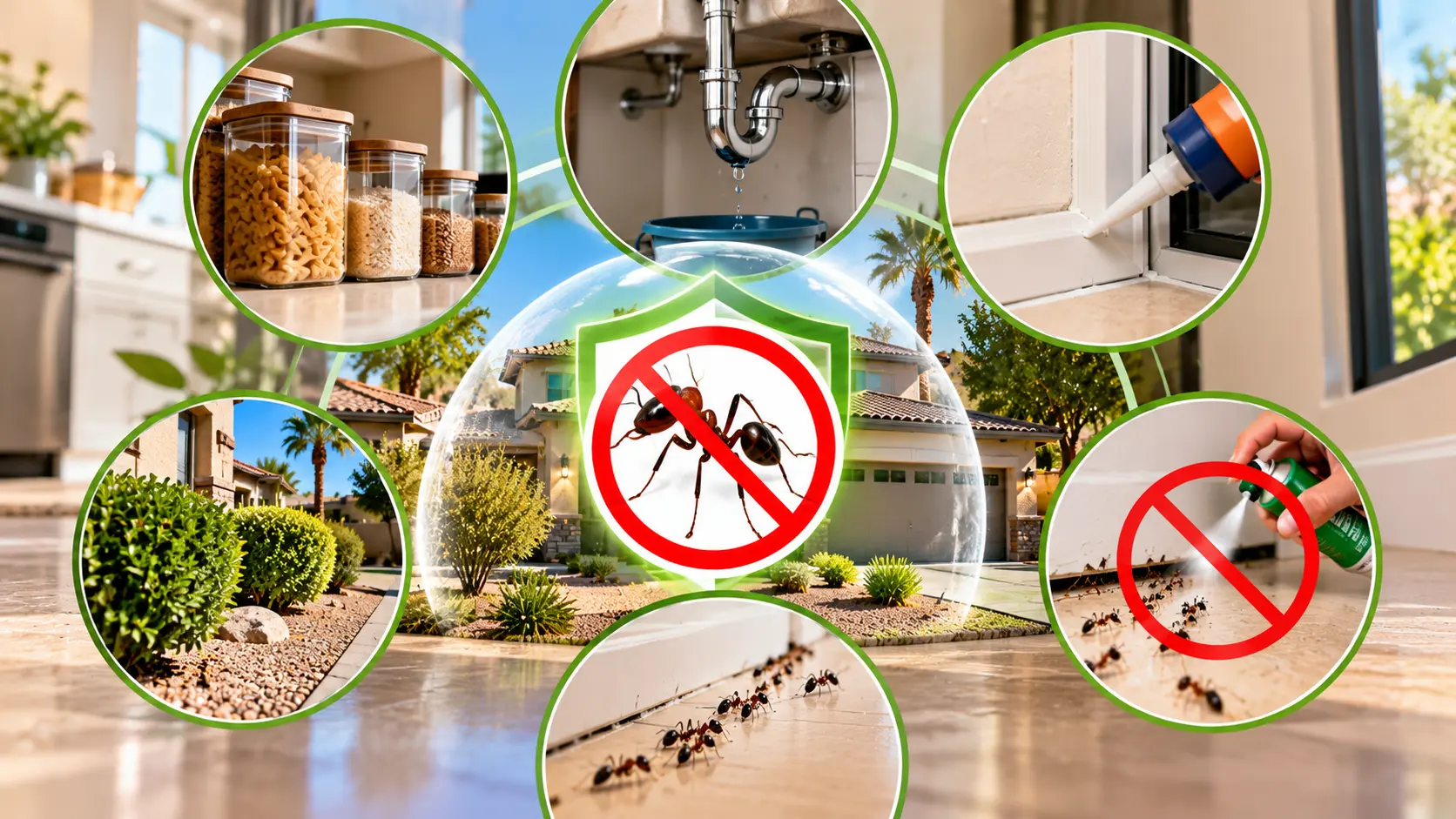
- Remove Food Sources: Store pantry items in sealed containers, empty trash daily, and clean under and behind appliances when possible. When your kitchen stays clean, pests have fewer reasons to enter your home and stay.
- Fix moisture problems: Water is another thing pests need to survive. Fix leaking faucets, check irrigation lines, and address damp areas beneath sinks as soon as possible. You can also use a dehumidifier in areas that stay damp. g
- Block entry points: Sealing gaps, repairing screens, plumbing and utility openings, or replacing movable windows can block ants’ entry points.
- Reduce outdoor access: In spring, yards may become more attractive to pests because of warmer temperatures, moisture, and sheltered nesting sites. Trim bushes and tree branches, remove piles of leaves or wood and keep your lawn cut short to reduce hiding spots.
- Monitor recurring trails: Pay attention to where ants appear, when their activity increases, and whether they return after baiting. Follow the trail to see where ants enter, and monitor the same spots after placing bait.
- Avoid repeated, random spraying: Applying different products without identifying the ant species or finding the nest can waste time. Some sprays may also repel ants or stop them from carrying bait back to their colony.
These steps help make your home less attractive to ants. However, an established colony or hidden nesting site may require professional ant control Las Vegas.
When to Seek Professional Ant Control in Las Vegas
Consider a professional inspection if pest activity continues, several areas are affected, you notice signs of damage, or DIY treatments have failed.
Enviro Guard Pest Control is a Nevada-licensed pest control company in Las Vegas that has followed environmentally responsible practices since 2006. Our local ant exterminator follows a simple approach: inspect, plan, treat, and follow up.
Our ant control treatment for homes combines targeted baits, exclusion work, and practical advice for your property.
If ants reappear between scheduled visits, we’ll treat the affected area again at no extra cost, subject to your service agreement.
Schedule your free inspection today.