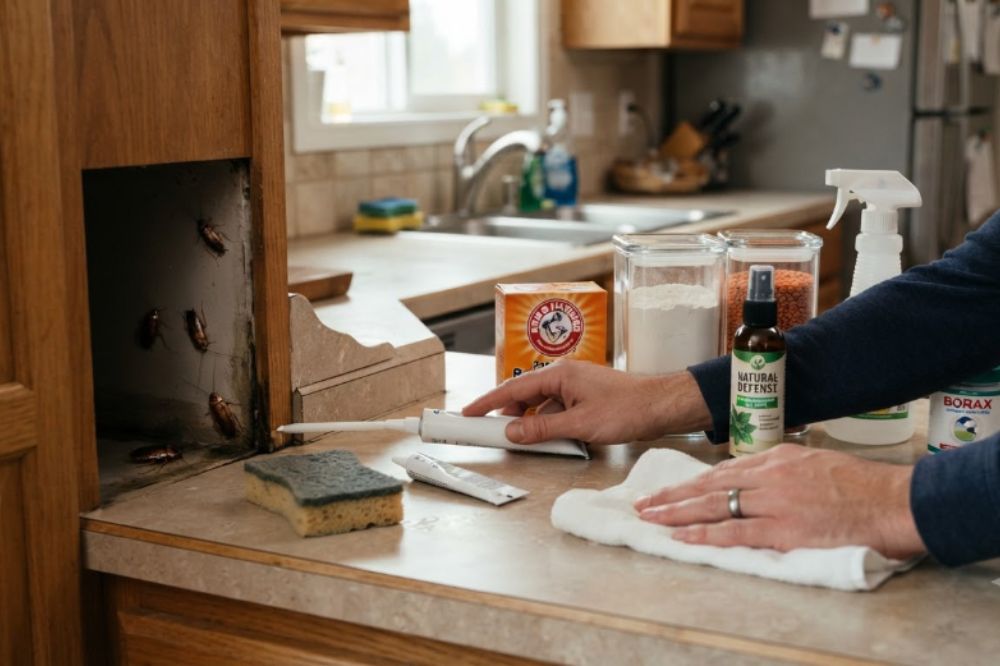
Cockroaches are one of those stubborn pests you really don’t want to find in your home. They multiply quickly, hide in hard-to-reach places, and can spread bacteria as they move food and surfaces. In fact, the CDC notes that exposure to cockroach allergens can worsen asthma or trigger breathing problems in people who are sensitive to them. So, if you spot a cockroach, it can be a sign that you need to take action immediately before the problem gets worse.
Hire professional pest control to provide a long-term solution if you deal with an infestation. However, If you’re looking for something you can try at home first, here are a few simple home remedies for cockroach control. This checklist for cockroach pest control treatment will help you take quick action using simple, easily available ingredients while keeping your home safer and cleaner.
Why Use Home Remedies for Cockroaches?
Home remedies are a popular first step because they are:
- Low cost
- Easy to apply
- A good approach for minor issues
- Made from everyday household items
- Encourage better hygiene
- Make food less available to pests
- Less toxic compared to chemical sprays
However, it’s important to remember that home remedies work best for minor infestations or as a temporary solution. For effective cockroach control in Las Vegas, it would be wise to call professional exterminators.
DIY Remedies for Cockroaches Control
Use this checklist to tackle cockroaches step by step:
1 Baking Soda and Sugar Trap
Commonly suggested home remedies for cockroaches.
How it works:
Sugar is likely a food source that attracts cockroaches, while baking soda reacts with their digestive system and kills them.
How to use:
- Mix equal parts baking soda and sugar
- Then, place the mixture in shallow containers or lids
- Keep near corners, under sinks, and behind appliances
- Keep it dry and replace it regularly.
Note: Not a trusted method to eliminate infestation
2 Bay Leaves Repellent
Plant-based options like neem, peppermint, bay leaves, etc. may help discourage cockroach activity.
How it works:
Bay leaves contain aromatic compounds that create a strong smell, which is highly disliked by insects.
How to use:
- Crush a handful of bay leaves
- Sprinkle powder in cabinets, drawers, and entry points
- Replace the leaves when the smell becomes weak
Note: It is a temporary deterrent, not a treatment to reduce cockroach development.
3 Neem Oil Spray
Neem oil contains azadirachtin, a plant-based compound that can disrupt insect feeding and the breeding cycle.
How it works:
Azadirachtin can impact the cockroach breeding cycle and help to minimize cockroach activity.
How to use:
- Mix neem oil with water
- Spray in affected areas at night
- Spray it around cracks, entry points, cabinets, and where you notce cockroach activity.
- Repeat regularly for better results.
Note: Follow the product label carefully and keep the spray away from children, pets, and food. However, neem oil does not guarantee cockroach extermination.
4 Boric Acid Powder
Boric acid is a mineral-based compound that is commonly used in some cockroach control products.
How it works:
Cockroaches may walk through boric acid particles. The particles can stick to their bodies, and when they groom themselves, they may ingest the powder. This can damage their digestive system and lead to death.
How to use:
- Lightly dust boric acid powder in cracks and crevices
- Apply thin layers for effectiveness
- Keep away from pets and children
Note: It can kill cockroaches if properly applied. However, it can be harmful if swallowed or misused.
5 Soap and Water Spray
Contains a mixture of liquid dish soap and water for an instant-kill method.
How it works:
Spraying a soap-and-water solution directly on cockroaches. It may interfere with their ability to breathe and function normally.
How to use:
- Mix liquid soap with water
- Spray directly on visible cockroaches
- Make sure the cockroach is wet for effective use.
Note: It is a direct-contact method. However, it does not provide lasting protection against cockroach infestations.
6 Peppermint Oil Spray
A natural repellent made with peppermint, eucalyptus, or lemongrass; this combination can contain menthol and menthone.
How it works:
The strong smell of peppermint discourages cockroaches from entering or staying in treated areas.
How to use:
- Add 10–15 drops of peppermint oil to water
- Shake well before use because oil and water always separate
- Spray around doors, windows, and kitchen areas
Note: Avoid spraying directly on people, pets, or food-contact surfaces.
7 Diatomaceous Earth
Diatomaceous Earth is a fine powder made from the fossilized remains of tiny aquatic organisms called diatoms that control cockroach activity.
How it works:
A natural powder like Diatomaceous Earth dehydrates and doesn’t poison the insects. Its small particles can damage their outer layer by reducing moisture from the cockroach’s body.
How to use:
- Sprinkle a thin layer in infested areas
- Avoid creating thick piles,
- Keep the powder dry to maintain effectiveness.
- Use food-grade diatomaceous earth only.
Note: DE can kill exposed cockroaches, but it will not necessarily reach hidden insects.
Tips to Prevent Cockroaches From Coming Back
DIY cockroach control works best when combined with prevention. Follow this checklist:
- Keep kitchen surfaces clean and dry
- Store food in airtight containers
- Take out garbage daily
- Fix leaks and remove moisture sources to stop cockroach survival
- Seal cracks and entry points
- Act quickly when you notice droppings, shed skins, egg cases, or a musty smell.
- Avoid leaving dirty dishes overnight.
Consistency is key; cockroaches thrive in messy and damp environments.
When Should You Call a Professional Exterminator?
Natural methods may hide or drive cockroaches away for the short term, but they do not reduce the infestation.
You should consider professional cockroach control treatment when:
- Cockroaches can hide inside walls, cabinets, drains, and appliances, where home remedies may not reach effectively.
- Cockroach eggs are enclosed in protective cases called oothecae, so killing visible adults may not manage infestation.
- Repellents like peppermint oil, bay leaves, etc may discourage cockroaches’ entry into your area, but do not necessarily kill them.
- Cockroaches reproduce quickly. For example, IDPH states that cockroach females produce oothecae (pillow-shaped egg capsules) containing up to 48 eggs.
- Even after a DIY remedy. Cockroaches still get food, water, and shelter.
- Managing an infestation may require professional treatment, sanitation, and monitoring.
Final Thoughts
Home remedies for cockroaches can be a useful step when you are dealing with a few cockroaches or to prevent them from coming back. They are simple, affordable, and safer for families; when used properly, they can keep your home clean and less inviting to pests. But home remedies may not be enough if you deal with an infestation.
For long-term prevention, it’s better to hire a professional pest control service.
A professional roach exterminator in Las Vegas can identify hidden areas in your home and apply targeted treatments to reduce the chances of cockroaches returning and keep your home pest-free.
By following these natural remedies for cockroaches, you can take control of your home environment and significantly reduce the chances of cockroach infestations. Stay consistent, stay clean, and act quickly for the best results. Contact Enviro Guard Pest Control if cockroaches are giving you nightmares in Las Vegas.