Seeing a spider in your house can be concerning. You might worry about getting bitten, especially when you’re not sure whether it’s harmless or a sign of infestation.
You clean the corners, remove the webs, and think that’s the end of it. But after a few days, you spot another spider near the bedroom window or crawling across the bathroom.
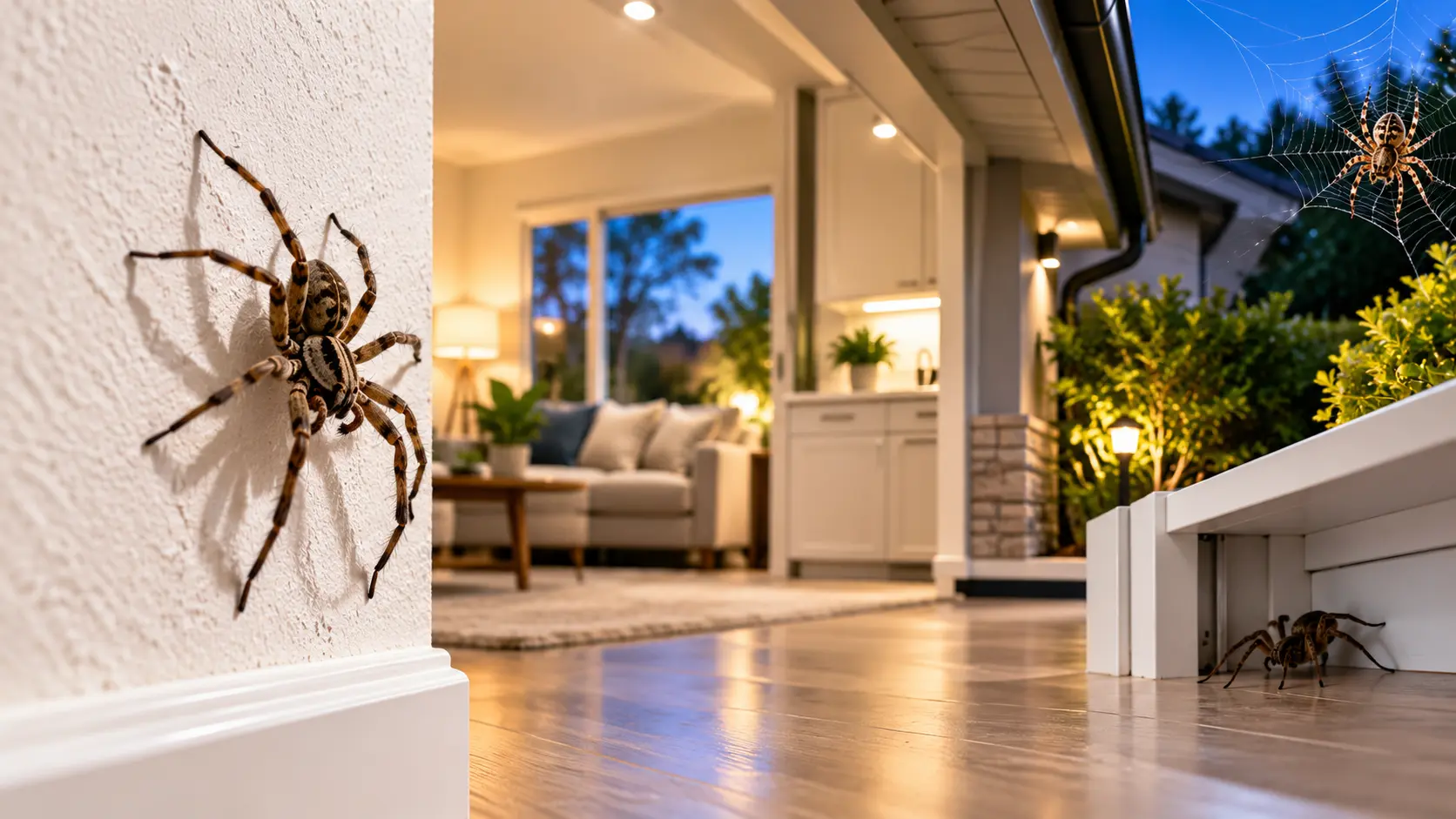
So, why do spiders keep coming inside? They’re usually looking for insects to eat, shelter, and a suitable place to build a web or lay eggs. In Las Vegas, outdoor heat, desert conditions, and irrigated landscaping around homes can all play a role in spider activity.
Finding out what attracts spiders and where they enter can help you reduce sightings inside your home.
Why Are Spiders Suddenly Appearing in My House?
Even a clean home can have spiders. The more useful question is what is attracting them, where they are hiding, and how they are getting inside
1 Other Insects Are Attracting Spiders
According to Colorado State University Extension, spiders feed on insects and other small arthropods. When flies, mosquitoes, moths, and other bugs are common inside a home, they can provide a food source that encourages spiders to stay nearby.
Look around windows, patio doors, kitchen lights, and other areas where insects gather.
What to do
- Reduce insects around entryways.
- Keep window screens in good condition.
- Avoid directing exterior lights toward open doors and windows.
Note: Outdoor lights can also attract flying insects close to your walls and entrances, giving spiders more opportunities to hunt.
2 Las Vegas Heat and Desert Conditions Are Driving Spiders Indoors
Living in the desert does not mean your home is free from pest activity. During hot, dry periods, conditions around a property can become more attractive to spiders seeking shelter.
Garages, storage rooms, wall gaps, and shaded corners offer protection from direct sunlight.
Irrigated plants, dripping outdoor faucets, and shaded landscaping may also support insects that spiders feed on.
What to do
- Inspect the areas around your home’s foundation for spider activity.
- Check for leaking irrigation lines and fix them promptly.
- Keep plants trimmed away from exterior walls.
- Move stored materials, boxes, and debris away from the foundation to reduce sheltered hiding places.
3 Spiders Are Entering Through Small Gaps and Cracks
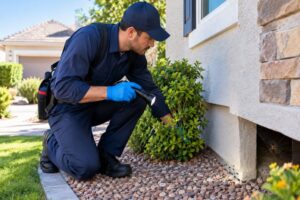
Spiders can enter through gaps around doors and windows, cracks in walls, and openings around pipes, vents, and utility lines.
Check these areas for gaps that spiders could use to get inside.
What to do
- Repair torn window screens with a screen repair patch to stop spiders from crawling through.
- Fit a door sweep along the bottom of outside doors to block the gap.
- Seal small cracks with caulk and use an appropriate sealant for larger openings.
- Keep vents clear and functional instead of blocking them.
Note: Finding a spider near a window does not necessarily mean it entered through that window. It may have come from another part of the house and moved toward the light or an insect.
4 Dark, Cluttered Areas Provide Hiding Places for Spiders
Spiders often hide behind stored boxes, inside closets, beneath furniture, or in dark corners that rarely get cleaned.
Garages are common hiding spots because stacked boxes, unused items, and dark corners give spiders places to hide and build webs.
What to do:
- Vacuum corners, baseboards, and behind furniture once a week.
- Remove unnecessary clutter such as old cardboard boxes, newspapers, unused clothes, or empty containers where spiders can hide.
- Keep seasonal decorations and other stored items in sealed containers.
- Wear gloves and check stored items before handling them, especially if they have been left untouched for a long time.
5 Spider Egg Sacs May Be Hatching Inside Your Home
If you are suddenly seeing several tiny spiders, you may be dealing with newly hatched spiderlings rather than a new wave of spiders entering from outside.
Female spiders produce egg sacs, although their appearance varies by species. Depending on the spider, the sac may be attached to a web, hidden in a sheltered corner, or carried by the female.
- A fresh, tidy web means an active spider. Dusty, abandoned webs mean it moved on. Messy tangles in a corner usually mean cobweb spiders.
- Spider eggs are small silk sacs, often papery, cream, or gray. A single sac can hold hundreds of eggs, depending on the species.
- Baby spiders are tiny and often show up in clusters after a sac hatches. A group of them means a sac was nearby, which is worth taking seriously.
- House spider nests aren’t really nests. Spiders don’t build colonies like ants. But many sacs in many places are the real sign of a problem.
What to do
- Don’t touch spider egg sacs with your bare hands.
- Wear gloves and use a vacuum with a hose attachment to remove reachable webs and egg sacs.
- Call a local pest control professional if you keep finding egg sacs or see lots of baby spiders indoors.
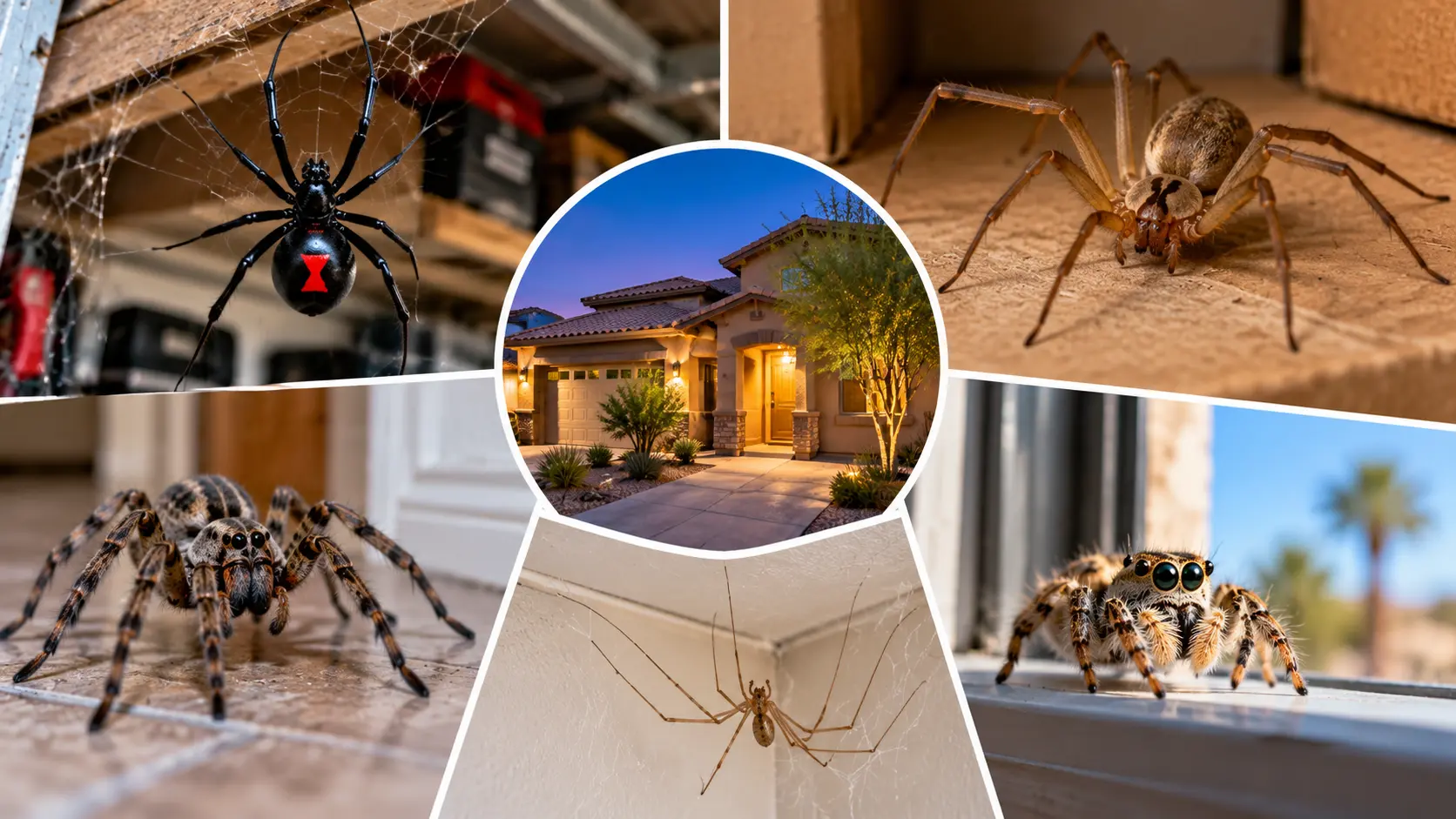
Which Spiders Are Commonly Found in Las Vegas Homes?
- Western black widow: Shiny black body, red hourglass underneath. Common in garages, woodpiles, meter boxes, and block walls.
- Desert recluse: Light brown with a darker violin shape on its back. It prefers quiet, undisturbed spots like boxes in a closet or storage room. Medically significant, though bites are uncommon.
- Wolf spiders: These large, hairy spiders can move quickly across floors. They usually run away when disturbed.
- Cellar spiders: Their long, thin legs and loose webs are common sights in ceiling corners, basements, and garages.
- Jumping spiders: These small spiders often appear near windows and move in short, sudden jumps. They rarely bother people.
Where Do Spiders Hide Inside Your Home?
| Location | What to check |
| Bedrooms | Behind headboards, under beds, inside closets, and around window frames |
| Bathrooms | Around plumbing openings, vents, window corners, and undisturbed storage |
| Garages | Cardboard boxes, shelves, stored equipment, and gaps around the garage door |
| Windows and doors | Screens, frames, exterior lights, and small openings |
| Attics and storage rooms | Undisturbed boxes, wall corners, and older webs |
How to Prevent Spiders From Entering Your House
- Seal Cracks and Gaps Around Your Home
- Repair Window Screens and Install Door Sweeps
- Reduce Insects Around Exterior Lights and Entryways
- Keep Garages and Storage Areas Clutter-Free
- Trim Landscaping and Fix Outdoor Water Leaks
- Vacuum Spider Webs and Inspect for Egg Sacs
Note: Avoid using spray that are not specifically designed to treat spider infestations, as they may worsen the problem and pose potential health risks. Instead, explore these chemical-free ways to keep spiders out of your home for safer and more effective prevention.
Are Spiders in Your House a Sign of an Infestation?
One old web in a corner is not enough to confirm an infestation. But if you notice these signs, they may indicate a more serious spider problem.
Signs of a Spider Infestation
- Spiders appear repeatedly in the bedroom, bathroom, kitchen, garage, living room, or storage room.
- New webs appear in different corners even after you remove the old ones.
- Finding several egg sacs or groups of baby spiders in the same area.
- Seeing spiders repeatedly in the garage, storage room, or near exterior doors.
- Finding spiders along with frequent sightings of flies, ants, or other insects indoors.
If activity continues after cleaning and sealing obvious gaps, a professional spider infestation treatment can help identify the source.
Are House Spiders Dangerous? What to Know About Spider Bites
Spiders generally bite when they feel threatened or become trapped against the skin, such as when someone puts on a shoe or glove containing a spider.
Which Spiders in Las Vegas Can Be Dangerous?
Most spider bites cause only minor symptoms, but bites from black widow or brown recluse spiders can cause more serious reactions and require medical attention.
What to Do if You Think a Spider Has Bitten You
- Wash the bite with soap and water.
- Apply a cool, damp cloth to the area to ease swelling.
- Call Poison Help at 1-800-222-1222 or visit Poison.org for advice.
- Go to urgent care or the ER if you have severe pain, muscle cramping, spreading redness, a blister that darkens, or trouble breathing.
- If you can do so safely, take a photo of the spider.
Important: For children, older adults, or anyone with health conditions, don’t wait.
When Should You Call a Spider Exterminator in Las Vegas?
A spider in the garage or a web in a quiet corner doesn’t always mean you need treatment. But if you keep finding egg sacs, spot black widows or suspected desert recluse spiders, or notice fresh webs after cleaning, don’t ignore the pattern.
If spiders continue to return, knowing when to call pest control professionals can help you decide what to do next. This is particularly relevant if DIY methods haven’t worked or you have children and pets at home.
How Professional Spider Infestation Treatment Works
At Enviro Guard Pest Control, an inspection helps identify where spiders are active, which insects may be attracting them, and where they could be entering the property.
Then we build a spider infestation treatment plan around your property.
Our spider control in Las Vegas targets the spiders and the insects that attract them, and we use low-toxicity options.
We’re licensed through the Nevada Department of Agriculture and have been working in Las Vegas homes since 2006.
Get a Free Spider Inspection in Las Vegas
Spiders in your house aren’t random. They follow nearby insects, sheltered hiding places, or gaps that allow spiders indoors. Sealing gaps, removing webs, and reducing indoor insects can help, but these steps may not stop every spider from getting inside. If you keep spotting spiders despite your efforts, schedule a free pest inspection to find out what’s attracting them to your home.