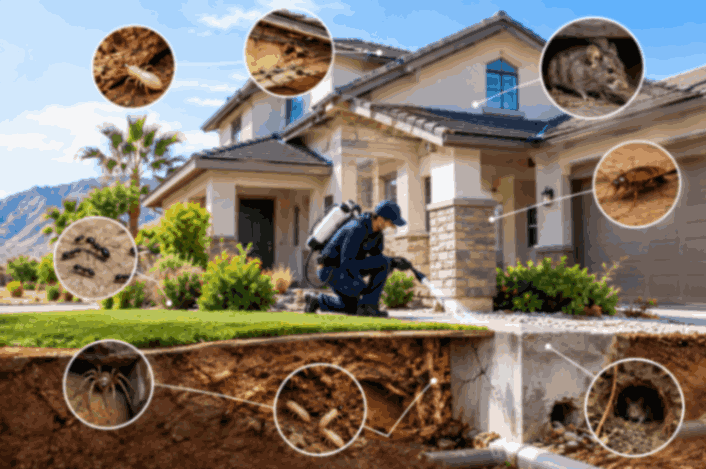
A pest control company safeguards your property against hidden dangers through its ability to see more than just the pest that first attracts attention. This allows one to understand where the activity is taking place, what is sustaining the activity, how the pests enter the property, and what the appropriate action is.
A scorpion inside the garage or ants in the kitchen are usually the initial indication, but that does not necessarily tell the whole story. In the case of Las Vegas, the surrounding environment will affect the location of pest activity.
Here is the typical surrounding environment we find in Las Vegas and what it means for us.
What We Commonly Notice Around Las Vegas Properties
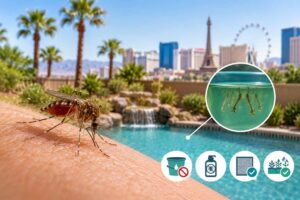
Las Vegas properties have a mix of desert conditions and maintained outdoor spaces. That difference stands out in the properties we work around.
Irrigated landscaping provides an environment that does not otherwise exist in the nearby desert. Drip irrigation, shaded landscaping, dense plantings, and routine irrigation alter the immediate environment of the home or business.
Pools, patios, block walls, garages, and exterior lighting provide additional environments where pests can hide, or insects become active.
There is also the matter of properties that are located near undeveloped land. The environment surrounding the property becomes relevant once pest activity becomes a factor for the property.
This information helps provide some valuable background before the pest issues come into consideration.
For more on the general pest issues that exist in Las Vegas, refer to our pest identification guide for Las Vegas and common pest problems.
What Counts as an Unseen Pest Threat?
Unseen pest activity can be described as something that is going on without any obvious sign of a pest.
Pests can be hiding in areas where people don’t see them often. While someone might be able to see a pest somewhere, other things related to their activity may be unseen.
Some of the examples include:
- Pest activity within walls and ceilings
- Droppings within unseen areas
- Nest-building material behind stored stuff
- Cast-off skins and insect parts
- Webbing within unseen areas
- Moisture that supports pest activity
- Areas which allow pests access
- Damage near areas with pest activity
Sometimes the issue is not just about the pest itself but also about the surroundings too.
A single observation requires some context. A repeated observation calls for attention.
Signs That Point to Hidden Pest Activity
There are some pest-related issues that have evidence even before the pests themselves can be identified.
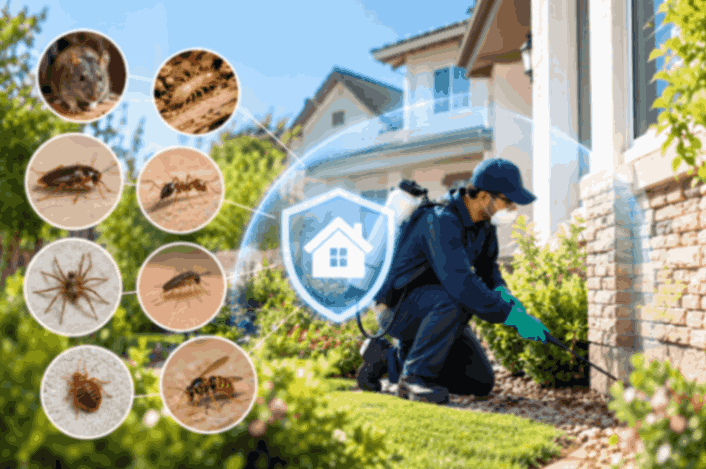
Evidence for pest problems must correspond with the kind of activity being observed. Such evidence includes droppings, skin sheddings, webbing, gnaw marks, nesting materials, trails, and odors.
When rodents invade the house, we recognize fecal pellets, gnawing damage, nests, and movement patterns through particular places.
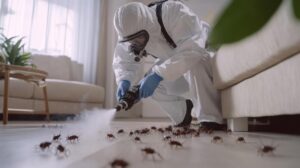
In the case of cockroaches, we will observe cast-off skins, feces, egg cases, and repetitive movement patterns through kitchens and utilities.
Ants tend to create trails that demonstrate their movement patterns.
Spiders produce webbing that can be found especially in insect activity areas.
Termites can leave mud tubes as evidence of their activity.
Bed bugs also have evidence such as spotting, shedding skins, and the presence of bed bugs removel services in areas of sleep and rest.
The important thing here is to relate the evidence to the type of pest.
Why the Pest You See Is Not Always the Source
The point of detection does not always coincide with the point where the activity took place.
The scorpion detected in the garage means that the garage is involved, but it cannot account for the reasons for the scorpion being there.
Detection of ants around the kitchen counter reveals activity, but this does not tell the whole story.
Detection of spiders around the patio can be related to the presence of insects in this area; cockroaches in plumbing areas are another example.
Activity of rodents should also take into account the area where the signs were detected and not the place of detection alone.
It is important because simply eliminating the detected pest may not solve the problems related to its activity.
How We Find the Access Points Pests Use
Pests don’t necessarily have to get through a big hole to enter a premises.
Small holes along doors, windows, garages, walls, utility lines, plumbing, and any other structures create pathways for entry.
Common areas include:
- Holes in the garage door
- Gaps along the threshold of the door
- Gaps in the windows
- Utility line openings
- Plumbing openings
- Cracks in the foundation
- Gaps in the exterior walls
- Vents and openings in the roofline
These create pathways from the outdoors to indoors.
An example would be an unsealed garage door or even an opening along a pipe providing an entryway for pests to places where they shouldn’t be.
How Las Vegas Landscaping Changes Pest Pressure
Landscaping affects the environment immediately surrounding the property.
In a natural desert environment, there is not much water available. A well-maintained yard brings in water via irrigation, plants, pools, and watering.
The drip irrigation system helps maintain the plants and also creates localized moisture due to landscaping. The plants create shade and shelter. The landscape beds create an area for soil, foliage, vegetation, and moisture surrounding the building.
This promotes insect life, which in turn affects the pests feeding on insects.
Scorpions are one such pest whose activity is related to the availability of insects surrounding the property.
Our guide on how eliminating food sources affects scorpion control explains that connection in more detail.
What Our Technicians Look for During a Pest Inspection
The pest inspection is based upon the information supplied by the property owner.
We find out what was observed, when and where the activity took place, how often the observations were made, and whether something changed prior to the observation.
On the basis of this information, the technicians proceed with inspecting the specific areas where the reported pest activity occurred.
We are looking for any signs of activity and conditions related to the reported pest issue. The results allow us to draw the line between an isolated occurrence and an observable pattern, which requires further investigation.
Finally, we present our results clearly.
When an action needs to be performed, we justify it and its appropriateness. If not, we state the results that have been obtained.
Such an examination is in accordance with the fundamental rules of Integrated Pest Management, including pest identification and monitoring, problem prevention, and control when needed. The guidelines provided by the EPA Integrated Pest Management can be regarded as an example here.
Why Different Pests Need Different Approaches
Each specific pest brings about its own specific problems; therefore, the treatment needs to be customized according to the specific pest.
- Cockroaches bring up problems such as paying attention to the inside activities of the building concerning food, moisture, plumbing, electrical appliances, and hiding places.
- Scorpions’ problems include paying attention to outside shelters, insect activity, entries, walls, and the surroundings of the building.
- Ants move because of either food or moisture; therefore, they leave trails of movement.
- Spiders usually congregate at places where there is insect activity, especially outside shelters and places with lights.
- Rodent problems include paying attention to entries, shelters, nesting, and activities in the building.
- Termite problems include paying attention to termite activity.
- Bed bug problems include paying attention to the hiding places inside the building close to resting places.
There is no universal pest control treatment.
How We Address the Conditions Behind Pest Activity
After identifying what is going on, we make our decision based on the pest, the property, and the results we obtained.
We recommend applications, modification of the property, monitoring, exclusion, or any other pest-specific action that may be necessary.
The idea here is to solve the issue without using one single method for all pests.
When you have an infestation of cockroaches in your kitchen, it is not treated the same way as when you have a scorpion infestation near your garage.
The same applies to rodent infestation inside the building and ants infesting the outside trail.
Where Eco-Conscious Pest Control Fits
Eco-conscious pest control is about choosing an appropriate approach for the situation.
At Enviro Guard, we provide environmental treatments where necessary. The correct treatment will be based on the type of pest, the behavior of the pest, and the surroundings of the building.
This does not imply that the same product will be used for all treatments.
Different pests and locations require different control strategies. Our technicians consider those factors before recommending the appropriate response.
Why Regular Attention Matters
Pests are a concern when their activity consistently repeats itself.
One observation is not equivalent to consistent observations of the same pest problem.
If there is persistence even after attempting to resolve the problem on your own, then the observation must be duly recorded.
The same applies in situations where the signs observed appear in several locations, or the activity is persistent without any reason at all.
Consistent monitoring will help you determine whether activity is sporadic or repetitive.
It is important because pest issues can sometimes result in property damage, disruption, and even harder-to-control pests later. That is discussed in our article “The Hidden Costs of Ignoring Pest Problems in Your Home.”
When We Recommend Calling a Pest Control Company
It is not necessary for you to wait for the pests to become active at such an extreme level.
We would suggest that you get professional help when you have any of the following situations:
- Multiple sightings of the pests
- Reappearance of the activity despite your DIY efforts
- Indications of the pests from multiple locations
- Signs of droppings or nesting
- Visible damage caused by the pests
- Unidentified pest
- Recurrent activity on your property
- Persistent problem without a specific reason
What to Look for in a Pest Control Company
A good pest control company should offer more than just coming out and applying a product.
Find one that:
- Understands the problem you are reporting
- Explains what was found
- Uses a pest-specific solution
- Makes proper recommendations
- Meets all licensing regulations
- Describes what will happen next
- Presents service options appropriate for the property
- Experience is important on a local level since each area has different levels of pest pressures.
For example, in Las Vegas, there is a need for knowledge of desert conditions, irrigated landscaping, garages, block walls, and how developed properties interact with other areas in an environment.
What to Expect When You Contact Enviro Guard
We begin with what you’ve observed.
Please share with us which pest you observed, where you observed it, and if it is a recurring issue.
After that, we schedule your inspection, inspect the premises, share our observations with you, and decide on the further course of action.
If you need ongoing residential pest control in Las Vegas, we can recommend an approach based on what we find.
Protecting Your Las Vegas Property Starts With Understanding the Problem
Sometimes the pest itself is merely an indication of the actual problem. To gain a proper understanding of the activity, one must examine the evidence, property, pest, and situation associated with the activity. That’s the reason why we begin with understanding the activity before making any decisions about how to solve it.
Enviro Guard Pest Control has been serving the Las Vegas area of southern Nevada since 2006.
If you are seeing continual pest problems around your home or office, call Enviro Guard Pest Control for a free pest inspection.