
Nobody wants to spend money dealing with the same pest problem again and again. But this happens to many homeowners. A few ants appear in the kitchen, a spider shows up in the garage, or you hear something moving in the attic. The first reaction is usually to grab a spray and try to fix it quickly.
Sometimes a simple treatment is enough. But in many cases, the problem is not as simple as it looks. Dealing with the problem the wrong way can make the situation worse and more expensive. A few simple changes and the right approach can help protect your home and prevent a small pest issue from turning into a bigger one.
Let’s look at some common mistakes homeowners make and what you can do instead.
1 Waiting Too Long to Deal With the Problem
Seeing one or two pests may not look like a big problem. But if you keep seeing them in the same place, there may be more hiding nearby. Pests can find food, water, and shelter inside your home. Once they find a good place to stay, they may keep coming back or build a nest.
Waiting can mean a larger infestation, more extensive treatment, and more time spent trying to solve a problem that might have been easier to control earlier.
2 Using Too Many Chemical Products
It is easy to think that using more pest control products will work better. But that is not always true. Using too much insecticide can be unsafe for people and pets. It can also leave unwanted residue or cause pests to move to other areas of your home.
Always read the label before using a pest control product. Use the amount recommended on the label and follow the instructions carefully. If you are not sure which product to use or how to use it safely, it is better to ask a professional for help.
The United States Environmental Protection Agency recommends reading the label before using a pest control product. Use the amount recommended on the label and follow the instructions carefully.
3 Killing the Pests Without Finding the Source
This is one of the easiest mistakes to make. You may kill the ants you see on the kitchen counter, but that does not mean you have dealt with the colony. You may catch one scorpion, but another can still enter through the same opening.
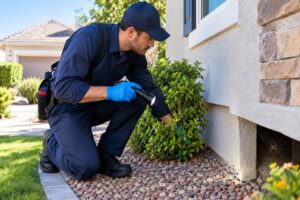
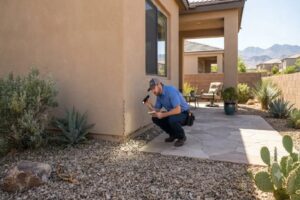
Look for the reason pests are getting inside. Check around doors, windows, plumbing openings, vents, roof areas, and other possible entry points. Sealing a gap or fixing a moisture problem can sometimes be just as important as treating the pest inspection themselves.
4 Treating Every Pest the Same Way
Not every pest responds to the same treatment. Ants, cockroaches, termites, spiders, and bed bugs all behave differently. A method that works for one pest may have little effect on another.
This is why identifying the pest first is important. It helps you understand where it may be hiding, what may be attracting it, and what type of treatment is appropriate. Using random products without knowing what you are dealing with can waste both time and money.
5 Forgetting About the Conditions Around Your Home
Pest control is not just about spraying. It is also important to look at what may be attracting pests to your home. Standing water, leaking pipes, food scraps, full trash cans, clutter, and overgrown plants can attract pests.
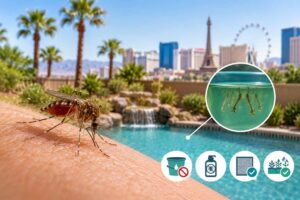
In a hot and dry place like Las Vegas, even a small amount of water can attract pests. Check around outdoor essentials, irrigation areas, air-conditioning units, and other places where water may collect.
Removing these things can help make your home less attractive to pests.
6 Relying on DIY Treatment for Every Problem
DIY products can help with small pest problems when used correctly. But some pest problems are harder to handle on your own. If pests keep coming back, they may be hiding somewhere or getting inside through an opening you have not found.
Termites, bed bugs, and large cockroach infestations can be especially hard to control without the right tools and knowledge.
Knowing when to stop trying different products can save you money. Trying the same treatments again and again may give pests more time to spread and can increase your costs.
7 Not Paying Attention to Where Pests Appear
The location and timing of pest activity can tell you a lot. For example, seeing insects near a sink may point to moisture. Finding droppings in the garage may suggest an entry point nearby. Repeated activity around one window could indicate a gap or damaged screen.
If you need professional help, make a note of where you have seen pests and how often they appear. Even a few simple details can help a technician understand what may be happening.
8 Continuing With a Treatment That Is Not Working
Sometimes homeowners keep using the same treatment because they have already paid for it. But if pest activity continues or gets worse, it is worth taking another look at the situation.
New droppings, fresh damage, increasing sightings, or pests appearing in new rooms can all be signs that the problem has not been fully controlled. Do not assume that more of the same treatment will automatically solve it. The pest may have been misidentified, the source may have been missed, or the treatment may not be suitable for that situation.
9 Skipping Professional Pest Prevention
Many homeowners wait until they have a serious pest problem before calling a professional. By then, pests may have already spread or found places to hide. Regular pest prevention can help catch problems early. A professional can check your home for signs of pests, look for places where they may be getting inside, and suggest ways to keep them out.
This does not always mean you need frequent treatments. The right approach depends on your home, the pests in your area, and the time of year. Taking care of small problems early can help prevent them from becoming bigger and more expensive later.
A Simple Pest Check for Your Home
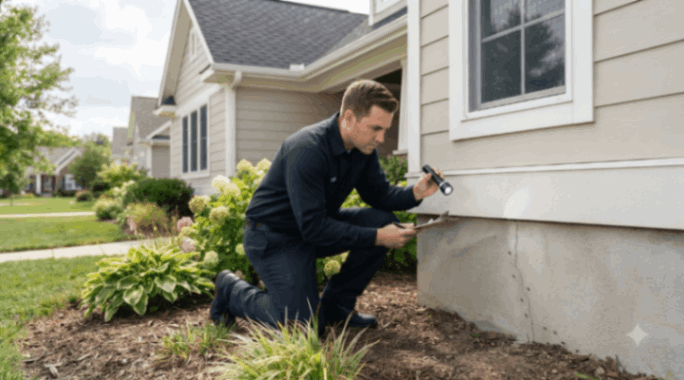
You do not need to spend hours doing a free pest inspection of your property every week. A quick check can help you notice potential problems before they become obvious infestations. Check:
- Under sinks and around plumbing for leaks or moisture
- Around doors and windows for gaps or damaged screens
- In garages and storage areas for droppings, nests or unusual activity
- Around outdoor taps, irrigation systems and air-conditioning equipment for standing water
- Around food storage areas for signs of insect activity
- Around patios, landscaping and exterior walls for possible pest entry points
If you notice something unusual, keep an eye on the area rather than immediately assuming you need treatment. Repeated activity is more useful information than a single isolated sighting.
Why Pest Prevention Requires a Proactive Approach
Pests do not need any invitation to enter your home. If they find food, water, or a safe place to hide, they will enter your place immediately.
That is why it is better to prevent pest problems instead of waiting for an infestation to appear. A proactive approach means looking after the areas around your home, keeping things clean, checking for possible entry points, and taking care of your yard and landscaping. Professional pest control plays a very important role in this approach. Regular inspections and timely treatments can help find signs of pest activity before the problem becomes harder to control.
Good pest prevention is not about doing one thing once. It is about taking small steps throughout the year to make your home less inviting to pests. This can help reduce the risk of dealing with a large and costly infestation later.
Explore EPA’s guide to Integrated Pest Management to learn more about long-term pest prevention.
How Enviro’s Expert Help Protect Your Home
Avoiding pest problems is not always about doing more. Often, it is about doing the right things at the right time.
At Enviro Guard Pest Control, we help identify the problem and work toward a solution that focuses on both treatment and prevention. Based on our findings, we recommend suitable treatments for pests such as ants, roaches, scorpions, spiders, termites, and bed bugs. We also focus on prevention by helping homeowners understand what they can do to reduce the chance of pests returning.
With the right treatment and simple prevention steps, you can protect your home without wasting money on solutions that do not address the real problem. Contact us today and discuss your pest control needs.