Late spring in Las Vegas brings warm evenings, mild nights, and longer nights outdoors. But this condition can increase insect activity. University of Minnesota Extension notes that crickets commonly become a nuisance around homes in late summer and fall.
That steady chirping from the corner of the yard, under the patio, or sometimes even inside the house. Crickets may seem harmless at first, yet once they find a way indoors, they can multiply quickly and become a nuisance by disturbing sleep, damaging materials, and invading indoor spaces.
Preparing your home before summer arrives is one of the easiest ways to keep these pests away. Many homeowners in the area start with preventative steps and, when needed, look for professional cricket pest control to make sure their homes stay quiet and pest-free. The good news is that a few smart changes around your property can make a big difference.
Why Las Vegas Homes Attract Crickets in Warm Weather
The desert climate of Las Vegas may seem dry, but it actually creates favorable conditions for crickets. When daytime temperatures increase, crickets look for shaded areas where they can rest until nightfall.
Las Vegas residential properties can also have several features that give crickets places to hide, settle, and reproduce, including
- Rock and gravel landscaping
- Dense plants near the foundation
- Yard debris
- Irrigated areas
- Gaps around doors and windows
- Garage openings
- Outdoor lights around patios and walkways
- Cracks around utility lines
- Spaces around foundations
Crickets tend to remain in the area, and their numbers can grow quickly over time. But that doesn’t mean that every cricket you see outside will become an indoor pest.
You just need to work to lower the chances of crickets gathering around your home.
The Hidden Entry Points Most Homeowners Miss
Crickets do not need large openings to get inside a house. Small cracks around doors, outdoor lights, windows, yard debris, and gaps around pipes can easily allow them to enter.
Once indoors, crickets usually settle in quiet and undisturbed areas. Garages, laundry rooms, closets, and storage spaces are common hiding spots because these locations offer dark, sheltered, and fewer disturbances.
They are mostly active at night; many homeowners first notice the problem when they hear constant chirping inside the house.
Plus, crickets may also damage household materials. When food is limited, they sometimes chew on fabrics, paper, and cardboard items. While the damage may seem small, it can become frustrating when crickets continue to return or multiply inside the home.
Simple Changes That Make Your Home Less Attractive to Crickets
Preventing crickets from settling around your property often starts with a few simple adjustments. These steps help remove the shelter, food, and moisture that attract them in the first place.
Some helpful actions homeowners can take include:
- Seal cracks and small gaps around doors, windows, and the foundation
- Install door sweeps to block openings beneath exterior doors
- Replace bright outdoor lighting with yellow bulbs that attract fewer insects
- Trim shrubs and plants so they do not touch the exterior walls
- Remove piles of wood, leaves, or debris from the yard
- Repair leaking irrigation lines or outdoor faucets
- Keep garage doors closed at night whenever possible
These preventive habits make your home far less appealing to crickets. When they cannot easily find food or shelter, they are less likely to remain around the property.
Your Pre-Summer Cricket-Proofing Checklist
You do not need to completely change your yard or spend a lot of money to overcome cricket activity.
By checking areas crickets are most likely to use, such as entry points, outdoor lighting, landscaping, moisture, and outdoor clutter, you can eliminate their access, food, shelter, or suitable conditions for them to survive.
1 Check Every Door Gaps
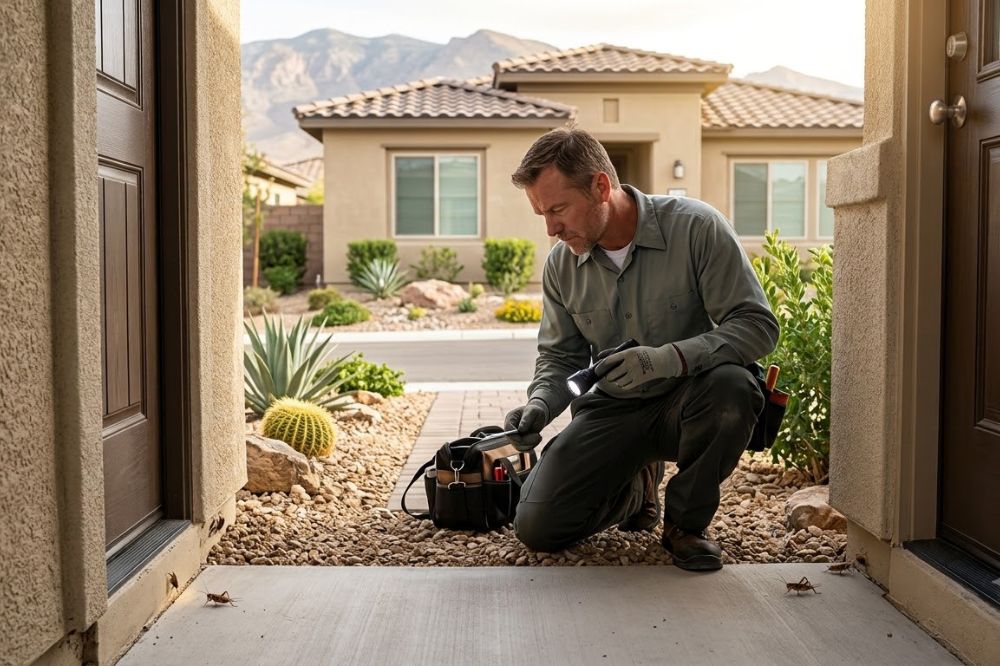
Your exterior door is the first place to start inspection. Doors are frequently open, and small gaps around door frames, worn weatherstripping, and gaps underneath a door create an easy opportunity for crickets to get inside.
You may have to check:
- Front and back doors
- Garage entry doors
- Patio doors
- Side doors
- Door frames
- Corners and edges
- The space underneath each door
- Damaged screen near the door
Plus, the University of Maryland Extension states that house and field crickets are attracted to light. So, try this hack at night: turn off the lights inside and look around the door from outside. If you can see light through a gap, then it is worth sealing or repairing.
How to fix door gaps?
- To fix gaps around the sides or top, replace worn weatherstripping
- To fix a gap under the door, install or replace a sweep
- Adjust the door frame
- exterior-grade caulk for small gaps around the frame
- For large gaps, repair damaged seals
However, don’t only focus on the main entrance; garage doors, sliding glass doors, doors leading to a balcony or yard, and side or patio doors can also become weak points.
2 Inspect Windows and Screens
Windows are another easy entry point for insects because they often have small gaps, loose screens, or damaged seals.
Look closely at outdoor ground-level windows, especially those near landscaping or outdoor lights.
Check for:
- Torn screens
- Loose screen edges
- Gaps around frames
- Damaged caulking
- Windows that do not close tightly
To stop crickets from entering your home, repairing damaged screens before summer helps close easy routes before you start opening windows more often for fresh air.
3 Seal Cracks Around Your Home
Walk around the outside of your home and inspect the foundation, walls, windows, doors, and areas where pipes or cables enter the building.
Because these spots have a high chance of small gaps that give crickets easy access indoors.
Look for:
- Foundation cracks
- Gaps around pipes
- Gaps around door frames
- Damaged exterior sealant
- Openings near vents
- Openings around utility lines
- Cracks around windows
Small gaps are easy to overlook or harmless in smaller areas because they are thin, hidden, or laced in less notable locations. However, door frames, around pipes, or where the foundation meets the wall are the most useful places to start inspection.
4 Keep Landscaping Away From the Foundation
Overgrown plants, dense ground cover, leaves, and mulch in your yard can create sheltered spots for crickets.
Nevada guidance recommends reducing plant debris, tall grass, and mulch around the foundation to reduce cricket habitat and hiding areas around your Las Vegas home.
Pay special attention to:
- Bushes touching walls
- Tall grass near the foundation
- Weeds around patios
- Fallen leaves
- Dead plants
- Plant debris
- Thick ground cover
Note: You do not remove all landscaping. The aim is to remove necessary hiding places that touch your Las Vegas home walls.
A 15-Minute Cricket Prevention Check
If you have less time, use this quick 15-minute check to spot the most common cricket entry and hiding areas around your home.
| Area | Checklist |
| Outside | Door sweeps, window screens, foundation cracks, pipe/cable gaps, overgrown plants, yard debris, standing water, outdoor lights |
| Garage | Door seal, cardboard, dark corners, storage |
| Inside | Door gaps, ground-level windows, food crumbs, food storage, dark areas |
When Cricket Activity Becomes Too Much to Handle
Even with careful maintenance, cricket populations can still increase in Las Vegas neighborhoods. Nearby landscaping, empty lots, and surrounding properties may already support large numbers of crickets. As these populations grow, they often spread into nearby yards and homes.
This is when many residents begin searching for cricket pest control to deal with the issue more effectively. Professional pest control treatments focus on the areas where crickets hide and travel around a property. These treatments help reduce the population and create a protective barrier around the home.
Targeted treatments along foundations, entry points, and landscaping zones are commonly used to control outdoor pest activity. With regular inspections and follow-up care, homeowners can keep cricket populations from returning throughout the warmer season.
Get Your Las Vegas Home Ready for Cricket Season
Taking steps to cricket-proof your Las Vegas home before summer can offer quieter nights with less cricket chirping, more comfortable indoor spaces, fewer crickets hiding in garages and storage areas, and a lower risk of minor damage to fabrics and stored items.
Sealing entry points, managing outdoor lighting, and maintaining your yard can significantly reduce the chances of crickets gathering around your property. These small efforts help create an environment where crickets can not survive and reproduce.
When cricket activity begins to grow despite these efforts, professional pest control solutions can provide the extra layer of protection many homes need. At Enviro Guard Pest Control, we have focused on targeted treatments that help control cricket populations around residential properties in Las Vegas since 2006.
Our team carefully inspects common hiding spots and applies environmentally friendly treatments designed to reduce activity while helping prevent crickets from entering your home.
If the chirping around your home is becoming more noticeable, we are here to help. Contact us to book a pest-free inspection and let our team help you keep your home quieter and more comfortable before summer arrives.