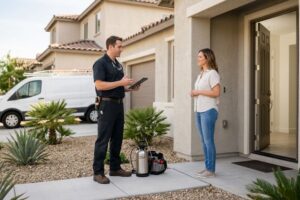
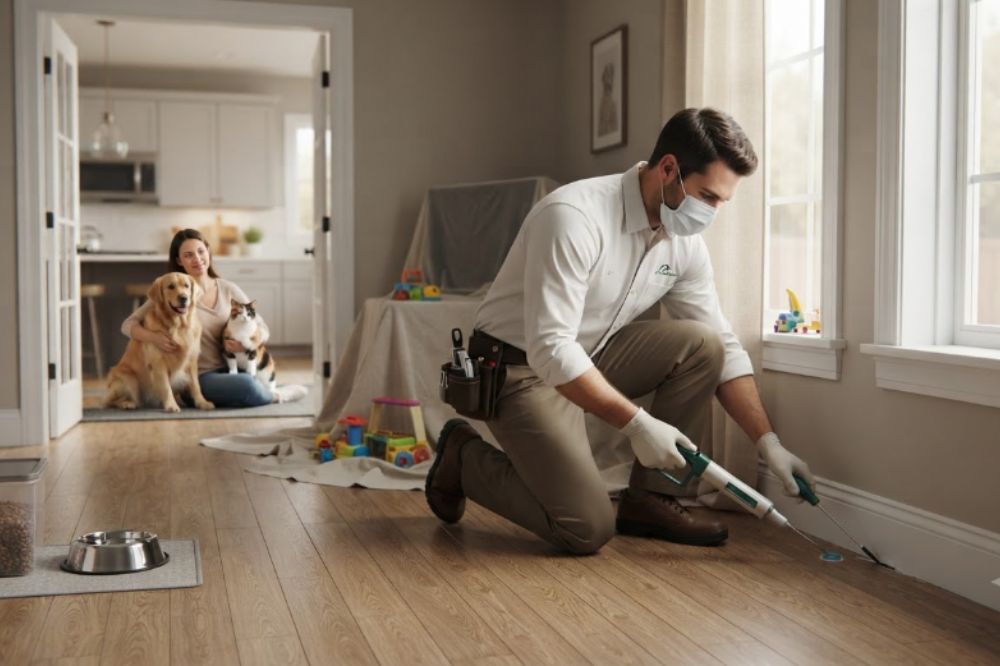
Yes, pest control can be safe for pets when the right product is used for the pest and treated area. In Las Vegas homes, we often work around dogs and cats that share yards, garages, patios, and living spaces with pests. In this guide, we explain what pet owners should do before, during, and after residential pest control.
What Makes a Pest Treatment Safe for Pets?
Pet safety starts with using the right product in the right place. The pest, treatment area, application method, and product label all matter.
During our home visits, we first check where the pest is active and where pets spend time. A treatment around a garage is different from one inside a kitchen or in a backyard.
University of Nevada, Reno Extension explains that pets can be exposed to pesticides by eating them, licking treated areas, or touching treated surfaces. Following the product label helps lower these risks.
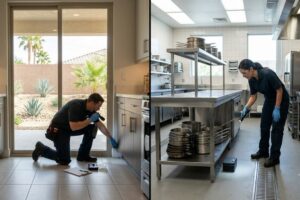
What We Check During a Home Visit
Your pet’s daily routine can help us understand the problem. During a home visit, we look at areas such as:
- Pet food and water bowls
- Dog doors and other openings
- Garages and patios
- Yards where pets spend time
- Places where you first saw the pest
- Landscaping close to the home
For example, ants near a pet’s food bowl give us a useful starting point. A dog that spends most of the day in the yard also tells us which areas deserve a closer look.
We use these details along with signs of pest activity to decide where treatment is needed.
What Should You Move Before Treatment?
Keep your pet away from areas that will be treated. Move items your pet uses if they are in those areas.
This can include:
- Food and water bowls
- Pet food
- Toys
- Bedding
- Crates
For outdoor service, follow your technician’s instructions about moving pets and their belongings away from the treatment area.
Where Should Your Pet Stay During Service?
It depends on where the treatment is being done.
If service is limited to one area that can be closed off, your pet may stay in another part of the home. If several areas need treatment, it may be better to take your pet out of the home for a while.
Before service, tell your technician:
- What type of pet you have
- Where your pet spends most of its time
- Whether your pet uses the yard
- Whether your pet has access to the garage
- Which rooms your pet uses most
This gives the technician a better picture of the home before treatment starts.
When Can Your Pet Return?
There is no set waiting time for every pest treatment.
The time depends on the product, how it was applied, and where it was used. Some outdoor treatments require pets to stay away until the treated surface is dry. Other products have different instructions.
Your technician should tell you when your pet can return and which areas to avoid.
Before the service ends, ask:
- Which areas were treated?
- When can my pet return?
- Are there areas my pet should avoid?
- Do any pet items need to stay away from the treated area?
Do not rely on a general two-hour or four-hour rule unless the product instructions give that time.
What About Baits Around Dogs and Cats?
Baits need extra care because they are made to attract pests.
That can also make them interesting to pets.
Bait stations should be placed where the target pest can reach them but pets cannot. Never move a bait station to an area your pet can reach.
If you are not sure where a bait will be placed, ask your technician before service.
What If You Use Pesticides Yourself?
Store-bought pesticides still need careful handling. Read the label before using any product and follow its directions for the pest, amount, and application area.
Using more products does not make it work better. Applying a product to the wrong area can also create extra exposure for people and pets.
Our guide to DIY pest control risks for homeowners covers problems that can come from using the wrong product, applying too much, or treating only the pest you see.
If you are not sure what is causing the activity, start by finding the source instead of repeatedly treating the same pest.
What Should You Do After Accidental Exposure?
If you think your pet has swallowed a pesticide or contacted a treated area, move the pet away from the area and check the product label for first-aid instructions.
Contact your veterinarian if you are concerned about exposure or your pet develops unusual symptoms.
The Nevada Humane Society lists vomiting, diarrhea, excessive drooling, lethargy, tremors, seizures, and collapse among possible signs of poisoning.
Keep the product container or label nearby if you need to speak with your veterinarian. The product name and active ingredients can help identify what your pet was exposed to.
What Should Your Technician Know About Your Pet?
Tell us about your pet before treatment starts. Useful details include:
- The type of pet in your home
- Where it eats and drinks
- Where it sleeps
- Where it spends time outside
- Whether it enters the garage
- Where you first saw the pest
- Whether you used a pesticide before the appointment
These details help us plan the visit around your home and your pet’s routine.
For example, a scorpion near a dog door gives us a different place to start than a scorpion found in an unused storage area. The location helps us decide where to inspect next.
Does Ongoing Pest Control Help Homes With Pets?
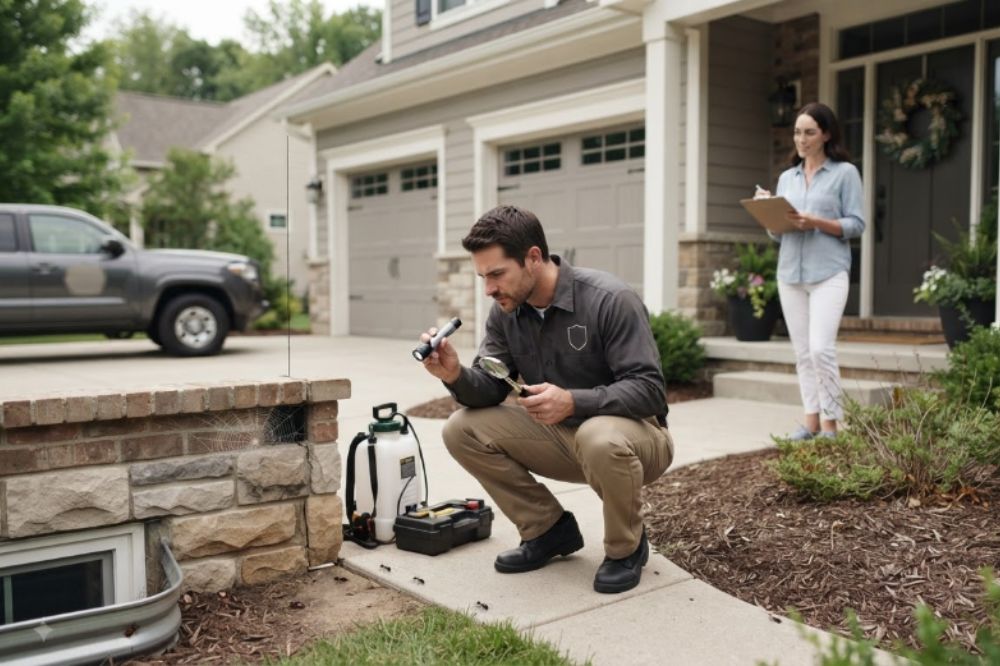
Pets spend time in the same areas where pests often enter or hide. Dogs may move between the yard, patio, garage, and home, while cats may have access to several rooms or outdoor areas.
If pest activity keeps showing up in places your pet uses, regular service can help manage the problem over time. During repeat visits, our technicians check the areas where your pet spends time and look for signs of new activity.
For example, if ants keep appearing near a pet’s feeding area or pests return around a dog door, we pay attention to those spots during future visits.
Our guide to ongoing pest control for homes explains how regular service works and when it can be useful.
The goal is not to treat more areas simply because you have a pet. It is to address pest activity while keeping your pet’s routine in mind.
How We Handle Homes With Pets
At Enviro Guard Pest Control, we start by finding the pest and checking the property.
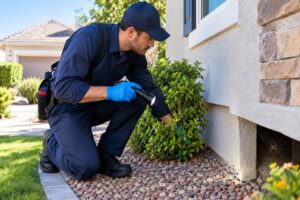
Our technicians look for signs of activity, entry points, hiding areas, and conditions that support the problem. We also ask where pets spend their time before recommending treatment.
We do not simply treat every available area. The treatment depends on what we find during the visit.
Enviro Guard has been serving Las Vegas and Southern Nevada since 2006. Our technicians work in homes with pets and follow product directions for the areas being treated.
Need Pest Control for Your Home?
A pest problem does not have to mean putting your pets at risk. The right treatment starts with knowing what pest is active, where it is active, and which areas need treatment.
At Enviro Guard Pest Control, our technicians inspect the property before recommending service. We consider areas your pets use, such as yards, patios, garages, and living spaces, before treatment.
If you have an active pest problem that needs prompt attention, our 24-hour pest control service is available for urgent pest concerns.
Call 702-569-2849 to discuss the pest problem at your home and the steps you can take to keep your pets safe during treatment.