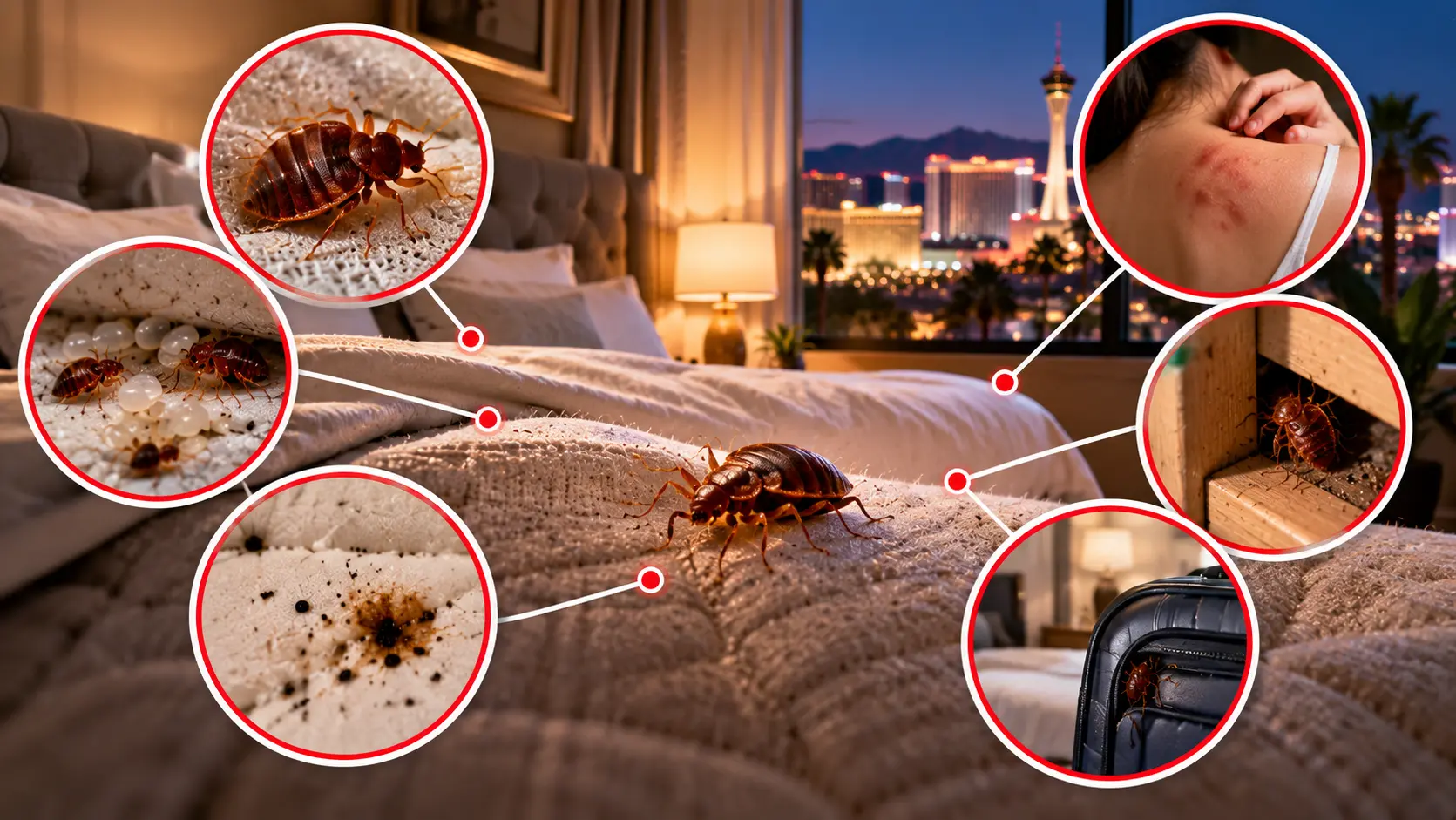
Rust or reddish stains, tiny dark spots, or shed skins around your mattress could be early signs of bed bugs in your Las Vegas home. You might also smell a musty odor or wake up with itchy red bumps.
But bites alone don’t confirm an infestation. According to the EPA, bed bug bites can resemble mosquito or chigger bites, eczema, or hives, and some people don’t develop any visible reaction at all.
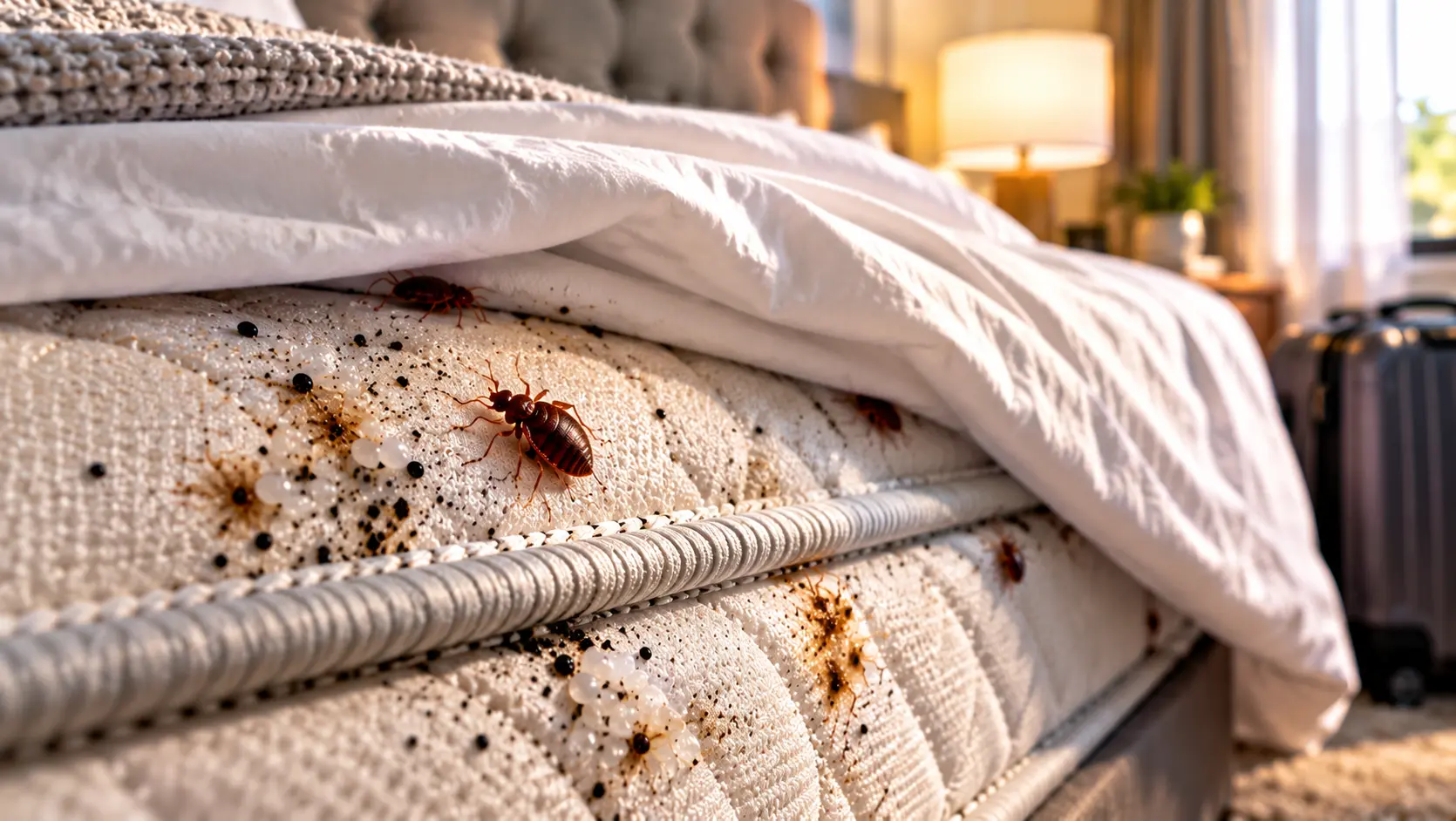
To identify a possible infestation, look for physical evidence such as live bed bugs, eggs, shed skins, and dark fecal spots. Check mattress seams, the box spring, bed frame, headboard, and nearby furniture using a flashlight. Identifying bed bug activity early can help you take action before they spread to additional areas.
If you’re unsure what you’ve found, a professional bed bug inspection can help confirm the problem and determine the next steps.
What Are the First Signs of a Bed Bug Infestation?
The EPA recommends identifying bed bugs early, as smaller infestations are generally easier and less expensive to treat than widespread ones.
1 Small Blood Stains on Sheets and Pillowcases
Tiny reddish or rust-colored stains on your bedding can appear when a bed bug is accidentally crushed after feeding because its body contains blood from the person or animal it has bitten.
You may notice these marks on pillowcases, fitted sheets, blankets, or the edges of your mattress.
However, repeated stains in the same sleeping area deserve closer attention because they can also result from other causes, such as small skin wounds, nosebleeds, or a pet’s minor injury.
2 Dark Spots on the Mattress or Bed Frames
Bed bug droppings often appear as small, dark brown or black spots. They may look like ink marks from a fine-tip pen and can bleed into fabric when wiped with a damp cloth.
Check the seams, edges, and labels of your mattress. Look at the corners and joints of the bed frame, small cracks in the wood, and screw holes. Don’t forget to check under the box spring and behind the headboard, where bed bugs can hide.
Note: Dark spots alone do not confirm bed bugs because other things like flea droppings, dried blood, ink stains, crushed insects, and dirt can leave similar marks. However, spotting several marks around protected crevices can indicate that insects are hiding nearby.
3 Bed Bug Shed Skins and Tiny White Eggs
Bed bugs shed their outer skins as they grow because their hard shells cannot expand with their bodies. Young bed bugs shed their skins several times before reaching adulthood. The discarded skins are tiny, pale, and empty exoskeletons. Their eggs are smaller, about 1 millimeter long, pearl-white, and often stuck to sheltered surfaces.
You may find them in mattress seams, furniture joints, or cracks near the bed. Finding several shed skins or eggs may mean bed bugs have been living and reproducing there.
4 Live Bed Bugs Hiding in Mattress Seams and Cracks
EPA states that adult bed bugs are about the size of an apple seed, measuring approximately 3/16 to 1/4 inch (5–7 mm) long. They have flat, oval bodies and are typically reddish-brown. After feeding, their bodies become more swollen and elongated.
Young bed bugs are smaller and lighter in color, which makes them harder to spot.
You may find live insects along mattress stitching, inside bed frame joints, behind headboards, or underneath upholstered furniture.
A flashlight can help you examine these dark, narrow spaces.
If you find a suspected bed bug, capture it in a sealed container or take a clear close-up photograph so it can be identified correctly.
Tip: Avoid crushing it because the bug may leave blood stains on nearby surfaces, making the area harder to inspect.
5 A Musty Odor in a Heavily Infested Room
A strong, musty smell in your bedroom may be a sign of a large bed bug infestation. However, bed bugs don’t always produce a noticeable odor, especially when there are only a few of them.
Do not use odor as your main test.
Physical evidence, such as live insects, shed skins, eggs, and dark spotting, provides a more useful basis for identifying a possible problem.
Bed Bug Evidence: What You Found and What It Means
| What You Found | What It May Mean |
| Black dots on mattress seams | Could be bed bug droppings. Check nearby crevices for more spots, eggs, or live bugs. |
| Pale, empty insect skins | Maybe shed bed bug skins. Finding several near the bed could indicate an infestation. |
| A small reddish-brown insect | Could be an adult bed bug. Take a clear photo or collect it safely for identification. |
| Itchy bumps after sleeping | Could be bed bug bites, but mosquitoes, fleas, and other causes can produce similar marks. Look for physical evidence before drawing a conclusion. |
How to Check Your Home for Bed Bugs Before They Spread
A useful inspection will help you identify the areas around your bed before you move your belongings to another room.
Step-by-Step Bed Bug Inspection Checklist
- Step 1: Start with the bed: Remove the bedding and check the mattress seams, piping, labels, corners, and handles. Bed bugs often hide in these tight, dark spots. Check the box spring, if you have one, and examine the underside of the bed.
- Step 2: Inspect the headboard and frame: Use a flashlight to look inside screw holes, joints, cracks, and gaps where wooden or upholstered sections meet. Pay attention to areas you rarely clean.
- Step 3: Check nearby furniture: Examine nightstands, upholstered chairs, sofas, and drawers near the bed. Check under furniture, inside joints, and along fabric seams for bed bugs.
- Step 4: Look for other hiding spots: Inspect baseboards, curtain folds, picture frames, and cracks near the bed. If the infestation is severe, bed bugs may also hide in places farther from the bed.
- Step 5: Record what you find: Take photographs of possible signs of bed bugs, and note where you found them. This helps bed bug exterminators identify the areas that need closer inspection.
Tip: Inspect the bed and the nearest furniture first, then expand outward. This makes it easier to keep track of findings without unnecessarily disturbing possible hiding places.
Can Bed Bug Bites Tell You If You Have an Infestation?
Bed bug bites may appear as small, red, itchy bumps, sometimes in clusters or lines on exposed skin. They can show up on the arms, legs, neck, shoulders, or face after sleeping.
However, bites are not a reliable way to confirm an infestation.
Some people develop noticeable skin reactions, while others have little or no visible reaction. Symptoms may also take several days to appear. If the skin reaction is severe, painful, or shows signs of infection, seek medical advice.
The National Pest Management Association’s bed bug guidance recommends looking for physical evidence, including dark fecal spots, shed skins, eggs, and live insects.
Note: If you wake up with new bites repeatedly, inspect your sleeping area rather than assuming bed bugs are responsible.
Why Bed Bugs Are a Concern in Las Vegas Homes
Las Vegas welcomed 38.5 million visitors in 2025, and hotel occupancy averaged 80.3%.
Bed bugs can enter your home through travel, visitors, nearby infested homes, and secondhand furniture. They can hide in suitcases, clothing, and furniture, so even a clean home can have bed bugs.
Some people think leaving luggage in a hot garage or car during summer will kill bed bugs. But this may not work because the heat may not reach every part of the luggage. Bed bugs die when their body temperature reaches about 113°F (45°C) for a long enough time.
Bed bugs can be killed by heat, but the temperature and exposure time both matter.
Note: The temperature inside mattress seams and furniture cracks may be lower than the surrounding air temperature. Professional heat treatment is generally more reliable for treating an entire room. Avoid using space heaters or other improvised heating methods because of fire risks.
What to Do If You Find Signs of Bed Bugs
- Avoid moving bedding and furniture into other rooms. This can carry bed bugs into new hiding places.
- Keep items that may have bed bugs in sealed bags. Put bedding and clothes in bags before taking them to the laundry to prevent bed bugs from spreading.
- Use a clothes dryer on high heat for 30 minutes to kill bed bugs. Follow the garment’s care label and use an appropriate high-heat drying cycle because washing alone may not eliminate every blood-feeding insect.
- Never spray pesticides on bedding or clothing unless the product label says they are safe for that use. Never use outdoor pesticides inside your home. Some chemicals can irritate your skin, eyes, or lungs, and using the wrong product may not kill bed bugs.
- Arrange a professional inspection. A trained bed bug exterminator can confirm the pest, check surrounding areas, and recommend a customised bed bug treatment in Las Vegas.
When to Call a Bed Bug Exterminator in Las Vegas
Call a pest control professional if you find live bed bugs or eggs, or if dark stains and unexplained bites keep appearing. Rental properties, motels, and offices may need professional treatment.
Bed bug treatment services in Las Vegas can locate bed bug hiding spots and assess how far the infestation has spread. Effective bed bug removal involves treating areas where adult bugs, eggs, and young bed bugs may be hiding, not just the insects you can see.
A professional bed bug control specialist can assess the situation and explain the treatment options, preparation requirements, and any necessary follow-up visits.
Schedule a Professional Bed Bug Inspection in Las Vegas
Bed bugs can hide in mattress seams, bed frames, and nearby furniture, making an infestation difficult to identify from bites alone.
If you find suspected bed bugs, eggs, shed skins, or recurring dark spots, avoid moving potentially infested belongings to other rooms. A professional inspection can help confirm the problem and determine the next steps.
EnviroGuard Pest Control has provided pest control services in Las Vegas since 2006. Contact our team to discuss your concerns, learn about available bed bug treatment options, and request a free pest inspection.